
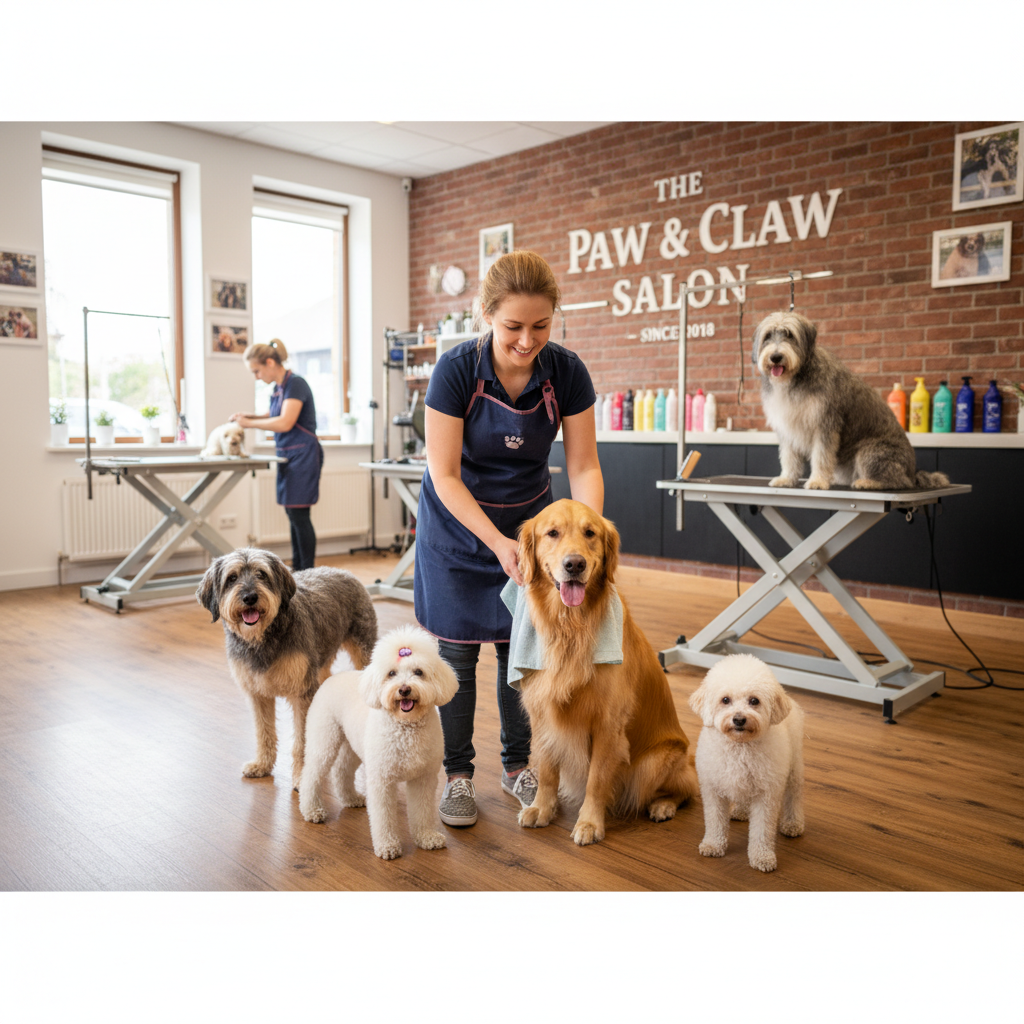
How Much Do Dog Groomers Really Make in the UK? A Practical Guide
The other day, Fern, my whirlwind of a Spaniel, decided the most interesting part of our Peak District walk was a bog. Not next to it, not around it, but right through the middle of it. She emerged looking less like a dog and more like a moving peat monster, absolutely chuffed with herself. My first thought, after the initial sigh, was of the saint who runs our local grooming parlour. She’s a miracle worker, and it got me wondering – for all the mud, matted fur, and occasional grumpy client (the four-legged kind, of course), what does a dog groomer actually take home?
It’s a question that crops up a lot. For those who love being around dogs, it seems like a dream job. But can you actually make a decent living from it? Let’s put the clippers down for a moment and look at the numbers.
What is the Average Dog Groomer Salary in the UK?
Right, let’s get down to brass tacks. The figures can be a bit of a mixed bag depending on where you look, but we can certainly get a good picture. According to the National Careers Service, you can expect a wide range.
- Average Starting Salary: Around £18,000 per year.
- Experienced Groomer Salary: This can rise to £25,000 per year.
- Business Owner/Top-End: With a successful business, earnings can push well past £30,000, with some sources suggesting experienced owners can make significantly more.
The key takeaway: A dog groomer’s income isn’t a simple, single number. It’s a spectrum that depends heavily on your setup, your skills, and where you lay your grooming table.
Salary Range: From Scruffy Apprentice to Top Dog
Your journey in the grooming world will see your pay packet evolve. It’s not just about surviving the puppy cuts; it’s about building a reputation and a skill set.
- Trainee/Apprentice: As a newcomer learning the ropes, you’ll be on the lower end, likely on minimum wage or a trainee salary, perhaps around £16,000 – £18,000. You’re paid less, but you’re gaining invaluable hands-on experience.
- Qualified Salon Groomer (2+ years): Once you’re confident with different breeds and techniques, you can expect to earn somewhere in the region of £20,000 – £25,000 working for a salon.
- Senior Groomer/Salon Manager: With more experience comes more responsibility. If you’re managing a salon, training staff, and handling top clients, you could be looking at £25,000 – £30,000.
- Established Business Owner: This is where the potential really opens up. Once you’ve covered your overheads (rent, insurance, equipment), your earnings are only limited by how many dogs you can groom and how well you run the business. Successful owners can earn £35,000 to £60,000+, but it comes with all the pressures of being the boss.
Key Factors That Tip the Pay Scales
Not all grooming gigs are created equal. Several things can nudge your salary up or down, much like trying to weigh a wriggly terrier.
Geographic Location (The Postcode Premium)
It’s no surprise that where you set up shop makes a huge difference. Grooming prices in London or affluent areas of Surrey will be considerably higher than in a small town in the north. Of course, the cost of living and running a business is higher too, so it’s a balancing act.
Years on the Job
Experience is currency in this trade. A groomer who has seen it all, from anxious rescue dogs to pampered show poodles, can work faster, produce better results, and build a loyal client base that trusts them implicitly. More trust means more bookings and higher rates.
Work Environment: Salon Hand vs. The Boss
Being an employee offers security – a steady wage, paid holidays, and no stress about finding clients or paying the electricity bill. Going self-employed, whether mobile or with your own parlour, means you take on all the risk, but you also keep a much larger slice of the pie.
Specialist Skills & Qualifications
Formal qualifications, like a City & Guilds Level 3 Diploma, build instant trust. Beyond that, specialist skills can make you a go-to expert. Are you a master of hand-stripping terriers? A whizz with giant breeds? These niche skills allow you to charge a premium for your expertise.
Breaking Down Career Paths & Their Earning Potential
Working in a Salon: The PAYE Path
This is the most common starting point. You’ll either be on a set hourly wage or, in some cases, a basic wage plus commission. A commission structure means you get a percentage of the fee for each dog you groom. It’s a great incentive to be efficient, but your income can fluctuate with the booking diary.
- Pros: Regular income, no overheads, part of a team, paid holidays.
- Cons: Lower earning ceiling, less control over your schedule and methods.
Mobile Grooming: Your Business on Wheels
Taking your parlour on the road has become incredibly popular. You invest in a professionally converted van and travel to your clients. This offers immense flexibility and lower overheads than a physical shop. However, you’ve got to factor in the cost of fuel, van maintenance, and insurance, which can eat into your profits significantly.
- Pros: High flexibility, lower start-up costs than a salon, direct client relationships.
- Cons: Vehicle costs, reliance on good weather, lone working.
Owning a Grooming Parlour: The Big Leap
This is the dream for many groomers. It offers the highest earning potential but also carries the most responsibility. You’re not just a groomer anymore; you’re a business owner. This means managing staff, marketing, accounts, stock, and dealing with landlords. Buster, my Lab, thinks being the boss just means getting first dibs on biscuits, but it’s a bit more complicated than that.
- Pros: Highest potential income, ability to build a brand, asset creation.
- Cons: High start-up costs, long hours, stress of managing a business.
Practical Ways to Increase Your Grooming Salary
Want to earn more than just the average? It’s entirely possible with a bit of savvy business sense.
Master the Art of the Upsell: It’s not about being a pushy salesperson. It’s about offering genuine value. Suggesting a de-shedding treatment during moulting season, a deep-conditioning paw balm in winter, or selling high-quality brushes that you genuinely recommend can add a steady stream to your income.
Become the Go-To for Tricky Breeds: If you can become the local expert for a challenging breed, like a Bedlington Terrier or a Bichon Frise, owners will seek you out and happily pay for your specific skills.
Build a Posh Pooch Clientele: Focus your marketing on attracting clients who see grooming not as a chore, but as an essential part of their dog’s wellness. These clients are often less price-sensitive and more focused on quality and reliability.
Introduce ‘Spa’ Packages: Bundle services together. A ‘Puppy’s First Groom’ package or a ‘Deluxe Spa Day’ with a facial and paw massage can be priced higher than the individual services and feel like a special treat for owners.
Frequently Asked Questions
Can you make a good living as a dog groomer?
Yes, absolutely. While a starting salary might be modest, a skilled and business-minded groomer who runs their own successful salon or mobile service can earn a very comfortable living. It requires hard work, skill, and a real passion for dogs.
Do dog groomers get paid hourly or by commission?
It can be either, or a combination of both. In a salon environment, you might be on a fixed hourly rate. Alternatively, a common model is a 50/50 commission split, where the groomer and the salon owner each take half of the grooming fee. Some salons offer a lower base salary plus a smaller commission percentage as a bonus.
How much do self-employed dog groomers really make?
This varies wildly. A self-employed groomer’s take-home pay is their total revenue minus all business expenses (insurance, van/rent, equipment, products, tax). A busy mobile groomer might turn over £50,000 a year but, after costs, their personal income might be closer to £30,000. A successful salon owner with several staff could earn much more, but the initial years often involve reinvesting most of the profit back into the business.
So, while Fern is now clean and fluffy again (for now), I have a renewed appreciation for the work involved. It’s a physically demanding, highly skilled job that’s about so much more than just a quick bath and a trim. It’s a proper career with real potential for those with the dedication to make it work.

Related Posts