What Actually Makes a Dog a ‘Good Family Dog’?
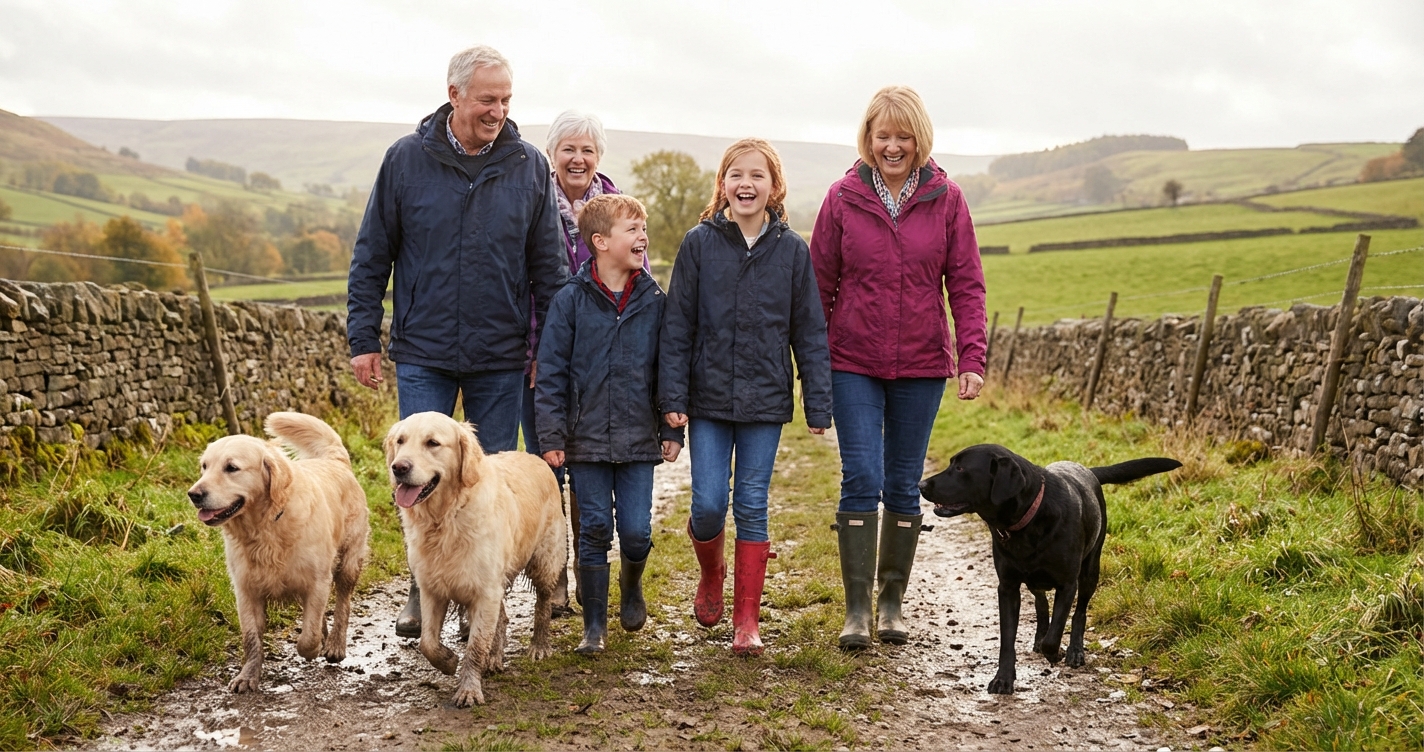
The telly and the internet are full of idyllic scenes: a perfectly groomed Golden Retriever playing fetch with smiling children in a sun-drenched garden. It’s a lovely thought, but here in the Peak District, the reality is often a bit… muddier. Just this morning, my board of directors were in session. Buster, the Labrador, was conducting a thorough investigation of a crumb under the table. Fern, my whirlwind of a Spaniel, was using the living room as a personal racetrack, and Margo, the rescue cat, was presiding over it all from her throne on the radiator, silently judging us. A truly ‘good family dog’ isn’t just about looks; it’s about fitting into the glorious, unpredictable chaos of real family life.
Before we dive into the list, let’s get our wellies on and wade through what really matters. It’s not about finding a ‘perfect’ dog, but the perfect dog for your pack. Forget the perfect pedigrees for a moment and consider these core traits:
- Temperament: You’re looking for a dog with a patient and forgiving nature. One that won’t get flustered by a toddler’s clumsy pat or a teenager’s sudden burst of loud music. A steady, good-humoured personality is worth its weight in gold.
- Energy Level: This is a big one. Be brutally honest with yourself. Are you a family of fell walkers, out in all weathers? Or is your idea of a big day out a potter to the local pub? Matching a dog’s energy to your lifestyle is the secret to a happy home. A bored dog is often a destructive one.
- Trainability: A dog that’s eager to please and picks things up quickly makes life much simpler. This isn’t about performing complex tricks, but about mastering the basics like ‘stay’, ‘come’, and ‘for the love of biscuits, drop that questionable sock’.
- Size: It seems obvious, but it’s not just about whether a massive Newfoundland will fit on your sofa. A large, boisterous dog can accidentally knock over a small child, while a tiny dog might feel overwhelmed and snappy in a noisy, boisterous household.
Our Top Picks: The Best Dog Breeds for Family Life
Right then, the kettle’s on. Let’s run through some of the most popular candidates for joining a family. I’ve given each one a ‘Mud Test’ score – a thoroughly unscientific but brutally practical rating on how much of the outdoors they’re likely to bring inside with them.
1. The Labrador Retriever: The Old Faithful
At a Glance:
- Temperament: Friendly, Outgoing, Patient
- Size: Medium to Large
- Energy Level: High
- Grooming: Moderate (they shed, oh boy do they shed)
The Lowdown: There’s a reason the Labrador is a firm family favourite. They possess a boundless optimism and a gentle nature that’s hard to beat. My own Buster is a prime example; his tail is a permanently wagging metronome of happiness. They are famously good with children and generally accepting of other pets (even radiator-hogging cats like Margo). Their intelligence and desire to please make them highly trainable.
The Mud Test: 4/5. Their love of water and thick, water-resistant coat means they are expert puddle-finders. Expect muddy paws and a perpetually damp-dog smell in the boot of the car.
Best For: Active families with a garden who want an all-round, dependable companion for walks, games, and sofa snuggles.
2. The Golden Retriever: The Gentle Soul
At a Glance:
- Temperament: Intelligent, Friendly, Devoted
- Size: Medium to Large
- Energy Level: High
- Grooming: High (that beautiful coat needs work!)
The Lowdown: If a Labrador is your cheerful mate down the pub, the Golden is the sensitive, intelligent friend who always knows how to cheer you up. They are incredibly patient and gentle, making them a fantastic choice for families with younger children. They are true people-pleasers and thrive on being at the heart of the family.
The Mud Test: 5/5. That glorious, feathery coat is a magnet for burrs, twigs, and a substantial amount of mud. A good grooming kit is not an optional extra.
Best For: Families who can commit time to grooming and training, and want a loving, devoted dog to join them on all their adventures.
3. The Beagle: The Merry Explorer
At a Glance:
- Temperament: Merry, Curious, Friendly
- Size: Small to Medium
- Energy Level: High
- Grooming: Low
The Lowdown: Beagles are powered by their noses and operate on the principle that the greatest adventure is just one sniff away. They are cheerful, sturdy little dogs that were bred to work in packs, so they typically adore being part of a family unit. They are brilliant with children and their smaller size makes them a bit more manageable for some.
A key takeaway: That fantastic nose can get them into trouble! Their recall can be ‘selective’ if they catch a scent, so a secure garden and diligent lead training are essential.
The Mud Test: 2/5. Their short coat is wash-and-wear. They clean up easily, but you’ll spend more time trying to stop them from eating something dubious they’ve found.
Best For: A family with a very secure garden and a good sense of humour. Someone who enjoys a long walk and doesn’t mind a dog with a one-track mind (and nose).
4. The Boxer: The Playful Guardian
At a Glance:
- Temperament: Fun-Loving, Patient, Protective
- Size: Medium to Large
- Energy Level: High
- Grooming: Low
The Lowdown: Don’t let their stern look fool you; Boxers are the clowns of the dog world. They are bouncy, endlessly playful, and deeply loyal to their families. They can be protective, but they are known for being exceptionally patient and gentle with children. They maintain a puppy-like exuberance well into their adult years.
The Mud Test: 1/5. With their short, sleek coat, a quick wipe-down with a towel is usually all that’s needed. They are remarkably low-maintenance in the grooming department.
Best For: An energetic family that loves to play. Boxers need plenty of exercise to keep their boisterous nature in check.
5. The Standard Poodle: The Clever Clogs
At a Glance:
- Temperament: Proud, Smart, Trainable
- Size: Medium to Large
- Energy Level: Medium to High
- Grooming: Very High (and potentially pricey)
The Lowdown: Forget the frou-frou show cuts. Beneath that fancy hairdo is a whip-smart, capable, and surprisingly rugged dog. Poodles were originally water retrievers. They are incredibly intelligent, easy to train, and have a playful, goofy streak. Their non-shedding coat is a huge bonus for families with allergies.
The Mud Test: 3/5. They don’t shed mud around the house, but their curly coat acts like a sponge. Every puddle and muddy patch will be soaked up and brought home for you to deal with.
Best For: Families who can commit to the cost and time of professional grooming, and want an intelligent, active, and hypoallergenic companion.
6. The Border Collie: The Peak District Champion
At a Glance:
- Temperament: Tenacious, Intelligent, Energetic
- Size: Medium
- Energy Level: Extremely High
- Grooming: Moderate
The Lowdown: You can’t live around here without having a deep respect for the Collie. They are arguably the most intelligent dog breed, but that brain needs a job. This is not a dog for a quiet life. They need immense amounts of physical exercise and mental stimulation. For the right family, they are unparalleled companions – loyal, intuitive, and unbelievably athletic.
The Mud Test: 4/5. Built for the fells, they are not afraid of bad weather. Their coat can hold a surprising amount of bog water and sheep-related muck.
Best For: Very active, outdoorsy families who are interested in dog sports like agility or flyball. Not a good choice for first-time owners.
What About Rescue Dogs? The Case for the Magnificent Mutt
Now, I’ll get off my soapbox for a moment, but this is important. While lists of pedigrees are useful, please don’t overlook your local rescue centre. They are full of the most wonderful crossbreeds and mongrels just waiting for a second chance. A ‘mutt’ often has the benefit of hybrid vigour, meaning fewer inherited health problems, and their personalities are already formed. The staff at a good rescue are experts at matchmaking and can tell you honestly if a dog is good with children, cats, or postmen. Giving a rescue dog a home is one of the most rewarding things you can do.
The Checklist Before You Commit
Found a breed you like the sound of? Excellent. Before you start looking at puppies, have an honest family meeting and run through this list. Getting a dog is a 10-15 year commitment, not a whim.
- Time: Who will walk the dog in the pouring rain? Who will do the training? Who will feed it?
- Cost: It’s not just the purchase price. Think food, insurance, vet bills, grooming, bedding, toys… it all adds up.
- Space: Do you have a secure garden? Is your home big enough for the breed you’re considering?
- Holidays: What will you do with the dog when you go away? Kennels or dog-sitters need to be factored into your budget.
The Final Verdict from the Pardon My Pet Pack
Choosing the right dog is less about the breed and more about the fit. The ‘best’ family dog is one whose energy, temperament, and needs are a perfect match for your own family’s unique rhythm. Whether it’s a pedigreed pup or a rescue rogue, do your research, be honest about your lifestyle, and you’ll find a loyal, loving friend who will make your family feel complete. Now, if you’ll excuse me, I think I hear the biscuit tin rattling. That’s the board of directors calling for their afternoon tea.

Related Posts