The “Greeting Stretch”: Your Dog’s Way of Saying Hello
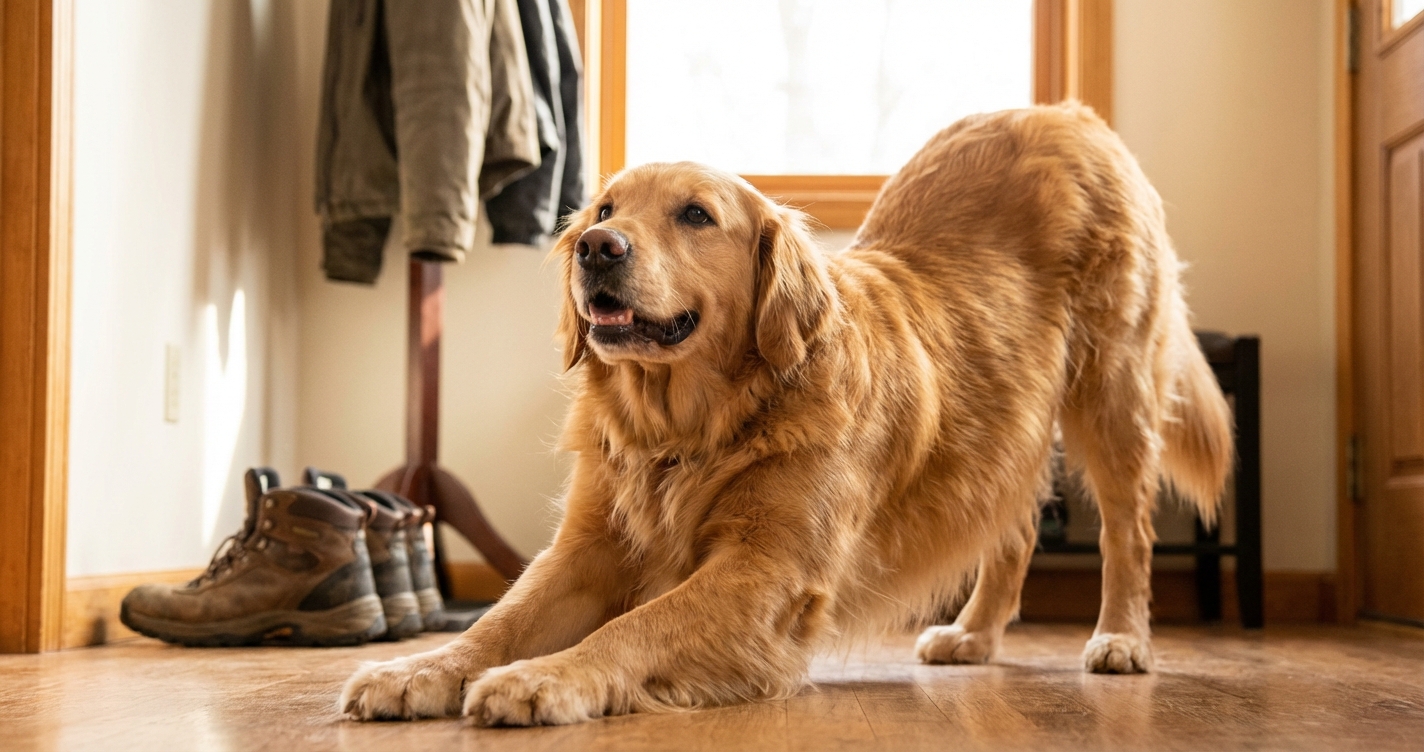
There’s nothing quite like coming through the door after a long day. You kick off your muddy boots, hang your coat, and there they are: your four-legged mate, giving you the most enormous, satisfying stretch. Front legs out, back arched, sometimes with a little groan for good measure. It’s a familiar sight for most of us dog owners, but what’s really going on behind that big welcome?
More often than not, this is what’s known as the “greeting stretch.” It’s a deliberate piece of body language reserved for people (and sometimes other dogs) they feel completely comfortable with. Think of it less as a muscle-loosener and more as a heartfelt compliment. It’s your dog’s way of saying, “Hello, I’m so happy you’re here, and I feel totally safe and relaxed in your company.”
It’s a vulnerable position, and by doing it in front of you, they’re showing an immense amount of trust.
5 Reasons Behind Your Dog’s Welcoming Stretch
While trust and affection are the main drivers, that big stretch can communicate a few different things. It’s usually a mix of these five key reasons:
- A Sign of Pure Affection: At its core, the greeting stretch is a sign of a strong bond. It’s a peaceful, non-threatening gesture that simply says, “I’ve missed you, and I’m glad you’re back.”
- Limbering Up for Action: Your arrival often means something good is about to happen—a walk, a game of fetch, or at least a good fuss. That stretch is their way of getting their muscles ready for whatever fun is coming next.
- A Self-Soothing Signal: Dogs use stretching to release tension. The sheer excitement of you returning can be a lot to handle, so a good stretch helps them to manage that happy energy in a calm way.
- It’s a Learned Behaviour: Your dog is no fool. They’ve likely learned that every time they perform this adorable stretch, they get a positive reaction from you—a pat on the head, a kind word, or a good scratch behind the ears. So, they keep doing it!
- Simple Post-Nap Relief: Sometimes, the simplest answer is the right one. If you’ve woken them up or they’ve been snoozing while you were out, they’re just shaking off the sleep and getting the blood flowing, much like we do first thing in the morning.
Is It a Greeting or a “Play Bow”? Key Differences
It’s easy to confuse the greeting stretch with another common canine posture: the play bow. Both are positive signals, but they have very different meanings. Getting to know the difference can tell you a lot about your dog’s mood.
Look out for these key signs:
The Greeting Stretch
- Pace: Slow, lazy, and relaxed.
- Posture: A full-body stretch, often with the back legs staying relatively straight. It might be paired with a soft groan or a big yawn.
- Mood: Calm, happy, and content.
The Play Bow
- Pace: Quick, sudden, and energetic.
- Posture: The classic “bum in the air” pose. Front end down, back end up, and usually accompanied by a wildly wagging tail and bright, excited eyes.
- Mood: Playful and ready for a chase. It’s an unmistakable invitation to a game.
How Should You Respond to Your Dog’s Stretches?
Right then, what’s the best way to react? The key is to keep things calm and positive to reinforce that lovely, relaxed greeting.
- Acknowledge them gently: A soft, happy tone of voice is perfect. “Hello, you sleepyhead” or “Alright, mate?” works a treat.
- Offer a gentle fuss: A slow stroke down their back or a scratch under the chin is a great way to return the affectionate greeting.
- Avoid over-the-top excitement: Rushing in with high-pitched squeals and frantic petting can turn a calm greeting into a chaotic one. Match their relaxed energy.
When Stretching Could Signal a Problem
While 99% of the time that stretch is a good thing, there is a specific posture to keep an eye on. Sometimes, a dog will hold a stretch that looks like a play bow for a prolonged period. This is often called the “prayer position” and can be a sign of abdominal pain.
This posture can be an attempt to relieve pressure in their stomach, and it’s often linked with conditions like pancreatitis. It’s not a cause for instant panic, but something to be aware of.
A quick checklist for when to ring the vet:
- Is your dog holding this “prayer” position frequently or for long periods?
- Are they off their food, lethargic, or vomiting?
- Do they yelp or seem uncomfortable if you touch their tummy?
- Does their stomach seem tight or bloated?
Key Takeaway: If you spot the prayer position combined with any of these other signs, it’s best to give your vet a call for some proper advice.
A Vet’s View: Your Stretching Questions Answered
We’ve rounded up some common questions people have about their dog’s stretching habits.
Why does my dog stretch and yawn at me?
This is often the ultimate combination of contentment. The yawn signals they are relaxed (or a bit tired!), and the stretch is their happy hello. It’s a double-whammy of affection.
Do all dogs do the greeting stretch?
Most do in some form, but every dog has a unique personality. Some are more reserved, while others are incredibly expressive. Don’t worry if your dog has a different way of saying hello, like bringing you a toy or just leaning against your legs.
My dog stretches on his back and wriggles. What does that mean?
This is a display of ultimate trust! Exposing their belly is the most vulnerable a dog can be. If they’re greeting you by rolling over and wriggling, they’re showing you they feel completely safe and are probably angling for a good belly rub.

Related Posts