A Peak District Guide to Defeating Canine Confetti in Your Car
The other week, I offered a lift to a friend. A rare occasion where a human would be in the passenger seat, not a dog. I opened the door and was met with a moment of pure horror. The seat, the footwell, the dashboard… everything was covered in a fine layer of what I lovingly call ‘canine confetti’. A mixture of Buster’s thick Lab fur and Fern’s finer, more wiry Spaniel hair, woven into the fabric like it was part of the original manufacturing process. It’s a familiar sight for any dog owner, that fluffy testament to every muddy walk and happy trip out.
Getting it all out can feel like a losing battle, but after years of trial and error (and a fair bit of grumbling), I’ve cobbled together a system that actually works. Forget fancy gadgets you’ll use once; this is a no-nonsense guide to reclaiming your car from the fluff. So, grab a brew, and let’s get that motor back to its former glory.
Your Essential Dog Hair Removal Toolkit
Before you dive in, having the right gear to hand makes all the difference. You don’t need to spend a fortune, but a few key items are non-negotiable in the war against fur.
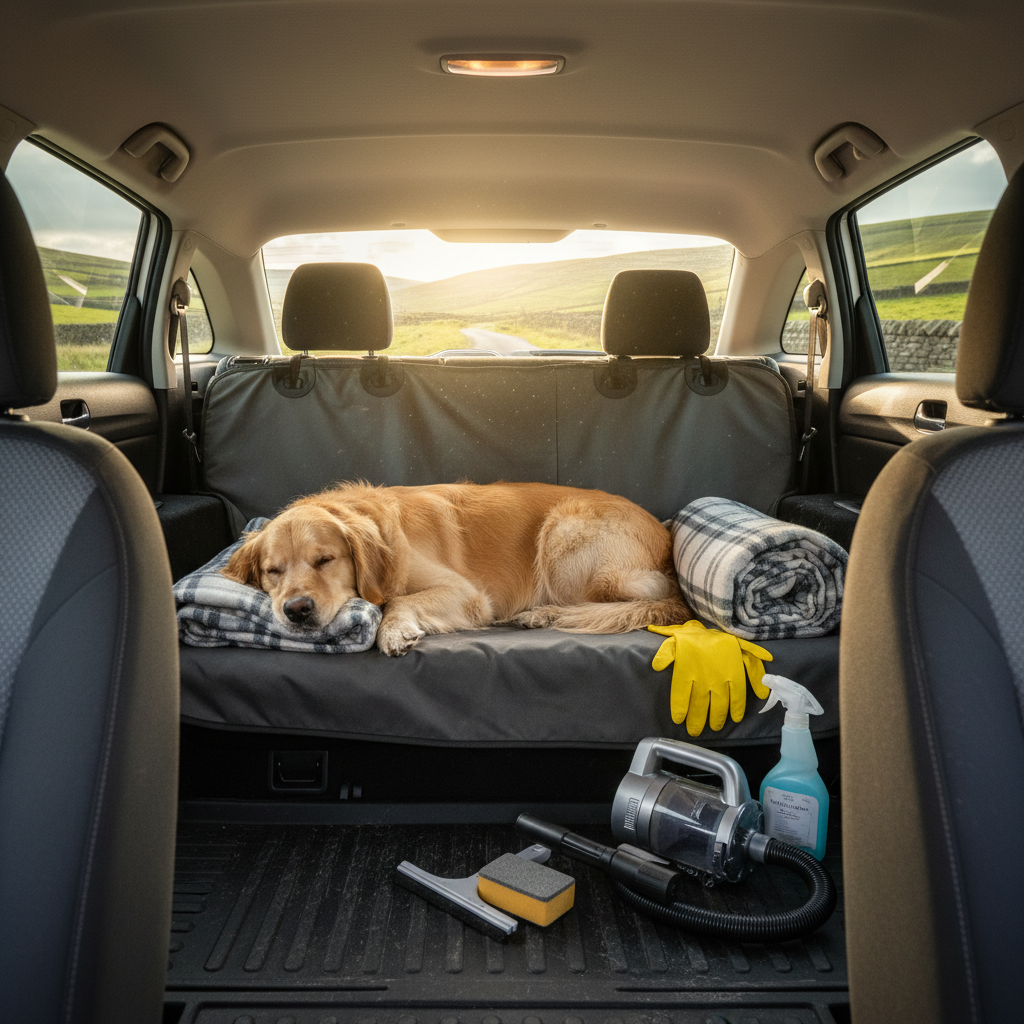
- A Powerful Hoover: A good vacuum is your best mate here. One with strong suction and a few attachments is ideal. A crevice tool for the awkward bits and a brush head are essential. A cordless one is handy, but a corded one often has more grunt.
- Rubber Gloves: Just your standard pair of washing-up gloves. The texture is brilliant for gripping and pulling hair from fabric seats.
- A Squeegee or Pumice Stone: A simple window squeegee or a detailing pumice stone (often sold as a ‘pet hair remover’) works wonders on carpets and boot liners by pulling embedded hairs to the surface.
- A Stiff Brush: For really stubborn, woven-in hairs, a small, stiff-bristled brush can help to agitate and loosen them before you hoover.
- Microfibre Cloths: Perfect for wiping down plastic surfaces where statically charged hairs love to cling.
- A Spray Bottle: To be filled with a simple water and fabric softener solution.
A Systematic Process for a Spotless Interior
Right, here’s the secret: it’s not about one magic trick, it’s about a methodical approach. Don’t just start scrubbing. Follow these steps in order, and you’ll save yourself a lot of time and effort.
Step 1: The First Hoover & Air Blast
Before you do anything else, give the entire interior a thorough hoovering. The goal here isn’t perfection; it’s to remove all the loose surface hair, dust, and general muck. Use your crevice tool to get down the sides of the seats and into tight corners. If you have access to one, a can of compressed air is fantastic for blasting hair out of air vents and other fiddly areas before you hoover it up.
Step 2: The Fabric Softener Spray Trick
This is a game-changer for loosening hair that’s stubbornly woven into the fabric.
- The Mix: Mix one part fabric softener with about 8-10 parts water in a spray bottle. Don’t make it too strong.
- The Application: Lightly mist the carpets and fabric seats. You want them slightly damp, not soaking wet.
- The Science Bit: The fabric softener helps to relax the fibres of the material and also reduces the static charge, releasing the hair’s death grip on your upholstery. Let it sit for a few minutes.
Step 3: Loosen and Gather the Embedded Hair
Now that the hair is loosened, it’s time to get it out. You’ve got a few options here, depending on the surface. Pick one and get to work pulling the hair into manageable piles.
- The Rubber Glove Technique: Pop on a pair of rubber gloves, dampen them slightly, and simply wipe your hands across the fabric seats. The friction and texture of the rubber will magically bunch the hair up into clumps. It’s surprisingly effective.
- Using a Squeegee: For carpets and the boot liner, a simple window squeegee is brilliant. Use short, firm strokes to drag the hair into a pile. You’ll be shocked at how much comes out.
- The Power of a Pumice Stone: For really tough, needle-like hairs (hello, Fern the Spaniel), a specialist pet hair pumice stone is top-tier. Use it gently on carpets as it can be abrasive, but it’s unbeatable for pulling out the most deeply embedded stuff.
A Quick Word on Balloons & Tape: You might see people online rubbing balloons on their seats to use static electricity. Honestly, it’s a bit of a faff and doesn’t work half as well as the gloves. Duct tape or a lint roller can be handy for a final once-over on a small patch, but it’s not practical for cleaning the whole car.
Step 4: The Final, Crucial Hoover
You’ve done the hard work of pulling all the hidden hair to the surface. Now, go over the entire interior again with the hoover. This time, you’ll suck up all those lovely piles of fur you created. The difference after this second pass is immense. This is the step that takes your car from ‘decent’ to ‘spotless’.
Proactive Prevention: How to Keep Your Car Cleaner for Longer
Once you’ve got it clean, you’ll want to keep it that way for as long as possible. A bit of prevention is worth a mountain of cure.
- Seat Covers & Boot Liners: This is the single best thing you can do. A good, washable seat cover or a heavy-duty rubber boot liner is an absolute must. It contains the majority of the mess and can be taken out and shaken or washed easily.
- Regular Grooming: Giving your dog a good brush before they get in the car, especially during shedding season, can drastically reduce the amount of hair that ends up on your seats. Buster gets a 5-minute brush-down before any long journey.
- Keep a Towel Handy: An old towel in the boot is great for a quick paw-wipe or for them to lie on, adding another layer of protection.
Frequently Asked Questions about Dog Hair Removal
What is the quickest method for removing dog hair?
For a quick tidy-up, the dampened rubber glove method is the fastest way to get a noticeable amount of hair off fabric seats. It takes seconds to grab a glove, wipe the seat, and see a big improvement.
How do professional detailers get cars so hair-free?
Professionals use a combination of the methods listed above, but with more powerful tools. They typically use high-powered vacuums, compressed air to blow out every crevice, and specialised rubber or stone-like brushes (like the pumice stone) to meticulously work every square inch of fabric before a final, thorough vacuuming.
Are there any surfaces I should avoid using certain tools on?
Yes, definitely. Be very careful with a pumice stone or a stiff wire-style brush on delicate upholstery or leather seats – they can easily cause damage. Stick to using them on tough, durable carpets and boot liners. Always test any tool on a small, inconspicuous area first if you’re unsure.

Related Posts