The Unmistakable Sound of Carpet Calamity
There are few sounds that can jolt a dog owner from a deep sleep, or make them leap from the sofa, quite like the pre-vomit ‘heave-ho’. You know the one. That guttural, rhythmic churning that signals imminent doom for the nearest patch of carpet. It’s a moment of pure, adrenaline-fueled panic as you try to shove a newspaper under their nose, usually a split-second too late.
Right then. Don’t panic. The damage is done, but it’s not permanent. Cleaning up dog sick from a carpet isn’t the most glamorous job, but with the right approach, you can get it looking (and smelling) right as rain. Let’s get stuck in.
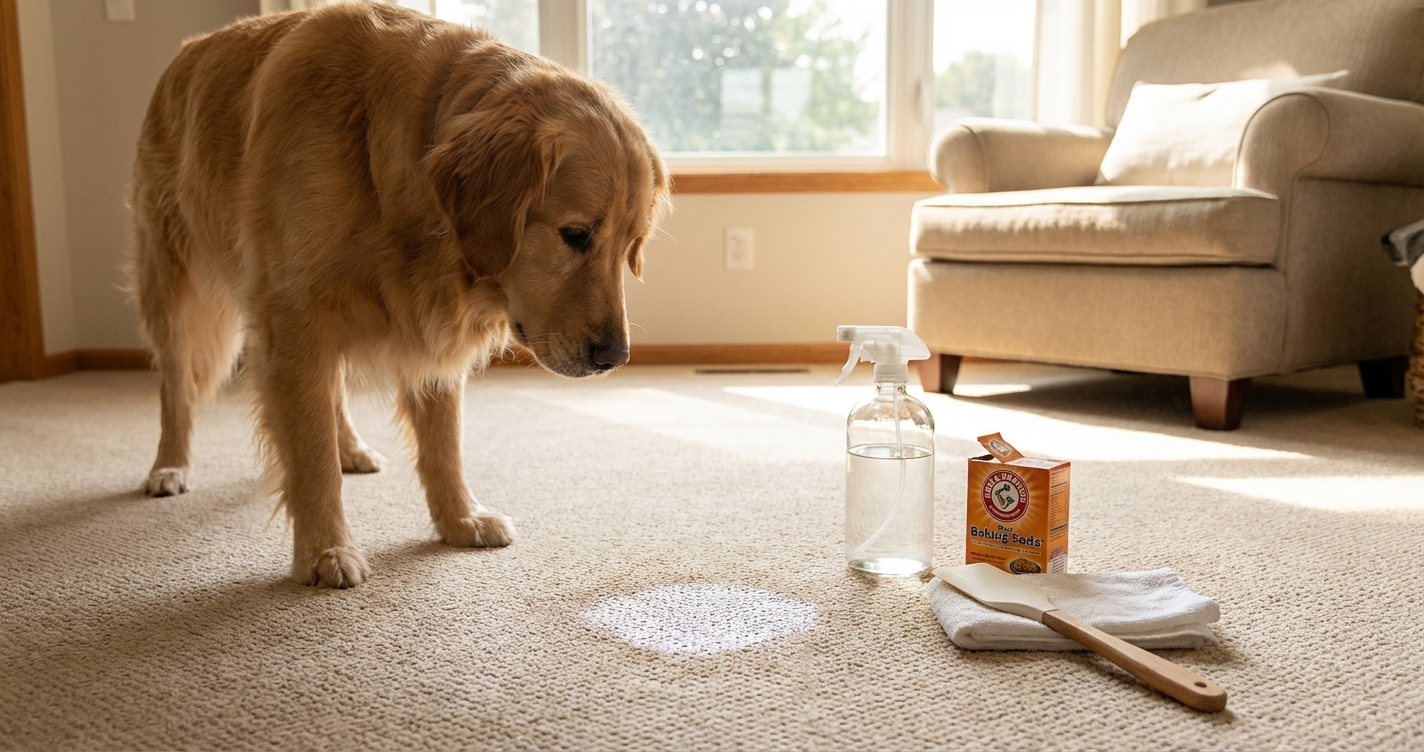
Your Vomit-Busting Toolkit
Before you start, get your gear together. Fumbling around in cupboards while the stain sets in is no good to anyone. Here’s your basic arsenal:
- Something to scrape with (a dustpan edge or an old spatula works a treat)
- Kitchen roll or old, clean cloths
- Bicarbonate of soda (baking soda)
- Plain white vinegar
- Warm water
- A spray bottle
- An old towel
The “Fresh” Incident: Cleaning Up Immediately
Acting fast is your best bet for avoiding a lasting stain. If you’ve caught the culprit in the act, here’s what to do, step-by-step.
Step 1: Remove the Solids
This is the grim bit. Using your scraper, lift as much of the solid material off the carpet as you can. Scrape from the outside of the mess inwards to avoid spreading it further. Plop it straight in the bin.
Step 2: Blot, Don’t Rub!
Take a wad of kitchen roll or a clean, absorbent cloth and gently blot the damp area. The goal here is to lift the moisture out of the carpet fibres. Whatever you do, don’t scrub or rub. This will only push the stain deeper into the carpet’s pile and make your job ten times harder.
Step 3: Apply a Cleaning Solution
You don’t need fancy chemicals for this. A simple homemade solution is often best. Mix a solution of 50/50 white vinegar and warm water in your spray bottle. Lightly spritz the affected area – don’t soak it. Let it sit for about five minutes to work its magic on the stain.
Step 4: Blot, Rinse, and Repeat
Using a new, clean cloth, blot the area again to soak up the vinegar solution and the dissolved stain. Next, dampen another cloth with a bit of plain water and blot the area one more time to ‘rinse’ out any remaining vinegar. Finally, press a dry towel firmly onto the spot to absorb as much moisture as possible.
The “Dried-On” Discovery: Tackling Set-In Stains
Sometimes you don’t find the little ‘present’ until it’s a dried-on, crusty patch. The approach is slightly different, but just as manageable.
- Scrape the Crust: First, scrape away all the dried, solid bits. A good hoovering afterwards will pick up any dusty remnants.
- Dampen and Soften: Spray the stain with your 50/50 vinegar and water solution. You need to rehydrate the stain to make it workable. Let it sit for 10-15 minutes to properly soften up.
- Blot and Clean: From here, the process is the same as for a fresh stain. Blot the area with a clean cloth, re-apply the cleaning solution if needed, and follow with a final water rinse-blot.
Banishing That Lingering Pong
Even after the stain is gone, a faint, sour smell can linger. This is where bicarbonate of soda proves its worth.
- Key Takeaway: Once the carpet patch is completely dry to the touch, sprinkle a generous layer of bicarb over the entire area.
- Don’t be shy with it; you want a good covering.
- Leave it to sit for at least a few hours, or even overnight if you can. The bicarb will absorb any remaining moisture and neutralise the odour particles.
- Simply hoover it all up afterwards. Job done.
Kitchen Cupboard vs. Shop-Bought: Which Cleaner is Best?
The eternal question: do you stick with the homemade stuff or buy a specialist cleaner? Here’s the practical take.
- Homemade (Vinegar & Bicarb): It’s cheap, you’ve probably already got it, and it’s effective for most common incidents. It’s a fantastic first line of defence.
- Enzymatic Cleaners: These are cleaners you buy from a pet shop. They contain enzymes specifically designed to break down the proteins in organic matter like vomit. They are brilliant for stubborn stains and odours and are a good thing to have in the cupboard for serious emergencies.
When to Wave the White Flag (And Call a Pro)
Sometimes, you have to admit defeat. It might be time to call a professional carpet cleaner if:
- The stain is on a delicate carpet like wool or silk.
- You’ve tried everything and the stain or smell just won’t budge.
- The mess is particularly large and you feel out of your depth.
There’s no shame in it; some jobs are just too big for a bit of kitchen roll and elbow grease.
A Quick Word on Your Dog’s Wellbeing
Right, now the carpet’s sorted, let’s talk about the dog. Cleaning up is one thing, but it’s also important to have a sense of when vomiting might be more than just a case of eating grass too quickly.
Disclaimer: We’re not vets, and this is no substitute for professional advice. If you’re ever worried, the best thing to do is ring your local vet. That said, here are a few things to observe:
- Frequency: Is this a one-off, or are they being sick repeatedly?
- Colour: Look at the vomit (before you clean it up!). Yellow bile, white foam, or any sign of blood (red or black ‘coffee grounds’) is worth noting.
- Behaviour: Is your dog acting normally, or are they lethargic, refusing food, or seem to be in pain?
A single pile of sick from a dog who is otherwise happy and bounding about is usually nothing to worry about. But if they’re being sick often, or it’s accompanied by any other symptoms, a quick call to the vet for peace of mind is always the sensible choice.

Related Posts