
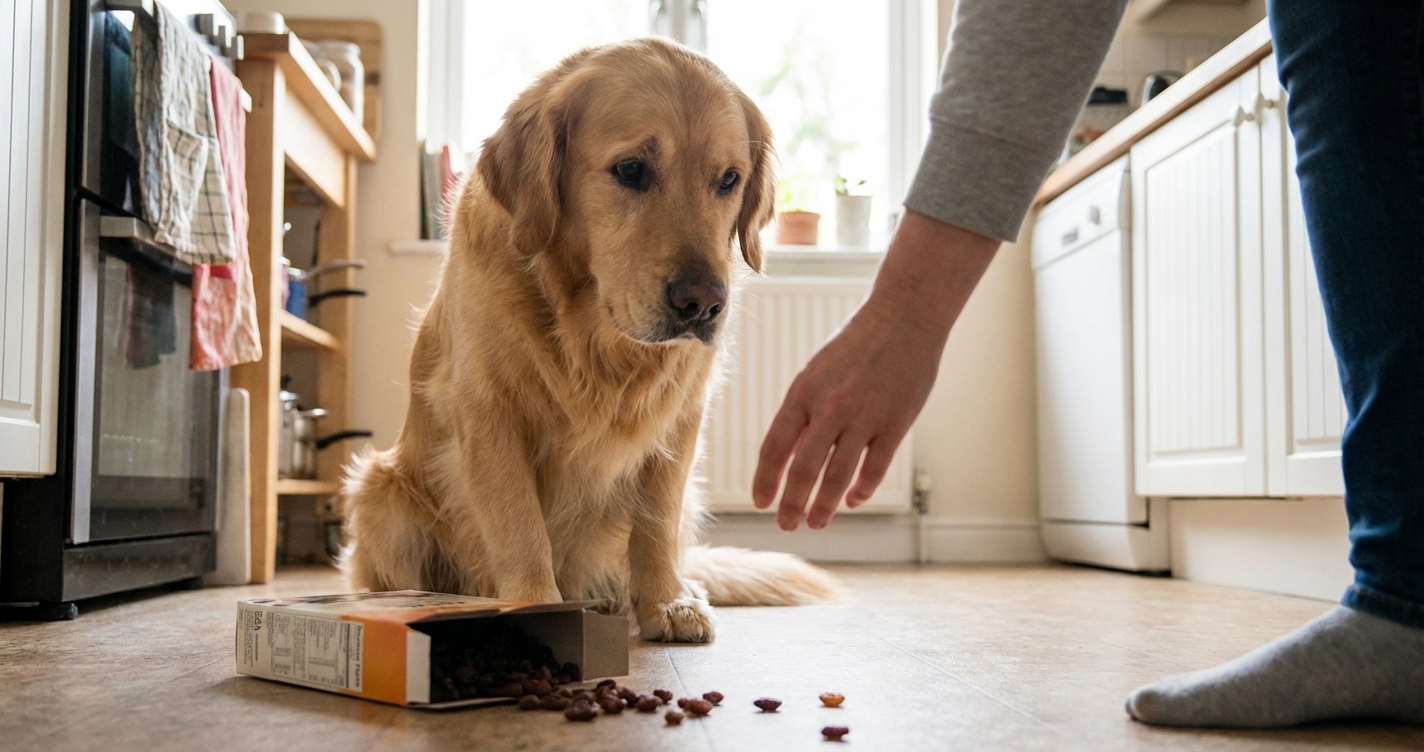
My Dog Just Ate a Raisin. Should I Panic?
It’s a heart-stopping moment, isn’t it? One second you’re enjoying a slice of fruit loaf, the next a stray raisin has tumbled to the floor and been snaffled up by the dog before you can even shout “Leave it!”. Or perhaps the kids left a cereal box out. Suddenly, your mind is racing with half-remembered warnings. Are raisins really that bad? Was it just one? It’s enough to send anyone into a right tizz.
Right, let’s get straight to it. If your dog has eaten a raisin, grape, or currant, the short answer is: yes, this could be an emergency. The best thing you can do is act quickly.
What To Do Immediately
- Stop them eating any more. Remove your dog from the area and secure any remaining raisins or grapes.
- Ring your vet. Now. This is the most crucial step. Don’t wait for symptoms to appear. Find the number and call them, even if it’s out of hours. They need to know what was eaten, how much (a rough guess is fine), and how long ago it happened.
- Do NOT try to make your dog sick yourself. Inducing vomiting at home can be dangerous and should only be done under the specific direction of a veterinary professional.
Why Are Raisins So Dangerous for Dogs?
For a long time, nobody was quite sure why these harmless-looking little fruits were so toxic to dogs. Recent research, however, points the finger at tartaric acid. Humans can process it just fine, but in some dogs, it can lead to sudden, severe health problems.
The main concern with raisin or grape ingestion is acute kidney failure. The toxin can cause severe damage to the kidneys, sometimes leading to them shutting down completely. This is as serious as it sounds, which is why a swift response is absolutely vital.
- Key Takeaway: Raisins, grapes, and currants contain a substance (likely tartaric acid) that is highly toxic to dogs and can cause the kidneys to fail.
But It Was Only One Raisin! How Many Are Toxic?
This is the million-pound question, and frustratingly, there’s no single answer. The scary truth is that the toxic dose is unknown. There is no established number of raisins that is ‘safe’.
Some dogs have eaten a handful and shown no ill effects, while others have become critically ill after swallowing just one or two. It seems to depend on the individual dog’s sensitivity and perhaps the specific batch of fruit. Because the reaction is so unpredictable, every single instance of ingestion must be treated as potentially poisonous.
- The Bottom Line: There is no ‘safe’ amount. The size of your dog doesn’t guarantee safety either. A single raisin could be enough to cause serious harm.
Signs of Raisin Poisoning to Watch For
If your dog has eaten a raisin, your vet will be your primary source of advice. However, it’s useful to know the signs. Symptoms typically develop within 6 to 12 hours of the dog eating the fruit.
Early Symptoms (First 24 hours)
- Vomiting (this is often the first sign)
- Lethargy, weakness, or unusual quietness
- Diarrhoea
- Loss of appetite
- Dehydration
More Severe Signs (24-48 hours later)
- Abdominal pain (your dog might yelp if you touch their belly)
- A significant decrease in urination, or stopping altogether (anuria)
- Increased thirst
These later signs can indicate that the kidneys are failing, which is why early veterinary intervention is so important to try and prevent this from happening.
How Vets Treat Raisin Ingestion
When you get to the clinic, the vet’s first job is to stop the toxin from being absorbed into your dog’s system. This is a race against time.
Common treatments include:
- Induced Vomiting: If the raisin was eaten recently (within a couple of hours), the vet can give an injection to make your dog sick and bring it back up.
- Activated Charcoal: This is a black liquid that binds to any remaining toxins in the stomach, preventing them from being absorbed into the bloodstream. Your dog might look like they’ve been mucking about in a coal mine, but it’s brilliant stuff.
- Intravenous Fluids: The vet will likely put your dog on a drip. This helps to flush the toxins through the system and supports the kidneys to keep them functioning.
- Blood Tests: Your vet will need to run blood tests to monitor how well the kidneys are working over the next few days.
Keeping Your Dog Safe: A Bit of Prevention
The best cure is, of course, prevention. It sounds like common sense, but in a busy house, it’s surprisingly easy for things to get within a dog’s reach.
- Check the Label: Raisins hide in all sorts of places – bread, biscuits, cereals, and snack bars. Get into the habit of checking ingredients before sharing any human food.
- Secure Storage: Keep baking supplies and snacks in high cupboards or securely sealed containers.
- Rubbish Bins: Make sure your kitchen bin has a dog-proof lid, especially after baking or clearing away plates.
- Educate Everyone: Make sure family members and visitors know that raisins and grapes are a strict no-go for the dog.
Frequently Asked Questions
Are grapes just as bad as raisins?
Yes. Raisins are just dried grapes, so they contain the same toxic substance, just in a more concentrated form. Grapes, raisins, currants, and sultanas are all in the same dangerous category.
What about cooked raisins in fruitcake or bread?
Cooking does not destroy the toxin. A raisin in a scone or a slice of Christmas cake is just as dangerous as one straight from the box. Be extra vigilant around festive periods!
My dog ate a raisin yesterday and seems fine. Are we in the clear?
Not necessarily. While some dogs get lucky, symptoms can be delayed. The safest course of action is still to ring your vet for advice. They may suggest a blood test to check kidney function just to be on the safe side.

Related Posts