That Lingering Puddle: More Than Just a Nuisance?
The other evening, I was settling down with a brew, feet up by the fire. Fern, my high-octane Spaniel, was dreaming of chasing squirrels, and Margo the cat had claimed her usual spot on the warmest radiator. All was calm. Then I caught it – that faint, sharp, unmistakable whiff. A quick search behind the armchair confirmed my fears: Buster, my food-obsessed Lab, had left a little ‘present’. As I reached for the kitchen roll, the thought struck me, as it probably has you: is this stuff actually bad for me, or is it just a bit grim?
Let’s be honest, dealing with dog wee is part of the job description when you have a four-legged friend. But when you’re on your hands and knees scrubbing the carpet for the third time this week, it’s natural to wonder about the health side of things. Down here in the Peak District, where mud and muck are a way of life, we like to be practical. So, let’s get the wellies on and wade into the facts about dog urine and whether it can make you sick.
The Sharp Smell: Unpacking the Problem with Ammonia
Fresh dog urine doesn’t smell too offensive, but give it a bit of time and it develops that eye-watering, throat-catching stench. That’s ammonia. Dog wee contains a substance called urea, and as bacteria gets to work on it, it breaks down and releases ammonia gas. In a well-ventilated space, a single puddle isn’t a major cause for alarm. However, in a home with repeated accidents or poor airflow, the build-up can become a real problem.
Breathing in high concentrations of ammonia fumes can certainly irritate your respiratory system. It’s not just an unpleasant smell; it’s a chemical irritant.
- What it feels like: You might experience a burning sensation in your nose, throat, and eyes. A persistent cough or wheezing can also be a sign that the ammonia levels are getting a bit much.
- Who’s most at risk: People with pre-existing respiratory conditions like asthma are particularly vulnerable. The fumes can trigger an asthma attack or worsen their symptoms. The very young, the elderly, and anyone with a weakened immune system should also be cautious.
Key Takeaway: While a one-off accident is unlikely to cause serious harm, chronic exposure to ammonia from old urine stains can irritate your lungs and is a genuine health concern, especially for vulnerable individuals.
The Hidden Danger: Let’s Talk About Leptospirosis
Right, this is the serious bit. While the ammonia issue is about fumes, there’s also a risk from direct contact, and the main concern here is a bacterial infection called Leptospirosis. It’s what’s known as a zoonotic disease, meaning it can be passed from animals to humans.
Leptospirosis is caused by bacteria that can be present in the urine of infected animals, including dogs. The bacteria can survive for weeks or months in water and soil. While it’s not incredibly common in people in the UK, it’s worth knowing about because it can be quite nasty if you do catch it.
How Could You Catch It?
Transmission from a dog to a human typically happens when infected urine comes into contact with your body, particularly through:
- Broken skin: A small cut, graze, or even a patch of eczema you didn’t know you had.
- Mucous membranes: Getting splashed in your eyes, nose, or mouth.
If you touch contaminated urine and then rub your eyes, you’re creating a pathway for the bacteria. This is why a proper clean-up is more than just about getting rid of the stain.
What are the Symptoms in Humans?
If a person does get sick, the symptoms often look a lot like the flu, which is why it can be missed. Keep an eye out for:
- High fever and chills
- A severe headache
- Nausea and vomiting
- Muscle aches
Important Note: If you start feeling unwell with flu-like symptoms after cleaning up a lot of dog urine, it is always a sensible idea to have a chat with your doctor and mention the potential exposure. It’s rare, but it’s best to be safe.
The Clean-Up Crew: A Guide That Passes the ‘Mud Test’
So, how do we handle these puddles safely and effectively? A quick spray and a wipe won’t cut it. To properly deal with dog urine, you need to tackle the bacteria and the chemicals that cause the lingering smell.
- Act Fast & Wear Gloves: The sooner you get to it, the better. Pop on a pair of rubber gloves to protect your hands from direct contact.
- Blot, Don’t Rub: Use a thick wad of kitchen roll or an old towel to soak up as much of the liquid as you possibly can. Press down firmly. Rubbing just spreads the wee deeper into the carpet fibres.
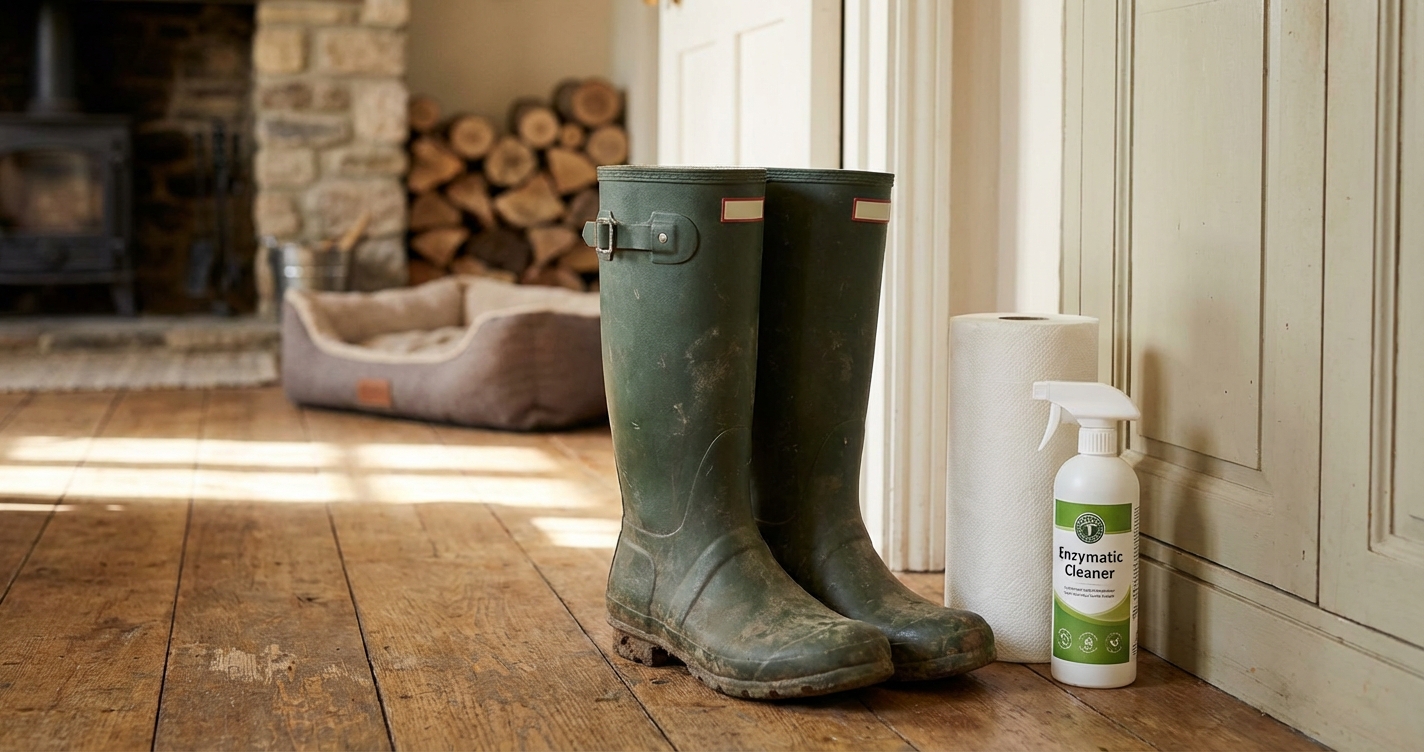
- Bring in the Specialist Cleaner: This is the crucial step. Normal household cleaners or soap and water won’t break down the uric acid crystals in the urine. These crystals are what release that ammonia smell later on. You need an enzymatic cleaner. These products contain special enzymes that literally eat the organic matter in the urine, eliminating the problem at its source rather than just masking it.
- Follow the Instructions: Soak the area thoroughly with the enzymatic cleaner (it needs to get as deep as the urine did) and let it do its work for the recommended time before blotting it dry.
When to Ring the Professionals
It’s important to know when to handle things yourself and when to get an expert involved.
- For Your Dog: If your well-housetrained dog suddenly starts having accidents, or if you notice them straining to wee, weeing more frequently, or see blood in their urine, don’t delay. These are all signs of potential health problems like a urinary tract infection (UTI) or bladder stones. A phone call to your vet is the right next step.
- For You: As mentioned, if you feel unwell after coming into contact with dog urine, especially with flu-like symptoms, a quick call to your GP for advice is never a bad idea.
At the end of the day, while there are some real, if uncommon, health risks associated with dog urine, a bit of knowledge and a good dose of common sense go a long way. For most of us, a puddle on the floor is just a smelly cleaning job. But by understanding the risks from ammonia and bacteria, and by cleaning up properly, we can keep our homes safe and hygienic for the whole pack – two-legged and four-legged members alike.

Related Posts