That Heart-Stopping Moment in the Kitchen
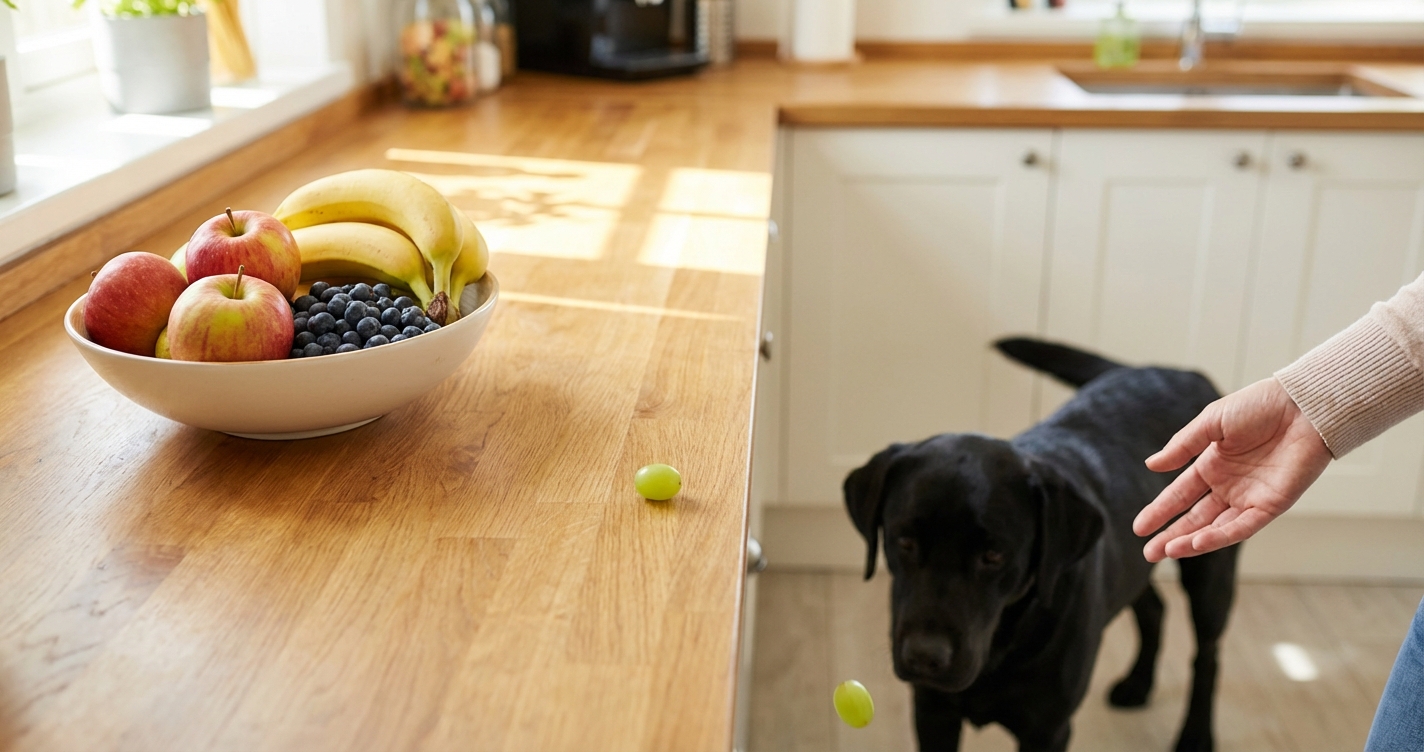
The other day, I was making a fruit salad – nothing fancy, just a bit of a pick-me-up. A single grape slipped from my fingers, bounced off the worktop, and began a slow-motion roll across the floor. Before I could even move, a black Labrador-shaped shadow, otherwise known as Buster, was already homing in on it like a guided missile. My heart did a proper leap into my throat. I managed to get there first, but it was a stark reminder of how quickly things can go wrong.
It’s a question that comes up a lot, and for good reason. So let’s get straight to it, no messing about:
Absolutely not. Dogs cannot and should not eat grapes. The same goes for their dried-up cousins: raisins, sultanas, and currants. To a dog, these seemingly harmless little fruits are incredibly toxic and can lead to severe, and sometimes fatal, health problems.
Why Are Grapes So Dangerous for Dogs?
For years, the exact reason for grape toxicity was a bit of a mystery. However, recent research points a very strong finger at tartaric acid. While humans can process this compound just fine, in dogs it can cause serious issues, most notably acute kidney failure.
Here’s the really tricky part that every dog owner needs to understand:
- The Dose is Unpredictable: There is no known ‘safe’ amount. For some dogs, a single grape has been enough to cause a catastrophic reaction. For others, it might take a whole bunch. You simply can’t risk it.
- It Affects All Kinds: This applies to all grapes – red, green, seedless, or with seeds. It also includes anything containing them, like fruit cake or hot cross buns.
- All Dogs Are at Risk: While some dogs may appear to eat a grape and be fine, the risk of a severe reaction is always there, regardless of the dog’s breed, size, or age.
Spotting the Signs: Symptoms of Grape Poisoning
If you suspect your dog has managed to snaffle a grape or raisin, you need to watch them like a hawk. Symptoms of poisoning can show up within a few hours. Keep a close eye out for any of the following:
- Vomiting or Diarrhoea: This is often one of the very first signs, usually within a couple of hours of ingestion.
- Lethargy and Weakness: Your dog might seem unusually tired, quiet, or depressed. Think of Fern, my usually bonkers Spaniel, suddenly not wanting to even look at her ball – that’s the level of out-of-character behaviour to watch for.
- Loss of Appetite and Abdominal Pain: They may refuse food and seem tender or sore around their tummy.
- Dehydration: Signs include a dry nose, pale gums, and panting. You might also notice they aren’t drinking or, conversely, are drinking an excessive amount.
- Changes in Urination: This is a critical sign of kidney trouble. They might stop weeing altogether or produce only a tiny amount.
My Dog Just Ate a Grape! What Should I Do?
Right, this is the practical bit. If you see it happen or even just suspect it, the key is to act immediately. Time is absolutely critical.
- Prevent Further Access: First things first, make sure there are no more grapes or raisins within reach. Get the dog away from the source of the problem.
- Contact Your Vet Immediately: Do not wait for symptoms to appear. Ring your vet straight away, day or night. Tell them what your dog has eaten, how much you think they ate, and how long ago it was.
- DO NOT Induce Vomiting Yourself: Please, don’t try any home remedies or attempt to make your dog sick unless your vet has explicitly instructed you to do so. Doing it incorrectly can cause more harm than good.
A key takeaway: Your vet is your best and only port of call. For extra peace of mind, you can also get advice from the UK’s Veterinary Poisons Information Service (VPIS), which your vet may consult, but your first call should always be to your local practice.
Safe and Tasty Alternatives
It’s not all doom and gloom! There are plenty of fruits that are perfectly safe and healthy for your dog to enjoy as an occasional treat. Buster and Fern are particularly partial to a few of these:
- Apple Slices (cores and pips removed)
- Blueberries (packed with antioxidants)
- Watermelon (seeds and rind removed)
- Banana (in moderation, as it’s high in sugar)
- Carrot sticks (not a fruit, I know, but a brilliant, crunchy snack)
Ultimately, keeping the fruit bowl out of reach and being vigilant is the best policy. It’s a simple bit of housekeeping that could save you, and your dog, a world of worry. Stay safe out there.

Related Posts