That Sinking Feeling: Finding a Nasty Mat in Your Dog’s Fur
There’s nothing quite like that feeling, is there? You’re giving your dog a proper fuss after a long, muddy stomp through the fields, and your fingers snag on it: a solid, tangled clump of fur. A proper, stubborn mat. My heart always sinks a bit. It looks uncomfortable, and you just know it’s going to be a faff to sort out. But before you reach for the scissors in a panic (please don’t!), let’s have a chat. With a bit of patience and the right approach, you can often tackle these tangles at home without any drama.
A quick word of advice: I’m just a fellow dog owner sharing what I’ve learned over the years. This advice is for small, manageable mats. If your dog has widespread, severe matting, or if their skin looks red, sore, or broken, your first and only port of call should be a professional groomer or your vet.
What Exactly is a Mat (and Why They’re a Nuisance)
Matted hair is more than just a bad hair day for your dog. It’s a dense, tangled mass of dead and live fur, often mixed with a bit of dirt or debris from their latest adventure. They’re most common in dogs with long or curly coats, and in high-friction areas.
- High-Friction Zones: Check regularly behind the ears, in their ‘armpits’, around the collar area, and on their hindquarters where they sit.
- Health Worries: A tight mat pulls on your dog’s skin, which is painful. It can also trap moisture, leading to skin irritation and infections. In worse cases, they can hide parasites or even restrict blood flow.
Your De-Matting Toolkit: What You’ll Actually Need
Forget the kitchen scissors. Getting the right gear makes the job ten times easier and a hundred times safer for you and your dog. You don’t need a lorry-load of stuff, just a few key items.
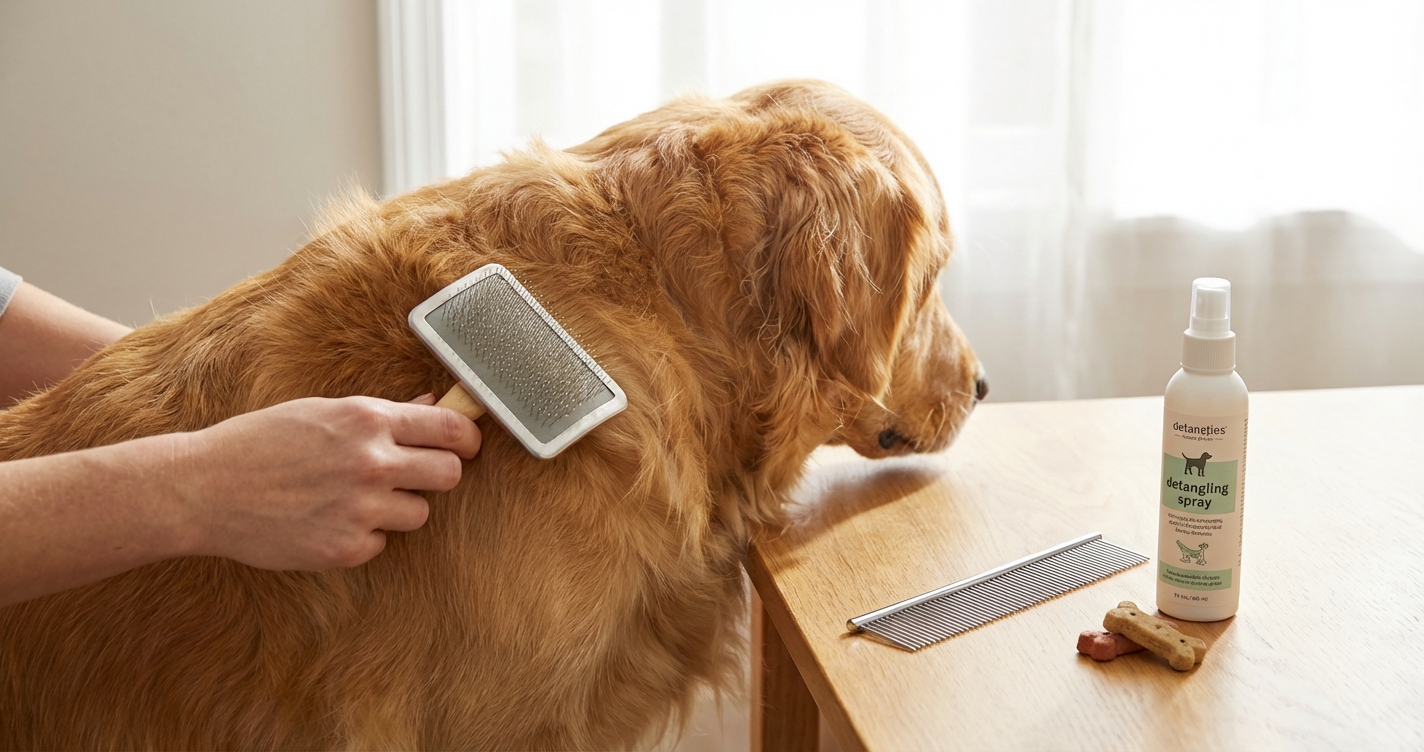
- Detangling Spray or Conditioner: This is your best friend. A good quality spray gives the hair some ‘slip’, helping the strands to separate without breaking.
- Slicker Brush: A brush with fine, short wires packed closely together. It’s brilliant for breaking up small knots and for general grooming to prevent mats in the first place.
- A Metal Comb (like a Greyhound Comb): This has both wide and narrow teeth. You can use the wide end to gently tease apart the edges of a mat.
- A De-matting Comb or Rake: This is a more specialist tool with sharp, curved blades. It’s designed to slice through a mat. Use this with extreme caution, as the blades are sharp and can easily catch the skin if you’re not careful.
- Plenty of High-Value Treats: This isn’t a tool for the mat, it’s a tool for the dog! Bribery is absolutely acceptable here to keep things positive.
A Step-by-Step Plan for Tackling Those Tangles
Right, choose a time when your dog is calm and relaxed. Pop them on a non-slip surface and get your tools and treats ready. Patience is key – this is not a race.
- Isolate the Mat: Gently separate the matted clump from the rest of the healthy fur around it.
- Spray it Down: Give the mat a liberal spritz with your detangling spray. Work it in a little with your fingers and let it sit for a minute or two.
- The Golden Rule – Hold the Base: This is the most important part. Firmly grip the hair at the very base of the mat, right against your dog’s skin. This prevents any pulling on their skin while you work on the tangle. Your dog will thank you for it.
- Start with Your Fingers: Before you bring in any tools, see what you can gently pull apart with your fingertips. You’d be surprised how much you can loosen a mat this way.
- Work from the Outside In: Using your metal comb or the slicker brush, start at the very tip of the matted fur, not the base. Gently pick and brush away at the outer edges, slowly working your way deeper into the knot. Small, short strokes are much better than trying to pull the whole thing out at once.
- Keep it Short and Sweet: Work for a few minutes and then give your dog a break, a treat, and a bit of praise. If they get stressed, stop and try again later. Forcing the issue will just make them hate grooming.
When to Wave the White Flag and Call a Professional
There is absolutely no shame in admitting defeat. In fact, it’s the most responsible thing to do in certain situations. It’s time to call a pro if:
- The mat is very tight against the skin. You can’t fit a comb between the mat and the skin. Trying to remove this at home poses a high risk of cutting your dog.
- The matted area is very large. If it’s covering a significant portion of their body (a situation often called ‘pelting’), it requires a professional shave-down.
- Your dog is in pain or gets aggressive. If they yelp, snap, or seem distressed, stop immediately. Their welfare comes first.
- The skin underneath looks sore, red, or infected. This is a job for the vet, not the groomer.
An Ounce of Prevention: Keeping Your Dog Mat-Free
The best way to deal with mats is to stop them from forming in the first place. A little bit of regular effort saves a lot of hassle down the line.
Key Takeaway: A consistent brushing routine is your number one defence. For long-haired breeds, this might mean a quick brush every day, while for others, a few times a week might suffice. Get to know your dog’s coat and what it needs. Make sure your brush gets right down to the skin to clear out the loose undercoat where mats love to start.
A Quick Nod to Natural Alternatives
If you find yourself without a proper detangler, a tiny bit of coconut oil can be worked into a dry mat to provide some lubrication. Likewise, some people find a sprinkle of cornflour can help absorb moisture and make it easier to grip and separate the hairs. Use these sparingly and be sure to brush them out thoroughly, but they can work in a pinch for minor tangles.

Related Posts