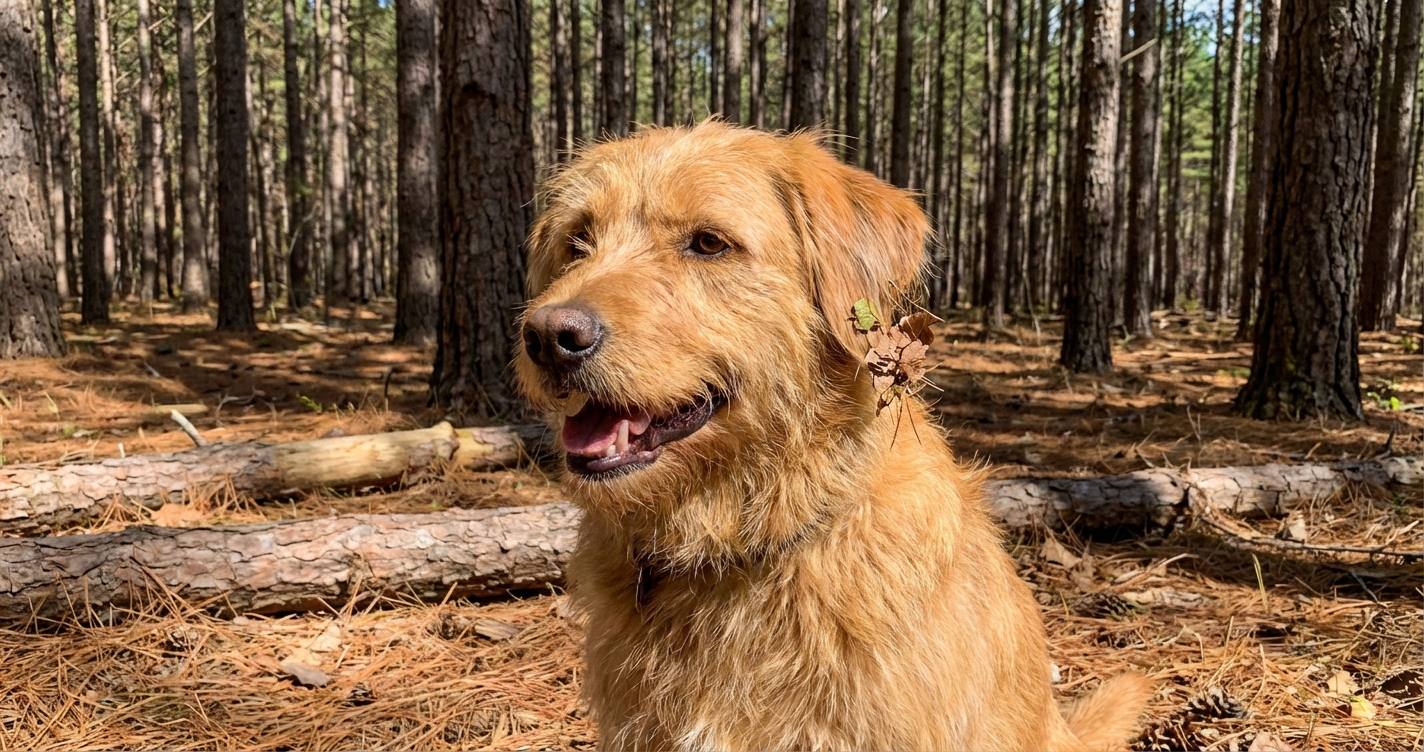
That Sticky Situation: A Dog, a Pine Forest, and a Messy Predicament
There’s a certain patch of woodland just outside of Buxton, thick with pine trees, that I swear my dog is magnetically drawn to. The other week, after a particularly enthusiastic session of sniffing and rolling, he trotted back to the car looking pleased as punch. I, however, noticed the problem straight away: several dark, impossibly sticky patches of tree sap matted into the fur on his back and flank. It’s a familiar story for many of us who love a good stomp through the woods. That stubborn pine sap seems to have a life of its own, clinging on for dear life and attracting every loose leaf and bit of dirt it can find.
But don’t panic. Getting sap out of dog fur is usually a straightforward job you can tackle at home with a bit of patience and a few things you’ve likely already got in your kitchen cupboard. The trick is to dissolve the sap, not to try and pull or scrub it out by force.
Why You Need to Tackle Sap Sooner Rather Than Later
While a bit of sap isn’t an emergency, leaving it be isn’t the best idea. The longer it stays, the more of a nuisance it becomes.
- It’s a Dirt Magnet: That sticky patch will quickly become a matted mess of grit, twigs, and general woodland floor debris.
- Potential for Skin Irritation: For some dogs, the sap itself or the trapped dirt can cause the skin underneath to become red and irritated.
- It Hardens Over Time: Fresh sap is much easier to deal with. Once it hardens, it becomes a solid lump that’s much tougher to remove without pulling on your dog’s skin and fur.
What You’ll Need: A Quick Raid of the Kitchen Cupboard
The secret to breaking down sticky, resinous sap is a simple one: fat. An oil-based substance will dissolve the sap, allowing you to comb it out gently. You shouldn’t need any fancy products.
Your Sap-Busting Toolkit:
- An Oily Ally: Any of these will do the job perfectly. Choose one you have to hand.
- Olive Oil
- Vegetable or Sunflower Oil
- Coconut Oil (the solid kind is great as it’s less drippy)
- Butter or Margarine
- Smooth Peanut Butter (just be sure it contains no Xylitol, which is toxic to dogs)
- Essential Gear: An old towel to protect your floors, a fine-toothed comb (a flea comb works a treat), and your fingers.
- For the Clean-Up: Your usual mild dog shampoo and access to a bath or shower.
The Step-by-Step Method for a Sap-Free Dog
Right, grab your chosen oil and find a comfortable spot where you don’t mind making a bit of a mess. Keep things calm and have a few treats ready to reward your dog for their patience.
Step 1: Isolate and Soften the Gunk
If the sap is hard and dry, you’ll want to soften it first. You can apply a warm, damp cloth for a few minutes. Another handy trick is to use a hairdryer on its absolute lowest heat and speed setting. Hold it a good distance from your dog’s coat and move it constantly, just to gently warm the sap until it becomes more pliable. Be extremely careful not to make it hot or burn your dog’s skin.
Step 2: Bring in the Oils
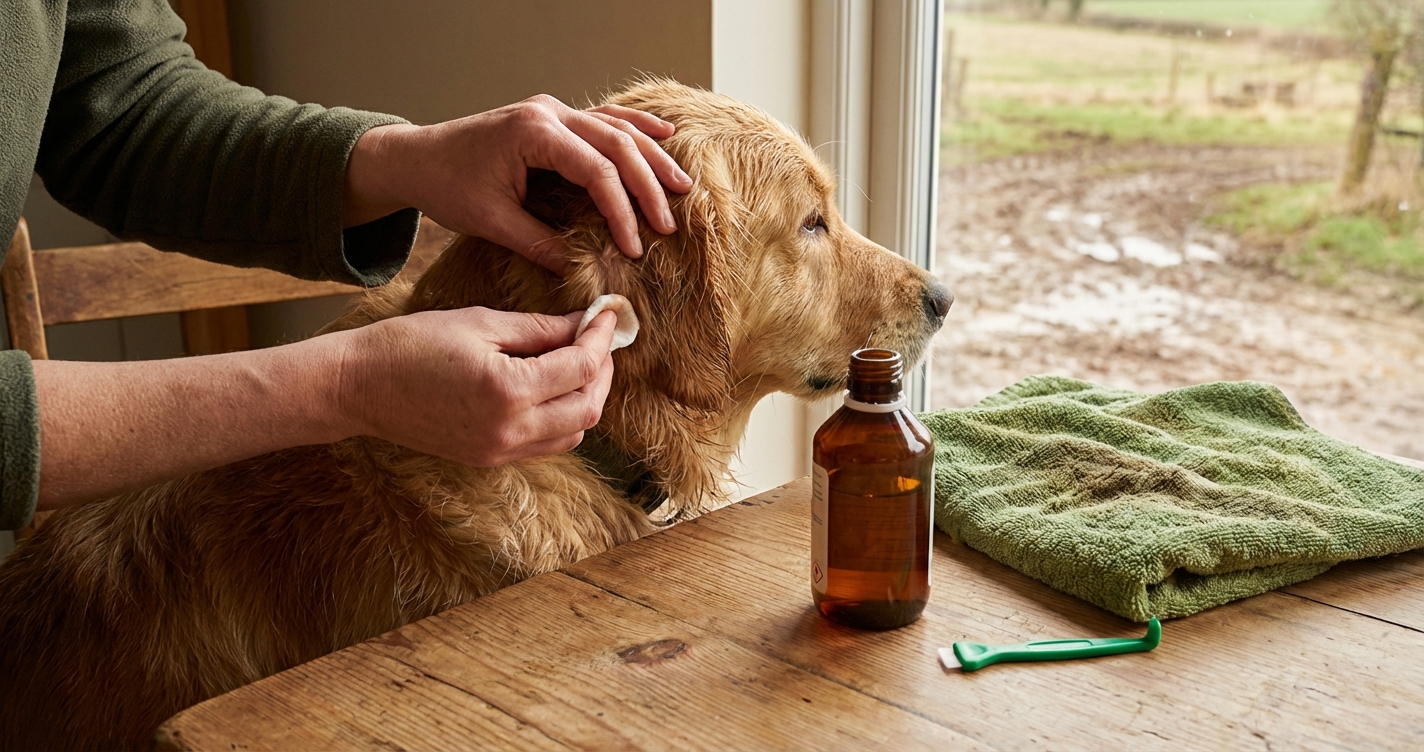
Once the sap is softened, it’s time to get oily. Take a generous dollop of your chosen oil, butter, or peanut butter and work it thoroughly into the sap-matted fur with your fingers. Really saturate the area. The goal is to let the oil surround and dissolve the sap.
Step 3: Gently Work It Out
Let the oil sit for a few minutes to work its magic. Then, using your fingers or a comb, start to gently work the sap loose. You should feel it breaking up and sliding out of the fur. This is the part that requires patience. Go slowly and praise your dog. If you hit a snag, add a bit more oil rather than pulling.
Step 4: The Big Wash-Up
Now that the sap is gone, you’re left with a very greasy patch of dog. The final step is a bath with a good quality, mild dog shampoo. You’ll likely need to lather up the oily area twice to get all the residue out, leaving your dog’s coat clean, soft, and completely sap-free.
Stop! What You Should Never Use on Your Dog’s Fur
It might be tempting to reach for something stronger, but this can be incredibly dangerous for your pet. Never, ever use these substances to remove sap:
- Solvents like Turpentine or White Spirit
- Nail Polish Remover (Acetone)
- Rubbing Alcohol
- Petrol or other fuels
These chemicals are toxic if licked and can cause severe skin burns and irritation. Stick to the safe, oil-based methods.
When to Wave the White Flag and Call a Professional
Most of the time, sap removal is a simple DIY job. However, there are times when it’s best to call in a professional groomer or have a chat with your vet.
- If the sap is in a very sensitive spot, like near the eyes, inside the ears, or on their paw pads.
- If a huge area of their body is affected, making a home clean-up impractical.
- If your dog is very anxious, distressed, or becomes aggressive when you try to handle the area. A pro has the tools and experience to get it done quickly and safely.
- If you notice the skin underneath is very red, sore, or broken. This might need a vet’s attention.
A Bit of Prevention is Worth a Pound of Cure
While you can’t wrap your dog in cotton wool, you can minimise the chances of another sticky encounter. After a walk through the woods, give their coat a quick check-over, paying attention to their legs, belly, and tail. Catching a small spot of fresh sap is a two-minute job, which is far better than tackling a hardened, dirt-caked lump a few days later.

Related Posts