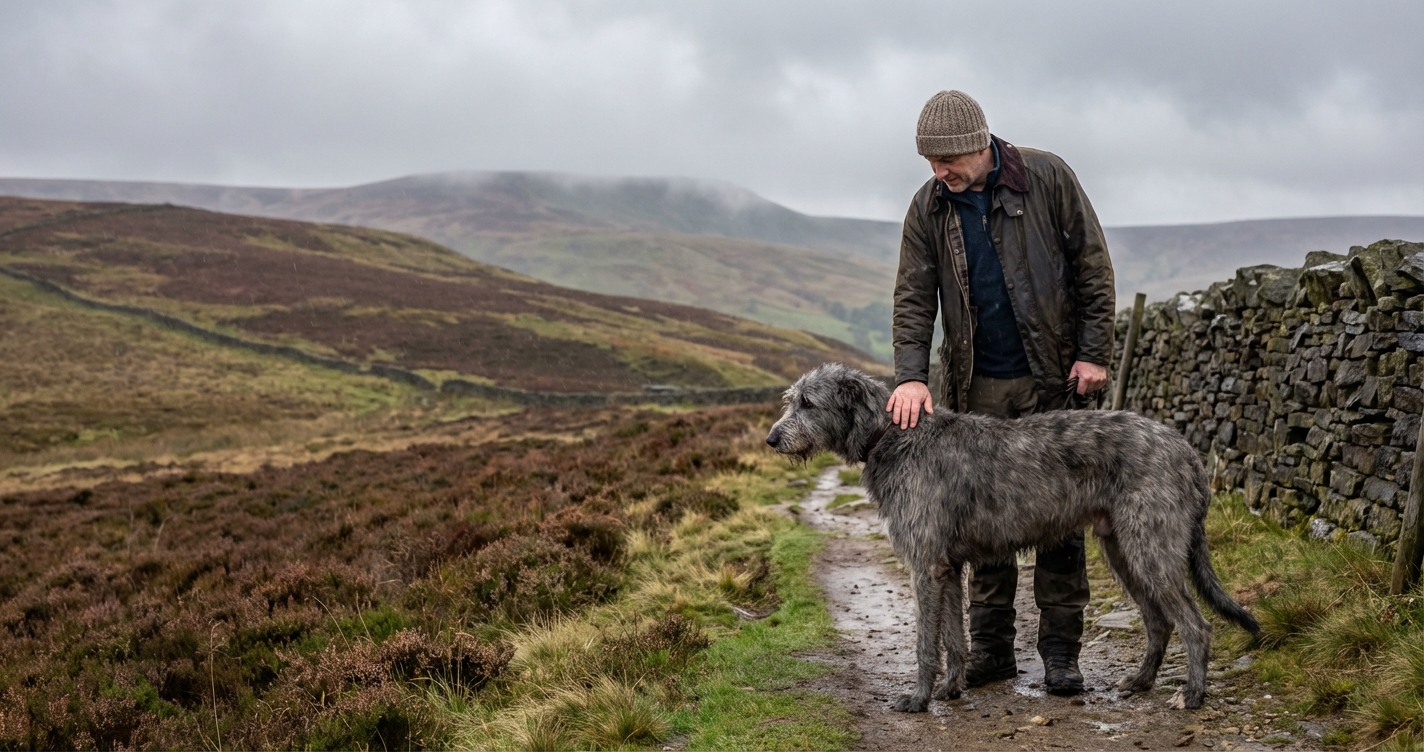
I was having a trudge up Mam Tor last Tuesday—bit of a drizzle, standard Peak District morning really—when I bumped into a chap with an Irish Wolfhound. Cracking dog. Size of a small pony and gentle as anything. We got to chatting while the dogs had a sniff, and he gave the big lad a pat on the flank and said, mostly to himself, "Just wish they lasted a bit longer, don’t you?"
It’s the one thing that puts a dampener on owning these magnificent beasts. We all know the deal when we sign up for a dog, but with certain breeds, that timeline is brutally compressed. It feels like you’ve only just got them out of the puppy chewing phase before you’re looking at grey muzzles and stiff joints.
If you’re researching this, you likely want the hard numbers, not just sympathy. So, let’s put the kettle on and look at the facts—which breeds have the shortest run, why biology seems to have it in for the giants, and practically speaking, what you can do to squeeze every drop of quality time out of those years.
The Direct Answer: Which Dog Breed Lives the Shortest?
If you are looking for the statistical average, one breed consistently sits at the bottom of the longevity tables across insurance data and kennel club surveys.
The Dogue de Bordeaux (French Mastiff) has the shortest average lifespan, typically ranging between 5 to 8 years.
While some lucky individuals push past this, the data is fairly stark. Closely following them is the Irish Wolfhound and the Great Dane. It is a harsh trade-off: the more massive the dog, the faster their biological clock seems to tick.
The "Heartbreak List": 15 Breeds With the Shortest Lifespans
It’s not just the French Mastiffs. There is a clear pattern here dominated by the "Giant" working groups. Based on aggregated veterinary data and insurance reports, here are the breeds that generally struggle to reach double digits.
The Under-8 Club
- Dogue de Bordeaux: 5–8 years.
- Irish Wolfhound: 6–8 years.
- Great Dane: 6–8 years.
- Bernese Mountain Dog: 6–8 years (Cancer rates are notably high here).
- Greater Swiss Mountain Dog: 6–8 years.
The Under-10 Club
- Mastiff (English): 7–10 years.
- Leonberger: 8–9 years.
- Newfoundland: 8–10 years.
- Saint Bernard: 8–10 years.
- Scottish Deerhound: 8–10 years.
- Bullmastiff: 8–10 years.
- Rottweiler: 8–11 years.
- Flat-Coated Retriever: 8–10 years (Often impacted by specific hereditary cancers).
The Flat-Faced Exceptions
While size is the main culprit, structure plays a role too. These smaller but structurally compromised breeds often have shortened lives:
- Bulldog (English): 8–10 years.
- French Bulldog: 9–11 years (Though popularity has introduced poor breeding practices that can lower this average).
The Science: Why Do Big Dogs Die Young?
It seems backward, doesn’t it? In the rest of the animal kingdom, big usually means old. An elephant outlives a mouse. A whale outlives a cat. But within the Canis familiaris species, the rule is inverted. Why?
1. The "Growth Spurt" Penalties
A Toy Poodle reaches its full size in a few months. An Irish Wolfhound or Great Dane has to grow from a handful of fluff to a 70kg beast in roughly 18 months. That is an immense amount of cellular division happening at warp speed.
Key Insight: Research points to the hormone IGF-1 (Insulin-like Growth Factor). High levels of this hormone allow these dogs to grow massive, but it appears to accelerate the aging process on a cellular level. Essentially, they are burning the candle at both ends to get that big, that fast.
2. The Structural Strain
Imagine the strain on a car engine that’s constantly towing a caravan. The hearts of giant breeds have to work significantly harder to pump blood around that massive surface area. This predisposition makes them susceptible to:
- Dilated Cardiomyopathy (DCM): The heart becomes enlarged and weak.
- Joint Degradation: The sheer weight puts massive stress on hips and elbows, leading to arthritis that can severely impact quality of life early on.
The Brachycephalic Factor
We can’t ignore the flat-faced (brachycephalic) breeds like the Bulldog. Their lifespan issues aren’t about rapid growth, but rather mechanical limitations. Their respiratory systems are compromised from birth.
If a dog struggles to oxygenate its blood just by walking down the garden path, the strain on its organs is cumulative. They are effectively living life with a restricted air intake, which takes a toll on the heart and limits their ability to regulate temperature.
Practical Steps: Extending the Timeline
Right, that’s the doom and gloom out of the way. I’m not a vet, just a bloke who’s spent years reading breed manuals and walking dogs, but there are practical things you can do. You can’t rewrite genetics, but you can manage the environment.
Strict Weight Management
This is non-negotiable. If you have a Bernese or a Mastiff, allowing them to get overweight is like adding bricks to a backpack they can never take off. Keep them lean. You should be able to feel their ribs without digging.
Preventative Screenings
Don’t wait for symptoms. With these breeds, you need to be proactive.
- The Heart Check: Ask your vet about heart scans (Doppler) earlier than usual, perhaps around age 2 or 3 for at-risk breeds.
- The "Bloat" Protocol: Gastric Torsion (GDV) is a massive killer of deep-chested dogs like Great Danes. Learn the symptoms, consider a slow-feeder bowl, and ask your vet about a prophylactic gastropexy (tacking the stomach) if you’re having other surgery done.
Joint Supplements Are Not Optional
Start high-quality joint support (Glucosamine/Chondroitin/Green Lipped Mussel) early. I’m talking young adulthood. You want to preserve the cartilage before it wears down, not try to fix it once it’s gone.
Sensible Exercise
I see people jogging on tarmac with Great Danes and it makes me wince. High-impact exercise on hard surfaces destroys giant joints. Stick to grass, dirt tracks, and gentle walks. Save the marathons for the Collies.
Frequently Asked Questions
Do mixed breeds live longer?
Generally, yes. It’s called "hybrid vigour." A mix tends to have a wider gene pool, which can dilute the specific hereditary health issues found in purebred lines. However, a cross between two giant breeds (like a Daniff—Dane x Mastiff) will still face the same size-related biological hurdles.
What is the shortest living small dog?
While small dogs generally live into their teens, the English Bulldog is the outlier. Despite being medium/small in height, their heavy build and breathing issues keep their average age low (8–10 years).
Does neutering affect lifespan in giants?
This is a hot topic. Recent studies suggest that neutering giant breeds too early (before growth plate closure) can increase the risk of certain cancers and joint disorders. It’s worth a proper sit-down chat with your vet to decide the best timing for your specific dog.

Related Posts