The Ultimate Guide: How to Get Dog Poop Out of Your Carpet (Fresh, Dried & Diarrhoea)
There are few things that can make your heart sink quite like the squelch of a sock on a wet patch of carpet, followed by *that* smell. The other day, I came downstairs to find Buster, my food-obsessed Lab, looking suspiciously proud of himself. A quick scan of the living room confirmed my fears: he’d left a little ‘present’ right in the middle of the rug. It’s a moment every dog owner knows well. Your first instinct is panic, but don’t. Grab a cuppa, take a deep breath, and let’s get this sorted. With a bit of know-how, even the most disastrous-looking mess is manageable.
Immediate First Steps: What to Do Right Now
Before you even think about cleaning solutions, your first ten seconds are crucial for damage control. Acting fast prevents the stain from setting deep into the carpet fibres.
- Remove the Solids: Using a paper plate, a dustpan, or a couple of pieces of stiff card, gently scrape up as much of the solid waste as you can. Work from the outside of the mess inwards to avoid spreading it.
- Do NOT Rub: Whatever you do, resist the urge to scrub or rub the area with a cloth. This will only push the mess deeper into the carpet pile and make the stain a hundred times worse.
- Blot, Don’t Scrub: If the mess is wet (we’ll get to diarrhoea in a moment), gently blot the area with some kitchen roll or an old white towel to absorb as much moisture as possible.
Your Cleaning Kit: Essential Supplies You’ll Need
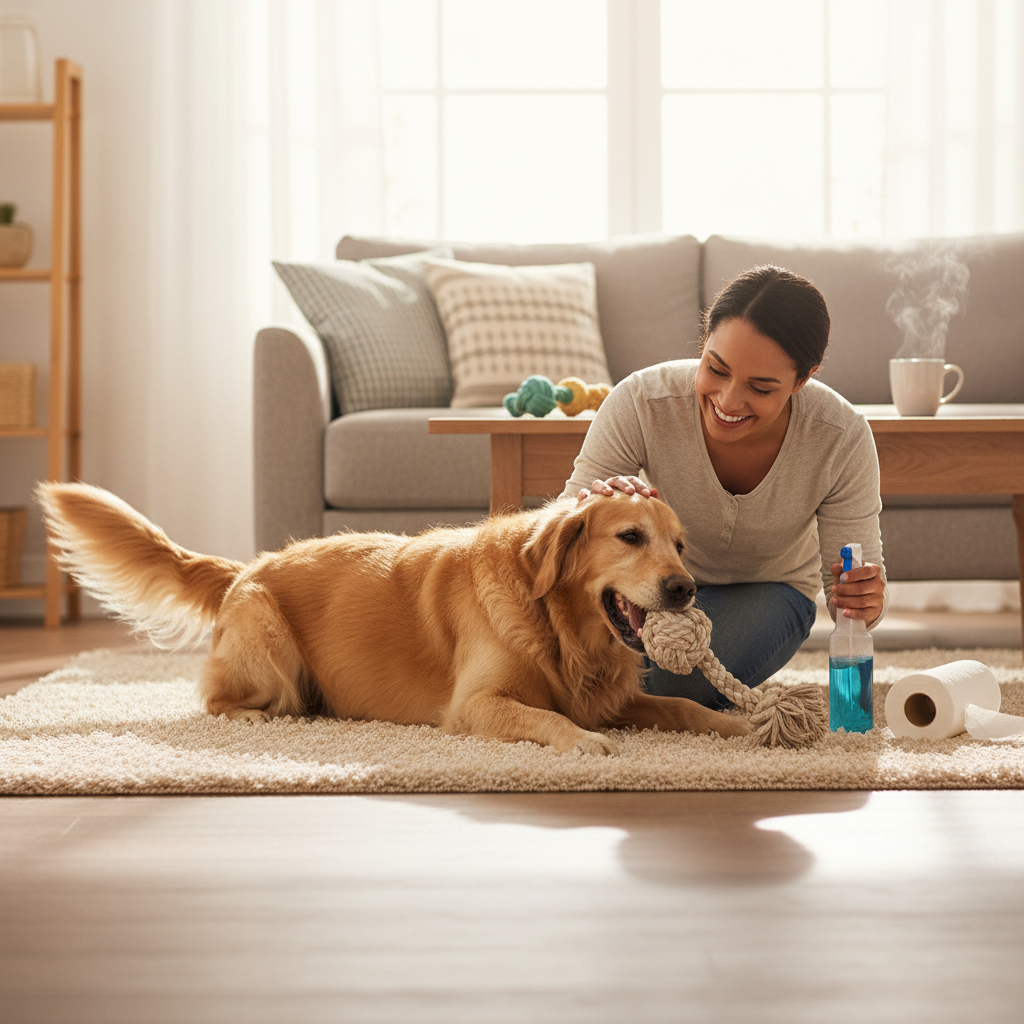
You don’t need a lorry-load of fancy chemicals. Most of what you need is probably already under your sink. Here’s a rundown of your toolkit:
- For the heavy lifting: A dustpan, stiff card, or a paper plate.
- For blotting: Kitchen roll or old, clean, white cloths (white is best so you don’t transfer any dye).
- A spray bottle: For applying your cleaning solution.
- DIY Cleaning Solution ingredients: A simple mix of white vinegar and cool water (a 50/50 solution works a treat) and a small drop of washing-up liquid.
- For deodorising: Bicarbonate of soda (bicarb).
- The Non-Negotiable: A good quality enzymatic cleaner. This is your secret weapon, especially for lingering smells. It contains enzymes that physically break down and destroy the organic proteins in the waste, rather than just masking the scent.
Step-by-Step: Cleaning a Fresh, Solid Dog Poop Stain
Right, the solids are gone. Now for the stain left behind. This method is your go-to for a standard, fresh accident.
- Create Your Solution: Mix a solution of 50% white vinegar and 50% cool water in your spray bottle. Add a single, small drop of washing-up liquid. Don’t go mad with the soap, or you’ll have a bubbly residue that’s a nightmare to rinse.
- Spray Lightly: Lightly mist the stained area with your cleaning solution. Don’t saturate the carpet, as this can damage the backing and underlay.
- Let it Sit: Allow the solution to sit on the stain for 5-10 minutes. This gives the vinegar time to work its magic on the stain.
- Blot the Stain: Take a clean, white cloth and gently blot the area. You should see the stain transferring from the carpet to the cloth. Keep turning the cloth to a clean section and continue blotting until no more stain is lifting.
- Rinse: Lightly spray the area with clean, cool water and blot again with a dry cloth to remove any soapy residue.
- Dry and Deodorise: Once the area is clean, sprinkle it liberally with bicarbonate of soda. Let it dry completely – this might take a few hours. Once bone dry, vacuum it up thoroughly.
Tackling the Unspeakable: How to Clean Dog Diarrhoea from Carpet
This is the big one. It’s messy, smelly, and needs a slightly different approach. The key is to remove as much as possible before you start with liquids.
Key takeaway: If possible, let the mess dry a little. It sounds counter-intuitive, but trying to clean up liquid diarrhoea often results in a bigger, smeared mess. A slightly firmer consistency is easier to scrape up. If you can’t wait, try sprinkling bicarb or even cat litter on it to absorb some of the liquid before scraping.
Once you’ve scraped up what you can, the process is the same as above, but with one crucial difference: after blotting with the vinegar solution, go in with an enzymatic cleaner. Diarrhoea penetrates deeper and contains more bacteria. An enzyme cleaner is essential to break down all the organic matter and completely eliminate the odour-causing bacteria that your nose (and your dog’s) can detect.
The Forgotten Fossil: Removing Old, Dried-On Dog Poop
Found a stain from last week behind the sofa? No problem. It just needs a little extra persuasion.
- Scrape and Vacuum: First, use a dull knife or the edge of a spoon to scrape off as much of the dried material as you can. Vacuum up all the flakes and dusty bits.
- Rehydrate the Stain: Apply your 50/50 vinegar and water solution and let it sit for a good 10-15 minutes to soften the stain.
- Blot and Repeat: Blot the stain firmly with a clean cloth. You may need to repeat the spraying and blotting process a few times for a stubborn, set-in stain.
- Enzyme Power: For old stains, an enzymatic cleaner is your best friend. Follow the instructions on the bottle, which usually involve spraying the area and letting it air dry. It will continue working as it dries.
Common Mistakes That’ll Make You Weep (What to Avoid)
We’ve all been there, but try to sidestep these common pitfalls:
- Using Hot Water: Never use hot water or a steam cleaner on an organic stain. The heat can permanently set the stain by bonding the protein to the carpet fibres. Always use cool or lukewarm water.
- Scrubbing Vigorously: As we said before, scrubbing just damages your carpet fibres and pushes the stain deeper. Always blot.
- Using Harsh Chemicals: Avoid bleach or ammonia-based cleaners. They can discolour your carpet and are harmful to pets. Stick to the basics that are known to be safe and effective.
Throwing in the Towel: When to Call in a Professional
Look, sometimes a stain is just too much. If you have a very large area, a delicate carpet material (like wool or silk), or the stain has seeped through to the underlay and subfloor, it might be time to call in the professionals. They have the equipment to deep clean and treat the problem at its source. There’s no shame in admitting defeat; sometimes it’s the most practical choice!

Related Posts