
The Panic is Over, But the Job Isn’t Done
Picture the scene: We’ve just come back from a proper soggy stomp over the hills. I’ve got the towel out to dry off the mud, run my hands through the fur, and there it is. A tick. A nasty, grey little hitchhiker tucked behind the ear.
You grab the tick hook (best couple of quid I ever spent), give it a twist, and it’s out. But once the adrenaline fades and you’ve stopped shuddering, you’re left looking at a small red mark on your dog and wondering: “Now what?”
Most advice stops the moment the parasite is detached, but as any practical dog owner knows, that’s really just the start of the anxiety. Did I get the head? What do I put on the bite? Why is there a bump there three days later?
Let’s park the panic. Here is the practical, chronological rundown of exactly what to do immediately after the extraction, and what to watch for in the weeks to come.
Immediate Aftercare: Clean the Scene
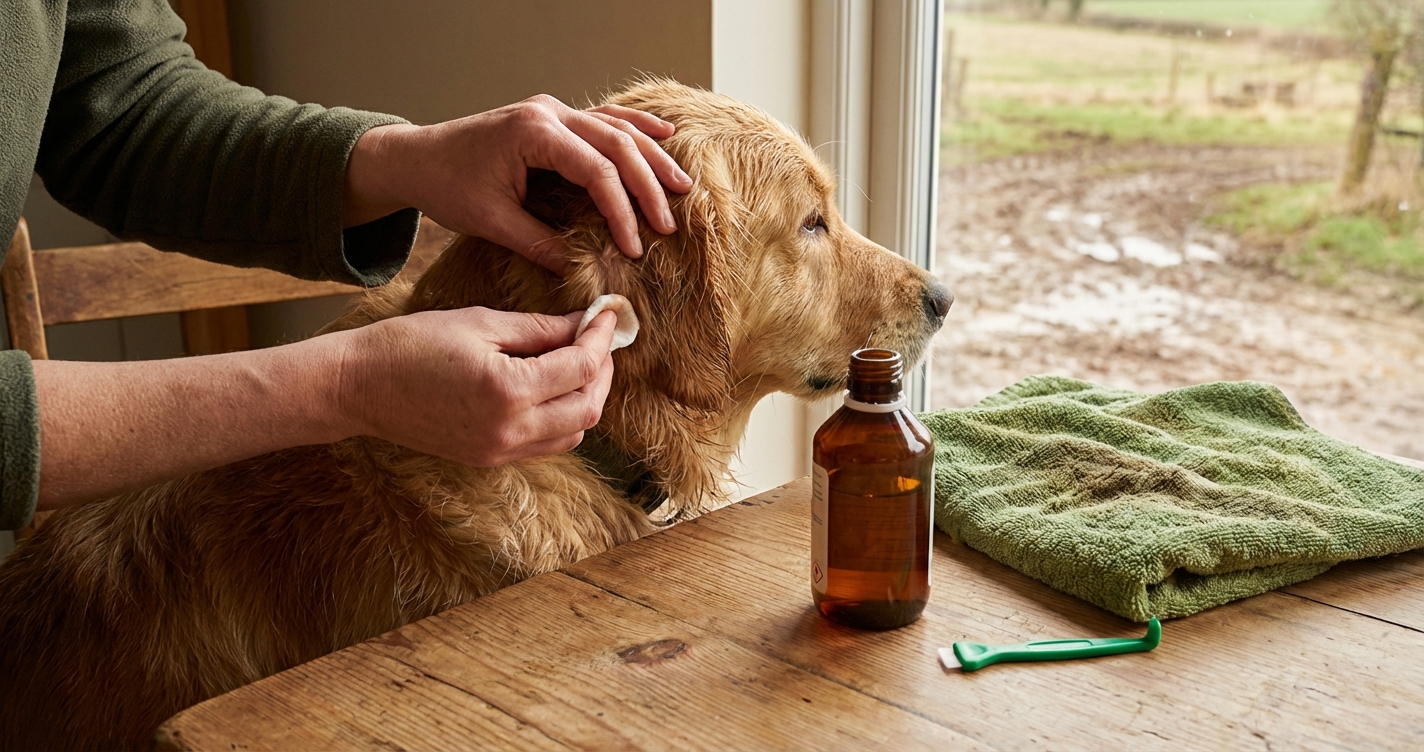
Right, you have successfully removed the tick. Don’t just pat the dog on the head and put the kettle on yet. The bite site is essentially a small puncture wound, and like any cut from a dirty source, it needs cleaning.
Bacteria from the tick’s mouth or the surrounding skin can cause a local infection (distinct from tick-borne diseases like Lyme). Here is the cleanup protocol:
- Antiseptic Wash: Clean the area gently with mild soap and warm water first to remove any debris or tick fluids.
- Disinfect: Dab a bit of pet-safe antiseptic, iodine, or rubbing alcohol (surgical spirit) on the spot. Don’t go overboard; just a quick swipe will do.
- Antibiotic Cream: Some folks use a triple antibiotic ointment (like Neosporin), but check with your vet first as some dogs try to lick it off immediately. Generally, keeping it clean and dry is sufficient.
The “Stuck Head” Dilemma
This is the most common worry I hear at the dog park. You pulled the tick, but looking closely, you see a tiny black dot left in the skin. The mouthparts have snapped off.
The Golden Rule: Leave it alone.
It is incredibly tempting to get the tweezers back out and start digging, but don’t. Digging around in your dog’s skin does more damage than the remnant of the tick. It increases the risk of skin infection and irritation.
Think of it like a splinter. In the vast majority of cases, your dog’s body will identify the foreign object and naturally expel it over the next few days. Just keep the area clean and let nature take its course.
Disposal: Don’t Just Bin It
I’ve made the mistake of tossing a tick in the kitchen bin, only to wonder an hour later if it crawled out. These things are resilient. Furthermore, if your dog does get sick later, having the specimen can help the vet identify what diseases it might have carried.
Safe Disposal Methods:
- The “Just in Case” Method: Place the tick in a sealed jar with some rubbing alcohol, or stick it securely to a piece of clear tape and fold it over. Write the date on it. Keep it for a month; if your dog stays healthy, throw it away then.
- The “Good Riddance” Method: If you aren’t saving it, flush it down the toilet or wrap it tightly in tissue and tape before binning. Never crush a tick with your fingers—the fluids can carry disease that can affect humans too.
The 30-Day Watch: A Chronological Timeline
The scary stuff—Lyme disease, Babesiosis, Ehrlichiosis—doesn’t show up immediately. This is where you need to be observant without being paranoid. Here is a timeline of what is normal and what isn’t.
First 24 to 48 Hours: The Bite Site
Normal: It is standard to see a small red bump or a scab form. It might look a bit like a mosquito bite. This is a local reaction to the tick’s saliva.
Abnormal: If the redness spreads rapidly, the area feels hot to the touch, or it starts oozing yellow or green pus, you are dealing with a local skin infection. That warrants a trip to the vet for a look-see.
Day 3 to Week 2: The “Tick Granuloma”
Many owners panic here. A hard, firm lump might persist at the bite site for a week or two. This is often called a tick granuloma. It’s essentially scar tissue or the body’s reaction to the inflammation. As long as it isn’t growing or weeping, it typically resolves on its own, though it can take weeks to fully disappear.
Week 1 to Week 4: Systemic Symptoms
This is the window where tick-borne diseases typically manifest. Because dogs can’t tell us they have a headache or feel achy, we have to look for changes in behaviour.
The “Bullseye” Myth: In humans, the tell-tale sign of Lyme disease is a target-shaped rash. This rarely happens in dogs. Do not wait for a rash to appear to think something is wrong.
Symptoms to Track:
- Lethargy: Is your dog sleeping more than usual? Reluctant to go for a walk?
- Lameness: This is a big one. “Shifting leg lameness” (where they limp on one leg, then another) is a classic sign of Lyme disease.
- Loss of Appetite: Turning their nose up at their dinner.
- Fever: If their ears or nose feel excessively hot or they seem shivery.
- Pale Gums: Can indicate anaemia, often associated with Babesiosis.
When to Call the Vet
I’m not a vet, just a bloke who spends too much time reading about dogs, but the consensus on when to seek professional help is fairly clear. You don’t need to rush to the surgery just because you found a tick. However, you should book an appointment if:
- The bite site gets angry: Spreading redness, heat, or discharge implies infection.
- You couldn’t get the tick out: If the body is engorged and you can’t get a grip, or you ripped it badly and a large chunk is left, let a professional handle it.
- Symptoms appear: If you spot any of the lethargy or lameness mentioned in the timeline above within 30 days of the bite.
If you do go, tell the vet: “I removed a tick from him three weeks ago.” That context is vital for their diagnosis.
Dealing with ticks is just part and parcel of owning a dog in the countryside. It’s unpleasant, sure, but with a bit of disinfectant and a watchful eye, it’s rarely a disaster. Keep an eye on them, keep that tick hook handy, and enjoy the walk.

Related Posts