The Slobbery Social Ritual Unpacked
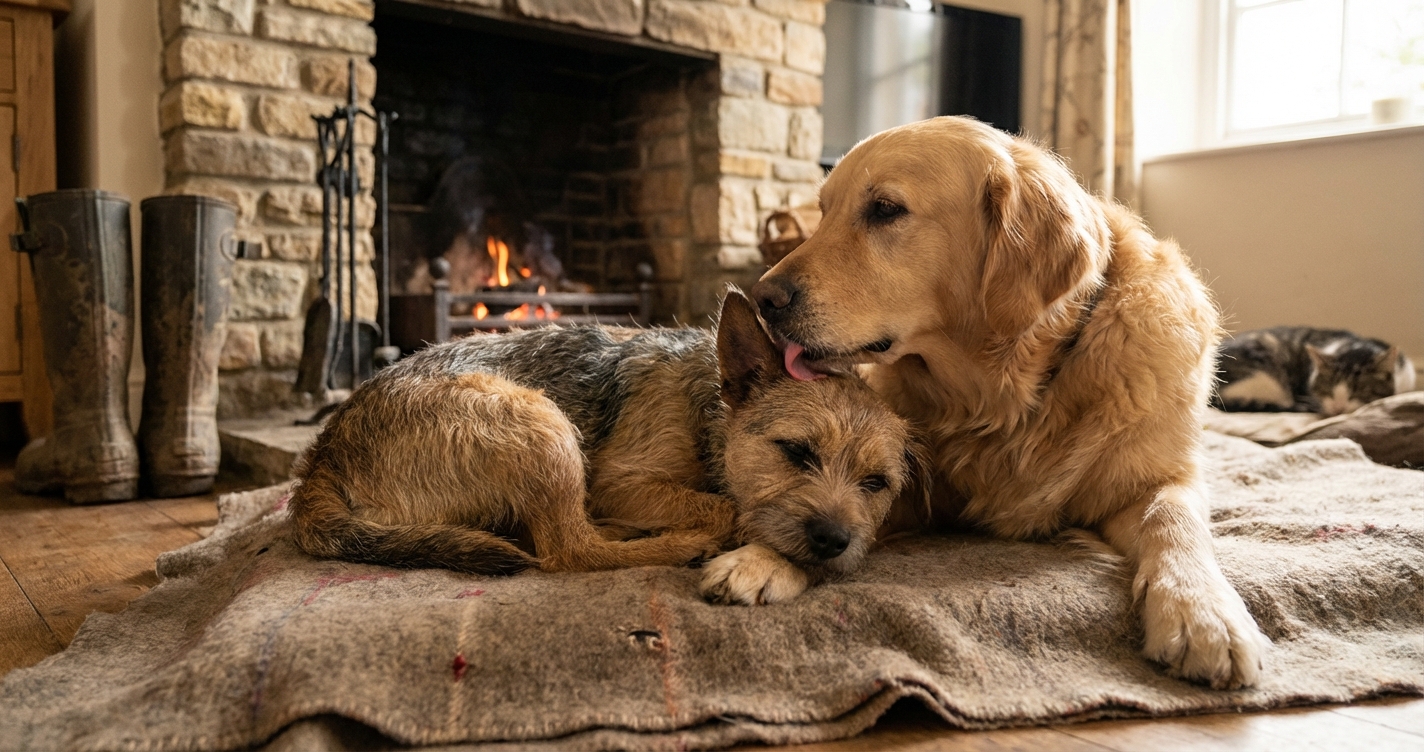
Picture the scene. You’ve just got back from a blustery walk over the tops, the dogs are knackered, and you’ve finally sat down with a brew. All is peaceful. Then, the sound starts. That rhythmic, slightly wet schlurp, schlurp, schlurp. You look over, and there’s Pip, head tilted, giving Bramble’s ear a wash and brush-up worthy of a royal valet. It’s a common sight in a multi-dog household, but what’s really going on? Is it a doggy hug, a snack, or something you should be worried about?
Well, grab your biscuit, and let’s get to the bottom of it. More often than not, this ear-licking business is a completely normal bit of canine communication. But like any good gossip, it’s worth knowing the different meanings behind the message.
The Social Side of Things: Licking as Canine Communication
Dogs are social creatures, and a lot of their odd habits are just their way of navigating their relationships. Ear licking is a prime example of this complex social language.
Affection and Bonding
At its simplest, licking is a sign of affection. When a mother dog cleans her puppies, it’s not just about hygiene; it’s about bonding. This instinct carries through to adult life. The act of licking releases oxytocin – often called the ‘love hormone’ – in both the licker and the one being licked. It’s their version of putting an arm around a mate, strengthening their social bonds and reaffirming their relationship.
Submission and Respect
In the world of dogs, there’s a certain etiquette. A dog might lick the ears or mouth of a more dominant dog as a sign of respect or deference. It’s an appeasement gesture that says, “I’m no threat, we’re all pals here.” This behaviour is a throwback to wolf pack dynamics, where younger or lower-ranking members would lick their elders as a sign of respect within the pack hierarchy.
Practical Matters: More Than Just Mates
It’s not all about feelings and social ladders. Sometimes, ear licking has a very practical, instinct-driven purpose.
A Good Old-Fashioned Groom
Let’s be practical. A dog can’t exactly get a cotton bud into its own lughole. Ears are a tricky spot to clean, and a canine pal can offer a helping tongue. This mutual grooming helps remove dirt, debris, and wax, keeping the ear canal clear. It’s a bit of team-based hygiene.
The Allure of the Taste
Right, let’s not beat about the bush. To us, the thought is a bit grim, but to a dog, earwax can be quite appealing. It’s a cocktail of dead skin cells, secretions, and fats – essentially a salty, protein-rich snack. A dog’s powerful sense of smell can pick up on this, making a friend’s ear an interesting place to investigate.
When to Keep an Eye Out: Potential Red Flags
While usually harmless, obsessive ear licking can sometimes be a signal that something’s not quite right. You don’t need to panic, but it pays to be observant. If the behaviour goes from a casual clean to a relentless fixation, it might be time to play detective.
A key takeaway: The problem is less about the licking itself and more about what it might reveal about the health of the dog whose ear is getting all the attention.
Watch for Signs of an Ear Infection
A dog’s nose is a powerful tool. They can often smell the yeasty, foul odour of bacteria or a yeast infection brewing in another dog’s ear long before we can. If one dog suddenly becomes fixated on the other’s ear, they might be trying to tell you something. Look for these telltale signs in the dog being licked:
- A funky smell coming from the ear.
- Redness or swelling inside the ear flap.
- Dark, waxy discharge that looks like coffee grounds.
- Constant head shaking or tilting.
- Scratching or pawing at the ear.
- Wincing or yelping when the ear is touched.
If you spot any of these, it’s best to get them checked out by a vet. An untreated ear infection is painful and can lead to bigger problems.
The Risk of Too Much Moisture
Even if there isn’t an underlying infection, constant licking can create one. All that saliva creates a warm, damp environment inside the ear canal – the perfect breeding ground for bacteria and yeast. This can kick off a nasty cycle of infection and more licking.
What to Do About Excessive Licking
If you’re concerned the licking has become a bit much, a few practical steps can help manage the behaviour.
- Book a Vet Check: This should always be your first port of call. A quick trip to the vet can rule out or diagnose an ear infection in the dog being licked. It can also help identify if the licking dog has any compulsive behaviours that need addressing.
- Redirect the Behaviour: Easier said than done, I know. But when you see the licking start, try to calmly redirect the licker’s attention to something else. A puzzle toy, a stuffed Kong, or a quick training session can work wonders to break their focus.
- Keep Ears Clean and Dry: A good routine of checking your dogs’ ears can help you spot trouble early. If you do clean them, use a proper, vet-approved solution and make sure the ear is dry afterwards to avoid trapping moisture.
So, next time you see one of your dogs giving the other’s ear a good seeing-to, you’ll know what it’s all about. Most of the time, it’s a perfectly normal, even endearing, part of their social life. Just remember to keep an eye out for the signs of obsession or discomfort, and you’ll know when to step in.

Related Posts