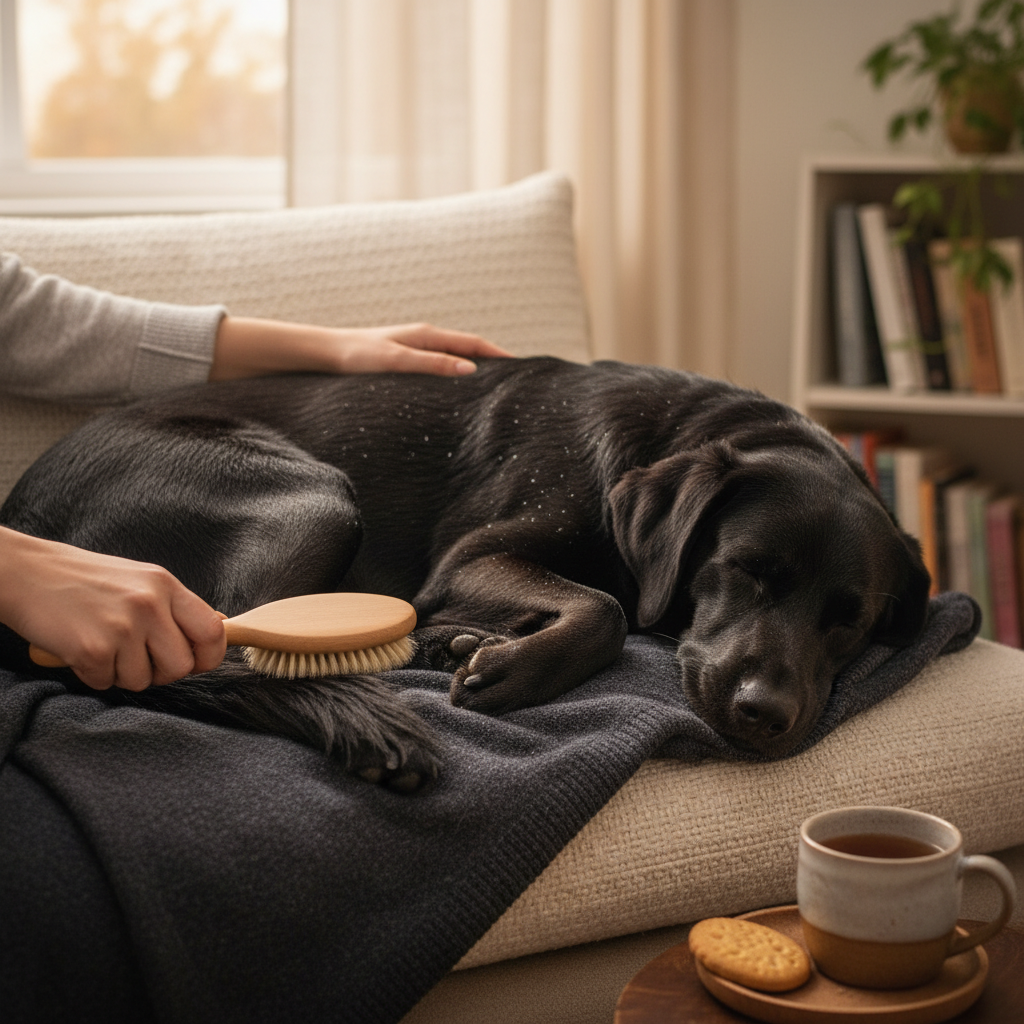
Is That Snow? Nope, It’s Dog Dandruff on My Jumper… Again.
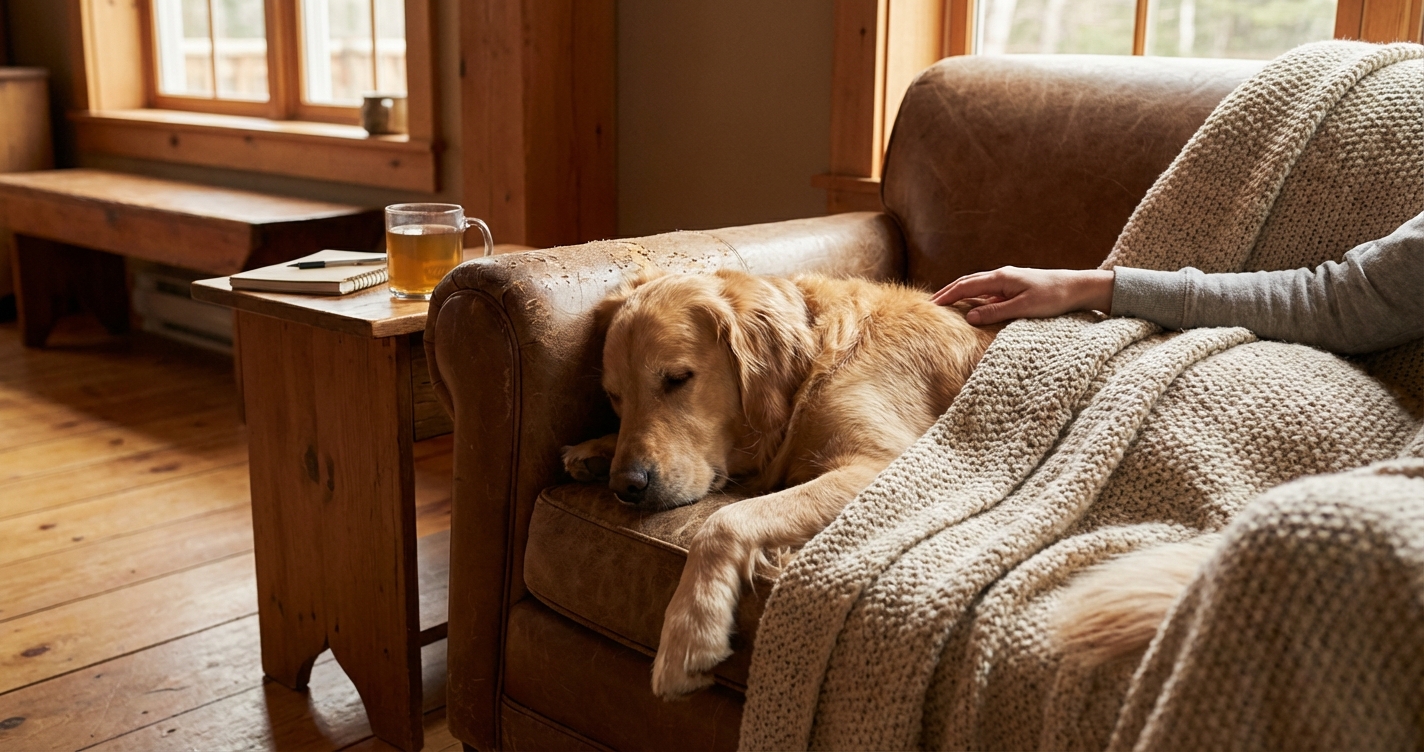
There’s a certain moment of realisation every dog owner has. You’ve just had a lovely cuddle on the sofa, your dog trots off to cause some mild chaos, and you look down at your dark-coloured jumper to see a fine dusting of white flakes. It’s not a winter wonderland; it’s dandruff. I had this exact moment with Buster, my food-obsessed Lab, just the other day. He leaned in for a tactical ear-scratch, and left behind a little galaxy of flakes on my sleeve. It’s a common sight, but it always gets you thinking: why is this happening and is it something to worry about?
Before you start worrying, take a breath. A bit of dandruff is usually not a five-alarm fire. But it is your dog’s way of telling you that something, somewhere, is a bit out of sorts. So, let’s put the kettle on, grab a biscuit, and get to the bottom of those pesky white flakes.
First Things First: What Exactly Is Dog Dandruff?
In simple terms, dog dandruff is just old, dead skin cells that flake off. A certain amount of this is perfectly normal. However, when you start noticing a lot of it, it’s often a sign of a condition called seborrhoea (or seborrhoeic dermatitis). This basically means the skin’s renewal process has gone a bit haywire.
Seborrhoea can show up in a couple of ways, and knowing the difference can be a useful clue:
- Seborrhoea Sicca (Dry Seborrhoea): This is the classic dandruff you’re probably picturing – dry, white flakes accompanied by dry, dull-looking fur.
- Seborrhoea Oleosa (Oily Seborrhoea): This type involves greasy, yellowish scales that stick to the skin and fur. It often comes with a distinct, waxy or fusty smell. A dog can have one type, or a lovely combination of both.
The Usual Suspects: Common Causes of Flaky Skin in Dogs
Right, let’s look at why your dog might be shedding more flakes than a budget croissant. Dandruff is almost always a symptom of an underlying issue, rather than the problem itself. The trick is figuring out which one it is.
Dry Air and Central Heating
This is probably the most common and least worrying cause. Just like our own skin gets dry in the winter when the central heating is blasting, so does a dog’s. The low humidity in the air can sap moisture from their skin, leading to more flaking.
Grub’s Up: Nutritional Niggles
You are what you eat, and the same goes for our four-legged mates. A diet lacking in essential fatty acids, particularly Omega-3 and Omega-6, can lead to poor skin and coat health. These fats are crucial for maintaining a strong skin barrier. Buster, being a Lab, would eat the floorboards if I let him, so ensuring he gets high-quality food with the right nutrients is non-negotiable.
Unwanted Guests: Pesky Parasites
The thought of creepy crawlies is enough to make anyone’s skin itch. Certain parasites can cause significant dandruff.
- Cheyletiella Mites: These little blighters are so notorious for this that they’re nicknamed “walking dandruff.” The flakes literally seem to move as the mites scurry around underneath.
- Fleas and Lice: The irritation from these parasites can cause dogs to scratch excessively, damaging the skin and causing it to flake.
Allergies and Irritations
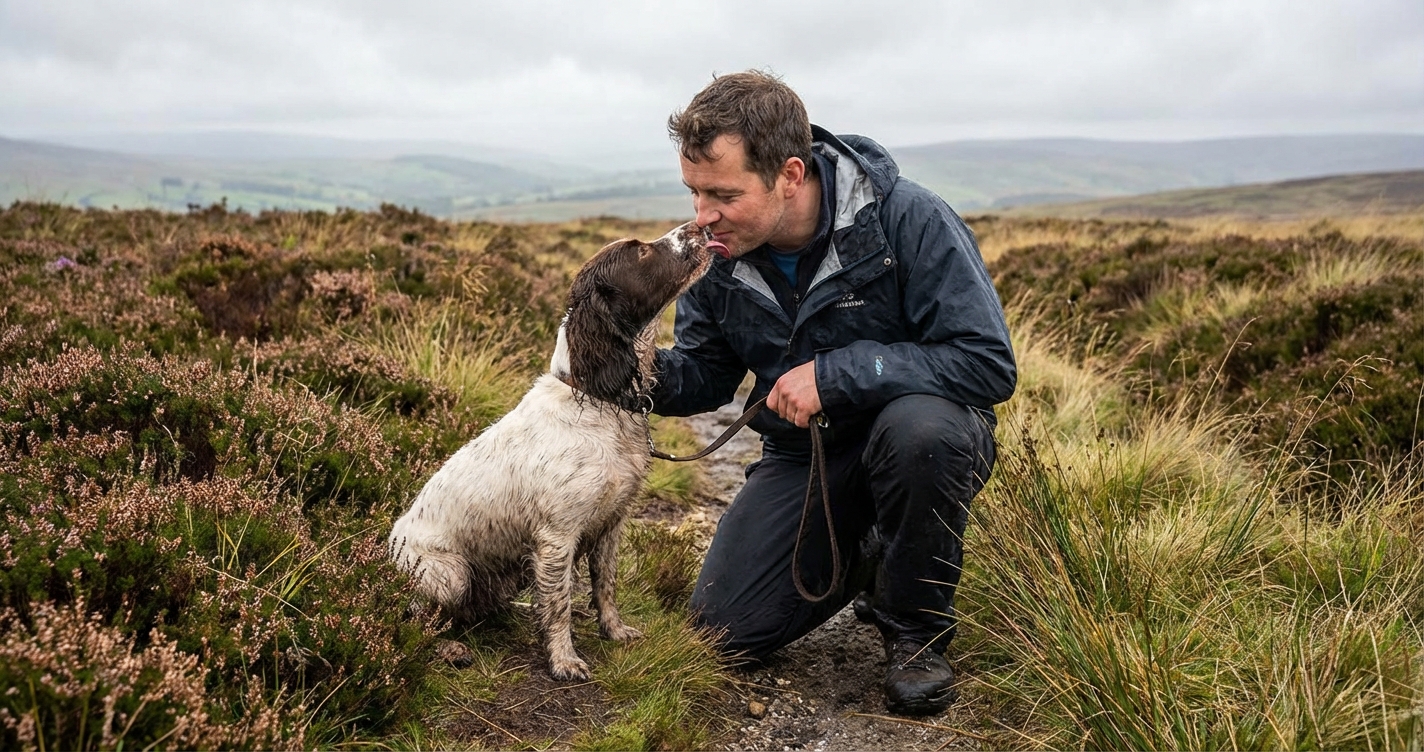
If your dog is itchy as well as flaky, an allergy could be the culprit. This can be a reaction to something in their environment (like pollen, dust mites, or mould) or something in their food bowl (like chicken, beef, or wheat). Fern, my spaniel, seems to get itchier after a long romp through the fields in summer, a classic sign of environmental sensitivity.
Skin Infections
When the skin’s natural defences are down, bacterial or fungal (yeast) infections can take hold. These infections disrupt the normal skin cycle, leading to flaking, redness, and often that ‘fusty biscuit’ smell, especially with yeast infections.
The More Serious Stuff: Underlying Health Issues
In some cases, dandruff can be a clue that something more significant is going on internally. Conditions like Hypothyroidism (an underactive thyroid) or Cushing’s disease can disrupt hormone levels, which has a major knock-on effect on skin and coat health. This is definitely one for the vet to investigate.
Your At-Home Dandruff Detective Kit
Before you ring the vet, it’s useful to gather some clues. Think of yourself as a detective observing the scene. The more information you can give your vet, the quicker they can crack the case. Ask yourself these questions:
- Are the flakes just on their back, or all over? A line of flakes along the back is a classic sign of ‘walking dandruff’ (Cheyletiella mites).
- Is the skin just dry, or is it greasy and a bit smelly? This helps distinguish between dry and oily seborrhoea.
- Is your dog scratching, licking, or chewing like mad? Intense itching points strongly towards allergies or parasites.
- Have you noticed any other changes? Think about their energy levels, appetite, thirst, or any hair loss. These can be signs of a deeper hormonal issue.
- Does the flakiness get worse at certain times of the year? If it’s a winter problem, it could be the central heating. If it’s a summer one, environmental allergies are a strong suspect.
Getting a Handle on It: Practical Fixes for Dog Dandruff
Okay, you’ve gathered your clues. Now for the practical bit. For mild cases, especially those caused by dry air or minor dietary issues, a few simple changes at home can make a world of difference.
A quick disclaimer: I’m just a bloke who spends a lot of time with his animals. None of this is a substitute for proper veterinary advice. Always chat with your vet before starting any new treatment.
The Power of a Good Brush
Never underestimate a simple, regular grooming session. Brushing helps to remove loose flakes and hair, and more importantly, it stimulates blood circulation and distributes the natural oils across the skin and coat. Trying to get high-energy Fern to stay still for a brush is a workout, but it’s worth the effort.
Bath Time: Choosing the Right Shampoo
First rule of dog baths: never, ever use human shampoo. Our skin has a different pH to a dog’s, and our products can be incredibly irritating and drying for them. Look for a gentle, moisturising, oatmeal-based dog shampoo. If the dandruff is more severe, your vet might recommend a specific medicated shampoo designed to tackle yeast, bacteria, or scaling.
A Look in the Larder: Diet and Supplements
Good skin comes from within. Ensure your dog is on a high-quality, complete food. You can also boost their fatty acid intake. Supplements containing Omega-3 and 6 are widely available, or for a more natural approach, adding a small amount of oily fish like sardines (in spring water, not oil or brine!) to their food once or twice a week can work wonders. Buster certainly doesn’t complain about that.
When to Ring the Vet
Home remedies are great, but it’s crucial to know when to pick up the phone and get a professional opinion. You should book a visit with your vet if you notice any of the following:
- The dandruff is severe or getting worse despite your efforts.
- Your dog is intensely itchy, to the point of causing self-harm like open sores or raw patches.
- There’s a strong, unpleasant odour coming from their skin.
- The skin is red, inflamed, lumpy, or has any scabs or lesions.
- Your dog seems unwell in any other way – lethargic, off their food, or just not themselves.
Remember, your vet’s job is to find the root cause. They can perform simple tests like skin scrapes or tape preps to look for mites and infections, or recommend blood tests if they suspect a deeper issue. Tackling the underlying problem is the only way to truly banish the flakes for good and get your dog back to feeling comfortable in their own skin. And that means more worry-free cuddles on the sofa for you both.

Related Posts