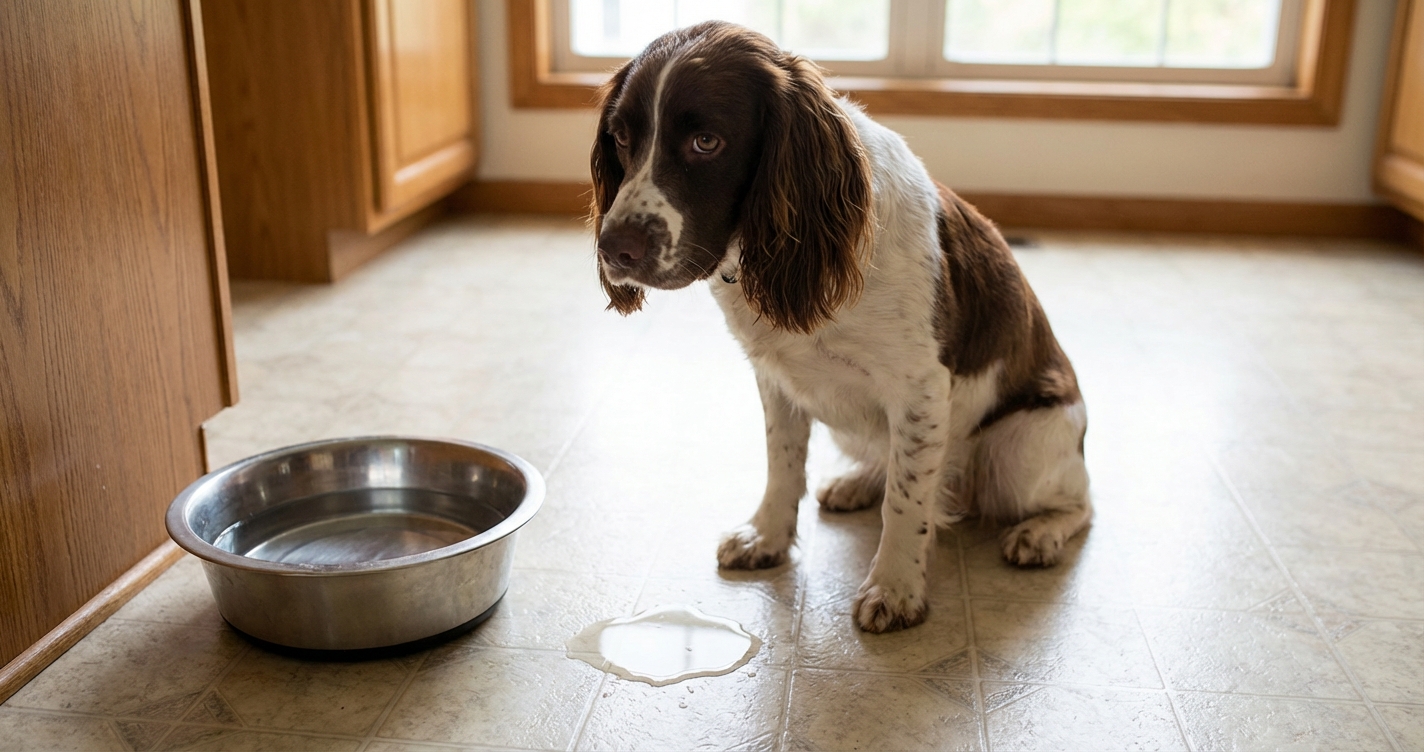
Right Then, Let’s Talk About Puddles on the Kitchen Floor
The other day, we got back from a proper yomp up Mam Tor. Fern, my whirlwind of a Spaniel, made a beeline for the water bowl and drank like she was trying to empty a reservoir. Thirty seconds later… whoosh. A perfect, crystal-clear puddle appeared on the lino. She looked at me, I looked at her, and Buster the Labrador just looked at his empty food bowl, hoping this drama might magically produce a biscuit.
It’s a heart-stopping moment, isn’t it? Seeing your dog being sick after drinking water. Your mind immediately races. Is it serious? Did they drink too fast? Is it time for a frantic call to the vet? Well, let’s put the kettle on and have a calm chat about it. Nine times out of ten, it’s nothing to fret about, but it’s always best to know what you’re looking for.
A quick but crucial disclaimer: I spend my days writing about our four-legged friends, but my expertise comes from years of cleaning up after them, not from a veterinary degree. This is a practical guide from one dog owner to another. If you are genuinely worried, your vet is always, always your first port of call.
First Things First: Vomiting or Regurgitating?
Before we go any further, we need to work out what’s actually happening. It sounds like splitting hairs, but it’s a key detail your vet will ask for.
- Vomiting: This is an active process. You’ll see their tummy muscles contract, you’ll hear heaving or retching, and it’s generally a bit of a dramatic performance. The contents are usually partially digested food, bile, and liquid.
- Regurgitation: This is a passive event. The water or food just seems to… fall out. There’s no heaving or effort involved. It often happens very soon after eating or drinking and what comes up is undigested, sometimes still in the shape of the food pellets.
Telling them apart can give a big clue as to the cause. Regurgitation often points to issues with the oesophagus (the tube leading to the stomach), whereas vomiting is more of a general stomach-related problem.
The Common Culprits (And Usually Nothing to Panic About)
More often than not, a dog bringing up water is down to one of these simple, everyday reasons. This is the stuff that happens in most dog-owning households from time to time.
Drinking Far Too Quickly
This is the Fern Special. After a good run or on a warm day, a thirsty dog will gulp down a huge volume of water incredibly fast. The sudden influx of cold liquid can shock the stomach, stretching it out and triggering a reflex that says, “Nope, too much, too fast!” and sends it all back out again.
The Empty Tummy Rumbles
Have you ever seen your dog throw up a bit of yellowish, frothy liquid, especially in the morning before breakfast? This is often just bile. It’s called Bilious Vomiting Syndrome, and it happens when stomach acids and bile irritate an empty stomach lining. A big drink of water on top of that can be enough to trigger the vomit reflex. My Buster, the Labrador-shaped stomach, used to do this before we split his meals up.
Post-Zoomies Excitement
A big drink followed immediately by a mad dash around the garden can be a recipe for a watery mess. All that sloshing around in an excited dog’s stomach can easily lead to it coming back up. It’s best to encourage a little quiet time for 15-20 minutes after a big meal or drink.
When to Pay Closer Attention: More Serious Causes
Okay, let’s look at the less common but more serious reasons. This isn’t a list to scare you, but to make you aware of the possibilities so you can act quickly if needed.
- Something Stuck in the Works (Obstructions): Dogs, especially young ones, can swallow things they shouldn’t – bits of a toy, a sock, a stone. An object can cause a blockage in the stomach or intestines, meaning nothing, not even water, can pass through properly.
- Tummy Troubles (Gastrointestinal Issues): Conditions like gastritis (inflammation of the stomach lining), pancreatitis, or even parasites can make a dog’s stomach incredibly sensitive and prone to vomiting.
- Problems with the Plumbing (Oesophageal Issues): Conditions like Megaesophagus mean the oesophagus is enlarged and doesn’t effectively push food and water into the stomach. This almost always leads to regurgitation rather than vomiting.
- Underlying Health Conditions: In some cases, persistent vomiting can be a sign of deeper issues like kidney or liver disease, or even certain infections. This is more common in older dogs or those with other symptoms.
The “Right, Phone the Vet Now” Checklist
This is the important bit. While a single episode of bringing up water after a big drink is rarely an emergency, you should call your vet immediately if you see any of the following:
- Repeated vomiting: If your dog is sick more than once or twice in a few hours.
- Lethargy: They seem unusually tired, weak, or just not themselves.
- Other symptoms: The vomiting is accompanied by diarrhoea, a loss of appetite, or a swollen abdomen.
- Blood in the vomit: This could look like fresh red blood or dark, coffee-ground-like material.
- Trying to be sick but can’t: Retching without producing anything can be a sign of bloat (Gastric Dilatation-Volvulus), which is a life-threatening emergency, especially in deep-chested breeds.
- Signs of pain: Whining, a hunched-up posture, or not wanting their tummy to be touched.
Your mantra should be: when in doubt, get it checked out. A phone call to the vet costs nothing and could make all the difference.
A Practical Home Action Plan (For Minor Cases)
If your dog has been sick just once, seems perfectly bright and happy, and you suspect it was just a case of over-enthusiastic gulping, here are a few practical steps.
Step 1: The Observation Post
Before you do anything, just watch your dog. Are they now happily playing or have they gone to lie in a corner? Is their tail wagging? Making a few notes can be incredibly helpful if you do end up needing to call the vet later.
Step 2: Slow Down the Slurping
If your dog is a serial gulper, the solution is often mechanical.
- Slow-down water bowls: These have lumps and bumps in them that force the dog to drink more slowly. They work a treat, though they can be a bit of a faff to clean properly.
- Put a big object in the bowl: A large, clean, smooth rock (too big to be swallowed!) can work just as well, forcing them to drink around it.
- Offer less, more often: Instead of filling the bowl to the brim, just put a smaller amount in and top it up regularly throughout the day.
Step 3: The Bland Diet Brigade
If their tummy seems a bit delicate, you might want to withhold their next meal or offer a small amount of something very plain, like a bit of cooked chicken or white fish with plain boiled rice. But again, if you’re at all unsure, have a word with your vet first.
Frequently Asked Questions
What does it mean if the sick is clear and foamy?
Usually, this is just a mix of saliva and water from the stomach. If it’s happening when their stomach is empty, it’s often just irritation.
Could my dog’s food be the problem?
It’s possible. A food allergy or sensitivity can cause general gastrointestinal upset, including vomiting. If the problem is persistent, it’s worth discussing their diet with your vet.
Is it ever ‘normal’ for a dog to be sick after drinking?
I wouldn’t say ‘normal’, but an isolated incident in an otherwise healthy and happy dog who has just drunk too fast isn’t typically a cause for alarm. The key is whether it’s a one-off or a recurring pattern.
So, there you have it. That puddle on the floor is often just a sign of a dog being a bit of a daft, over-eager creature. But by knowing the difference between a simple slurp-and-splash and the signs of something more serious, you’re in the best possible position to look after them. Now, I think Buster has waited long enough for that biscuit.

Related Posts