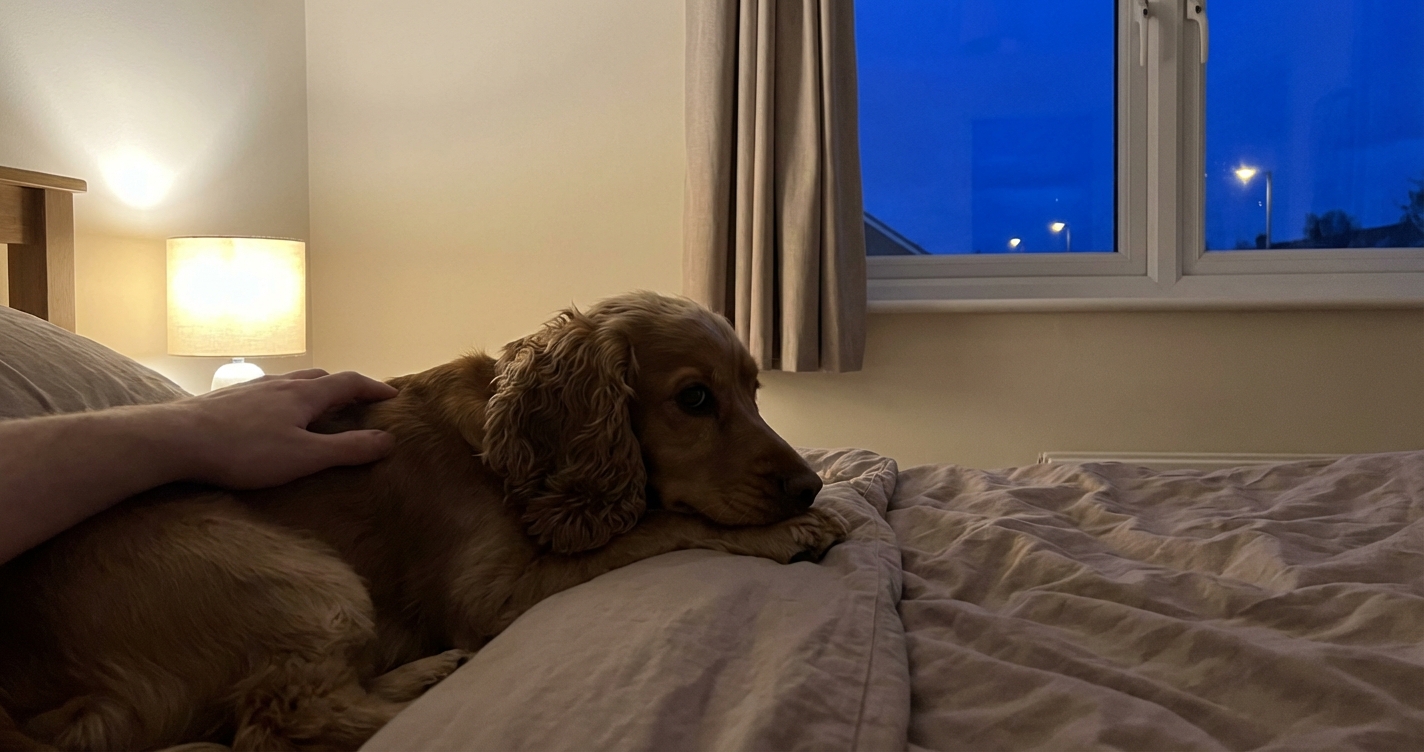
It’s 3 AM. The house is silent, save for the wind rattling the window pane—and the relentless, rhythmic click-click-click of claws on the laminate flooring.
You’re lying there, staring at the ceiling, listening to your dog do laps of the bedroom like they’re training for a marathon. Usually, they’re dead to the world by 10 PM, snoring loudly enough to wake the neighbours. But tonight? Tonight they are pacing, whining, and unable to settle. It’s unnerving, isn’t it?
When a dog becomes restless at night all of a sudden, it hits differently than general hyperactivity. It feels urgent. As a dog owner who has spent many a sleepless night worrying over a fidgety Spaniel, I know that panic well. Is it just a tummy ache? A badger in the garden? Or something worse?
Before we look at the long-term fixes, we need to do a bit of immediate triage. We need to work out if this is a “wait until morning” problem or a “get in the car now” problem.
The Emergency Triage: When to Act Immediately
Let’s be pragmatic. Most of the time, night-time restlessness is down to discomfort or environmental factors. However, because you’ve searched for “all of a sudden,” we cannot ignore the acute medical risks. If your dog is displaying any of the following alongside their restlessness, stop reading and call your emergency out-of-hours vet.
- Unproductive Retching: If they are trying to be sick but nothing is coming up, this is a classic sign of Gastric Dilatation-Volvulus (GDV), commonly known as Bloat. This is life-threatening and time-critical.
- Distended Abdomen: Does their tummy look swollen or feel tight like a drum?
- Pale Gums: Lift their lip. If the gums are pale or white rather than a healthy pink, it suggests circulation issues or shock.
- Collapse or Disorientation: If the pacing turns into stumbling.
- Excessive Panting: If the house isn’t hot, heavy panting is a primary pain signal.
If you’ve ticked any of those off, put the phone down and go to the vet. If not, let’s put the kettle on (decaf, obviously) and work through the Tonight vs. Tomorrow framework to figure out what’s going on.
The “Tonight” Checklist: Environmental & Physical Audits
If the emergency signs are absent, your dog is likely communicating discomfort or anxiety. Dogs are stoic creatures; they don’t complain until they absolutely have to. Here is what you need to check right now.
1. The Environmental Audit
Their hearing and sense of smell are vastly superior to ours. What feels like a quiet room to you might be a sensory nightmare for them.
- Critters in the Cavity: It sounds daft, but mice in the skirting boards or a fox screaming in the garden can drive a dog spare. If they are staring intently at a wall or the back door, trust their senses.
- The Temperature: We love a warm duvet, but dogs—especially double-coated breeds—can overheat easily at night. Check if the heating is still blasting. If they are constantly moving from the bed to the floor, they are likely trying to thermoregulate.
- New Noises: Is the boiler making a new clunking sound? Is there a storm brewing? High winds can rattle vents that upset noise-sensitive dogs.
Quick Fix: Try moving them to a different room or putting on some white noise (a fan or a radio on low volume) to mask external sounds.
2. The Physical Scan (Pain vs. Discomfort)
Sudden restlessness is often the only way a dog can tell you, “I hurt.”
- Joint Pain & Arthritis: Cold, damp nights can flare up old joints. If your dog struggles to get comfortable, lies down, then immediately stands up again, they simply cannot find a position that doesn’t hurt.
- The Digestive System: Listen to their stomach. Is it gurgling like a washing machine? They might need a toilet break urgently. Watch for the “prayer position” (front legs down, bum in the air), which often indicates abdominal pain or pancreatitis.
- Hidden Injuries: Run your hands gently over their body. Did they pick up a thorn in their paw on the evening walk? Is there a grass seed worked into their ear?
Quick Fix: If they need to go out, let them out on a lead. If it’s just a bit of an upset tummy, sometimes a boring toilet break is all that’s needed to settle the mind.
The “Tomorrow” Strategy: Long-Term Causes
If you manage to get through the night, but this becomes a pattern, we need to look at the broader picture. Here are the three most common culprits for sudden nocturnal changes that aren’t immediate emergencies.
1. Canine Cognitive Dysfunction (The “Sundowning” Effect)
If your dog is getting on in years, this is a prime suspect. Just like humans, older dogs can suffer from cognitive decline. This often manifests as Sundowning—where confusion and anxiety peak as the light fades.
They might forget where they are, get stuck in corners, or wake up startled. It’s heartbreaking to watch, but it is manageable with veterinary support and medication.
2. The Exercise Imbalance
Be honest—did they get enough stimulation today? A dog that has slept on the sofa all day while you were at work is simply fully charged by 10 PM. Conversely, too much high-intensity exercise right before bed can leave cortisol levels spiking, making it impossible for them to wind down.
The Fix: Shift the evening walk to earlier in the evening, and make the final pre-bed activity a “sniffari” (a slow, sniffing walk) or a brain game. Licking and sniffing are naturally calming behaviours.
3. Separation Anxiety & Isolation
If your dog sleeps in a separate room (like a utility room or kitchen) and suddenly starts kicking off, they may have developed late-onset separation anxiety. They know you are in the house, and they know they aren’t with you. This can be triggered by a scary event (like fireworks) that happened while they were alone, making that room feel unsafe.
Actionable Steps to Regain Your Sleep
You can’t pour from an empty cup, and you can’t look after your dog if you’re shattered. Here is a practical plan of action:
- Consult the Vet: If this behaviour persists for more than 24 hours, or if pain signals are present, get a check-up. Rule out urinary tract infections and joint issues first.
- Upgrade the Bed: If arthritis is suspected, a proper orthopaedic memory foam bed (not just a fluffy pillow) can make a world of difference to their sleep quality.
- Review the Diet: Heavy meals right before bed can cause indigestion. Try feeding their last meal a little earlier.
- Calming Aids: There are plenty of plug-in diffusers and natural supplements available that help take the edge off anxiety. They aren’t magic wands, but they help set the mood.
Sudden restlessness is worrying, but by stripping back the variables—checking the environment, ruling out pain, and managing their routine—you can usually get to the bottom of it. For now, check the locks, check the thermostat, and give them a reassuring pat. Hopefully, you’ll both be back to snoring shortly.

Related Posts