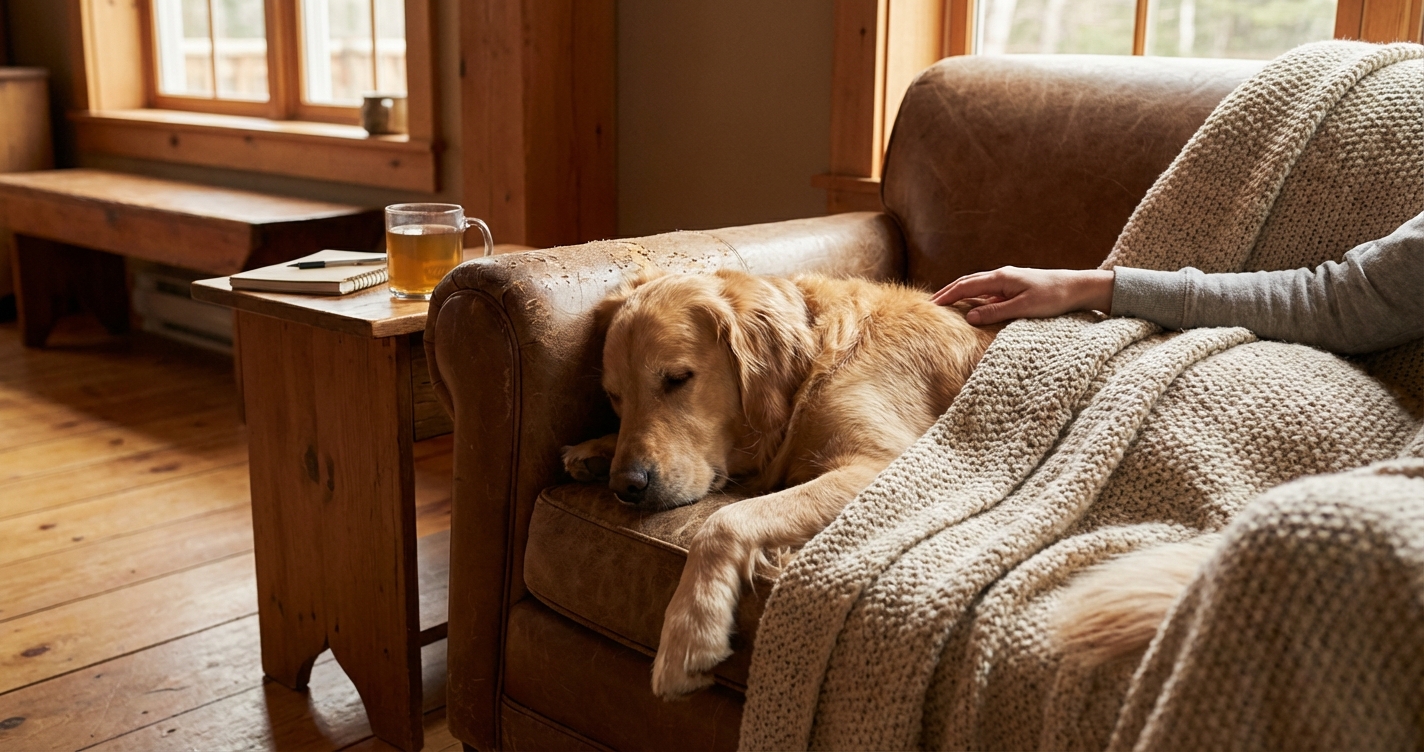

From Gentle Whuffles to Full-Blown Log-Sawing
The other night, I was jolted awake by a noise that sounded like a small, asthmatic bear trying to start a stubborn lawnmower. It wasn’t a bear, of course. It was Buster, my food-obsessed Labrador, flat on his back, paws in the air, snoring with an enthusiasm that could rattle the windows. It got me thinking, as I lay there staring at the ceiling, what’s actually going on when our dogs start rumbling in their sleep?
Most of the time, a bit of snoring from your four-legged friend is completely normal and, let’s be honest, sometimes quite endearing. But occasionally, a change in the tune or volume can be their way of telling us something isn’t quite right. So, let’s get the kettle on and have a proper look at the common causes of dog snoring, when to prick up your ears, and a few practical things you can do about it.
First Things First: What Exactly is a Snore?
Before we dive in, let’s clear up what’s happening. A snore is simply the sound made when air can’t move freely through the nose and throat. As your dog snoozes, the tissues in their throat relax, and if there’s any kind of partial blockage or narrowing in the airway, these tissues vibrate as they breathe. Voilà, you’ve got a snore.
- The Core Mechanic: Vibration of soft tissues in the upper airway during sleep.
- The Cause: Anything that obstructs or narrows this airway, from their anatomy to a bit of dust.
The Usual Suspects: Is Your Dog’s Breed to Blame?
Some dogs are just built for snoring. If you have a flat-faced or ‘brachycephalic’ breed, you’ll know exactly what I mean. Their charmingly squished faces come with a unique internal structure – a shorter airway and an elongated soft palate that can easily obstruct their breathing, especially when they’re relaxed.
Dog breeds prone to snoring include:
- Pugs
- French Bulldogs
- English Bulldogs
- Boxers
- Shih Tzus
- Boston Terriers
- Pekingese
For these chaps, snoring is often just part of the package. It’s their normal. The key is to know what *their* normal sounds like, so you can spot any unusual changes.
Common, Everyday Reasons for a Rumbling Dog
If your dog isn’t a flat-faced breed, or their snoring is a new development, it’s likely down to one of these common culprits. Thankfully, most are nothing to lose sleep over.
- Sleeping Position: Just like us, dogs can snore more in certain positions. Lying on their back often causes the tongue to fall back and partially block the throat. Buster the Lab is a prime example of a back-sleeping snorer.
- A Bit of Extra Timber: Let’s be frank. Carrying extra weight is a major cause of snoring. Excess fat around the throat can narrow the airways, leading to louder and more frequent snoring. It’s a sensitive topic, but managing their weight is crucial for their breathing and overall health.
- Allergies: Dogs can get hay fever, too! Allergens like pollen, dust mites, and mould can cause inflammation in their nasal passages and throat, leading to snoring. I always notice our energetic Spaniel, Fern, gets a bit snuffly after a long run through the fields in summer.
- Airborne Irritants: Things like cigarette smoke, strong perfumes, plug-in air fresheners, or even dust from shaking out a rug can irritate your dog’s respiratory system and trigger snoring.
- A Minor Obstruction: Sometimes the cause is as simple as a bit of grass or a seed that’s found its way up their nose during a particularly enthusiastic sniffing session.
When a Snore Isn’t Just a Snore: Red Flags to Watch For
Right, this is the important bit. While most snoring is harmless, it can sometimes be a symptom of a more serious health issue. The trick is not to panic, but to be observant. You know your dog better than anyone. A sudden change is the main thing to listen out for.
It might be time for a chat with your vet if the snoring is:
- Sudden and Loud: If your previously silent sleeper suddenly starts snoring for England, it’s worth investigating why.
- Accompanied by Gasping or Choking: If your dog seems to stop breathing for a few seconds and then gasps for air (a bit like sleep apnoea), this definitely warrants a professional opinion.
- Paired with Other Symptoms: Keep an eye out for other changes. Things like a runny nose (especially if the discharge is yellow, green, or bloody), coughing, wheezing, changes in appetite, or general lethargy alongside snoring should prompt a call to the vet.
Potential underlying health issues that can cause snoring include:
- Dental Problems: An abscessed tooth or infection in the mouth can lead to inflammation and swelling that obstructs the airways.
- Fungal Infections: Conditions like Aspergillosis can cause inflammation within the nasal passages.
- Hypothyroidism: An underactive thyroid can sometimes contribute to changes in the tissues of the airway.
- Growths or Polyps: Any kind of growth, benign or otherwise, in the nasal passages or throat will cause an obstruction.
The takeaway: Don’t try to diagnose things yourself. If the snoring has changed dramatically or comes with other worrying signs, a quick check-up provides peace of mind.
Practical Tips to Quiet the Canine Concert
If you’ve ruled out any serious concerns, there are a few simple, practical things you can try at home to help lessen the noise and improve your dog’s sleep quality (and yours!).
- Try a Different Bed: A round bed with raised sides encourages dogs to curl up, which keeps their airways more open than sprawling on their back.
- Elevate Their Head: Popping a small pillow or a rolled-up blanket under your dog’s head can help to open their airways, much like it does for us.
- Keep the Air Clean: Wash their bedding regularly in hot water to get rid of dust mites and other allergens. Consider using a humidifier if the air in your home is dry, especially when the central heating is on. And it’s best to avoid smoking or using strong air fresheners in the same room where your dog sleeps.
- Manage Their Weight: If your dog is a bit chunky, working to get them to a healthy weight is the single most effective thing you can do. It’s not just about snoring; it benefits their joints, heart, and overall quality of life.
Your Snoring Questions, Answered
Is it normal for a dog to snore?
For many dogs, yes! Especially for flat-faced breeds or older dogs. The key is to know what is normal for *your* individual dog and to pay attention to any sudden changes.
Why has my dog started snoring all of a sudden?
A sudden start to snoring is a flag. It could be something simple like a seasonal allergy kicking in, a change in sleeping position, or they might have a bit of a cold. However, because it’s a change from their baseline, it’s always worth watching them closely for other symptoms and considering a vet check if it persists.
Should I give my dog any medicine to stop them snoring?
Absolutely not. Never give your dog any human medications for snoring or congestion. These can be incredibly dangerous for them. If you believe your dog’s snoring requires intervention, the only person to consult is your vet.

Related Posts