The Heart-Warming Stuff: Is It Just a Cuddle?
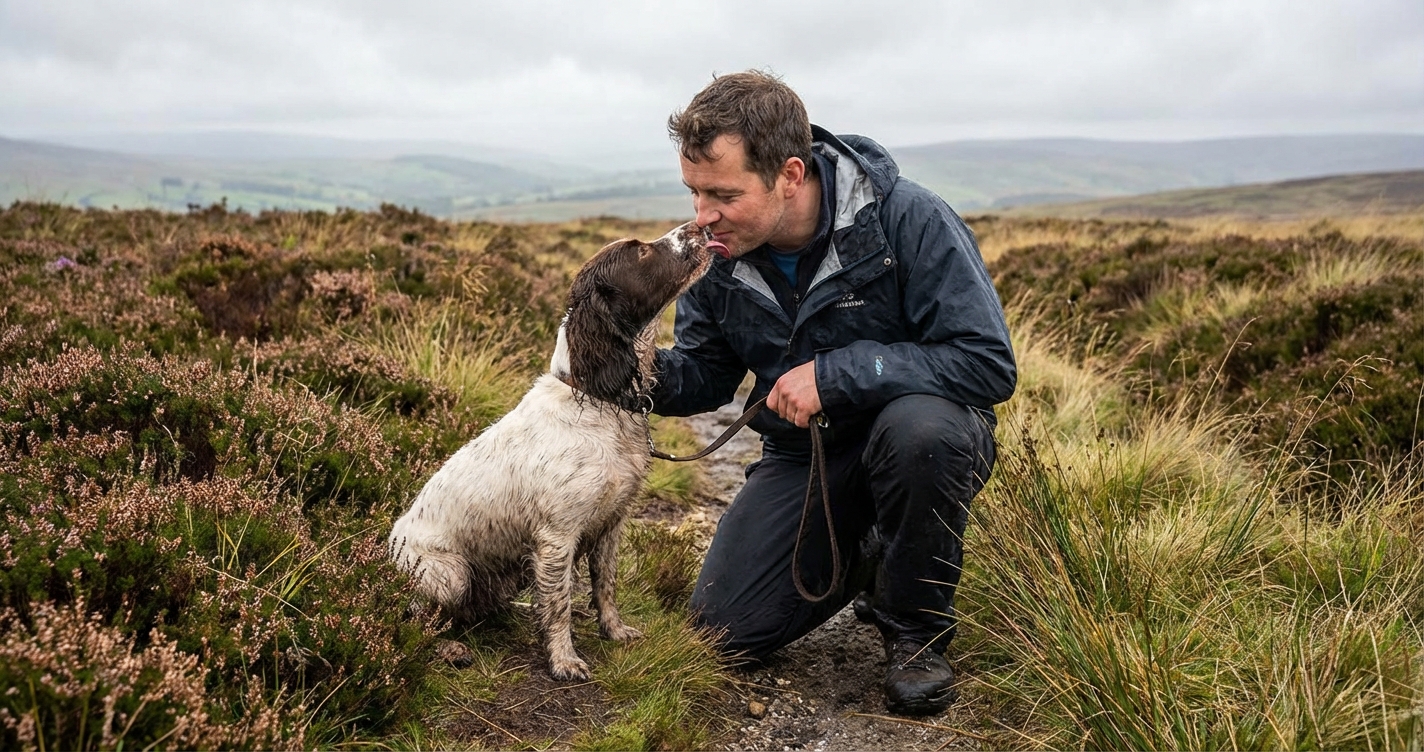
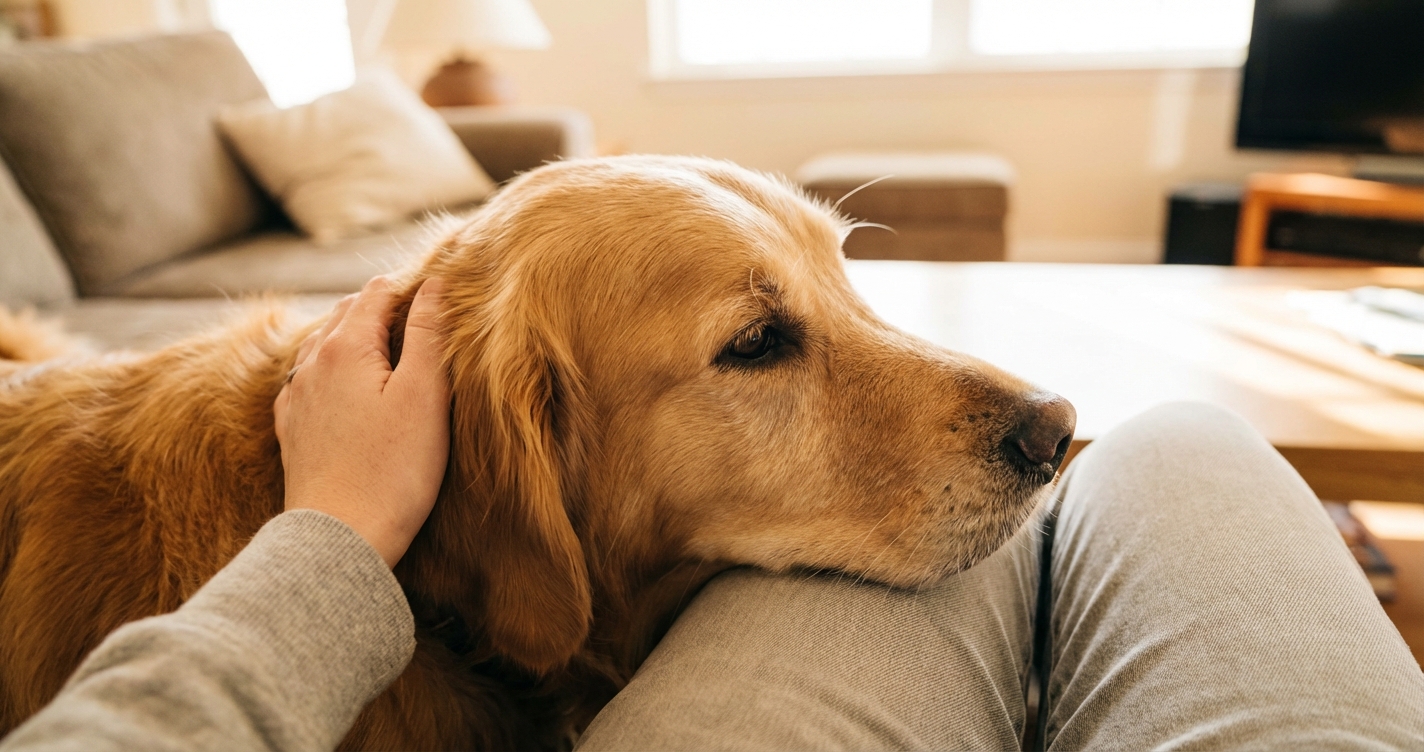
There’s nothing quite like it. You’ve just kicked off your muddy walking boots after a long stomp, and your four-legged friend trots over, leans in, and gives your leg a thorough nuzzle. It’s a common, and usually heart-warming, bit of behaviour. For the most part, when your dog rubs their face on you, it’s their equivalent of a hug.
This simple act is packed with meaning:
- A Show of Affection: It’s a clear, loving gesture. They’re seeking physical contact and reinforcing the bond you share. It’s their way of saying, “I’m glad you’re here.”
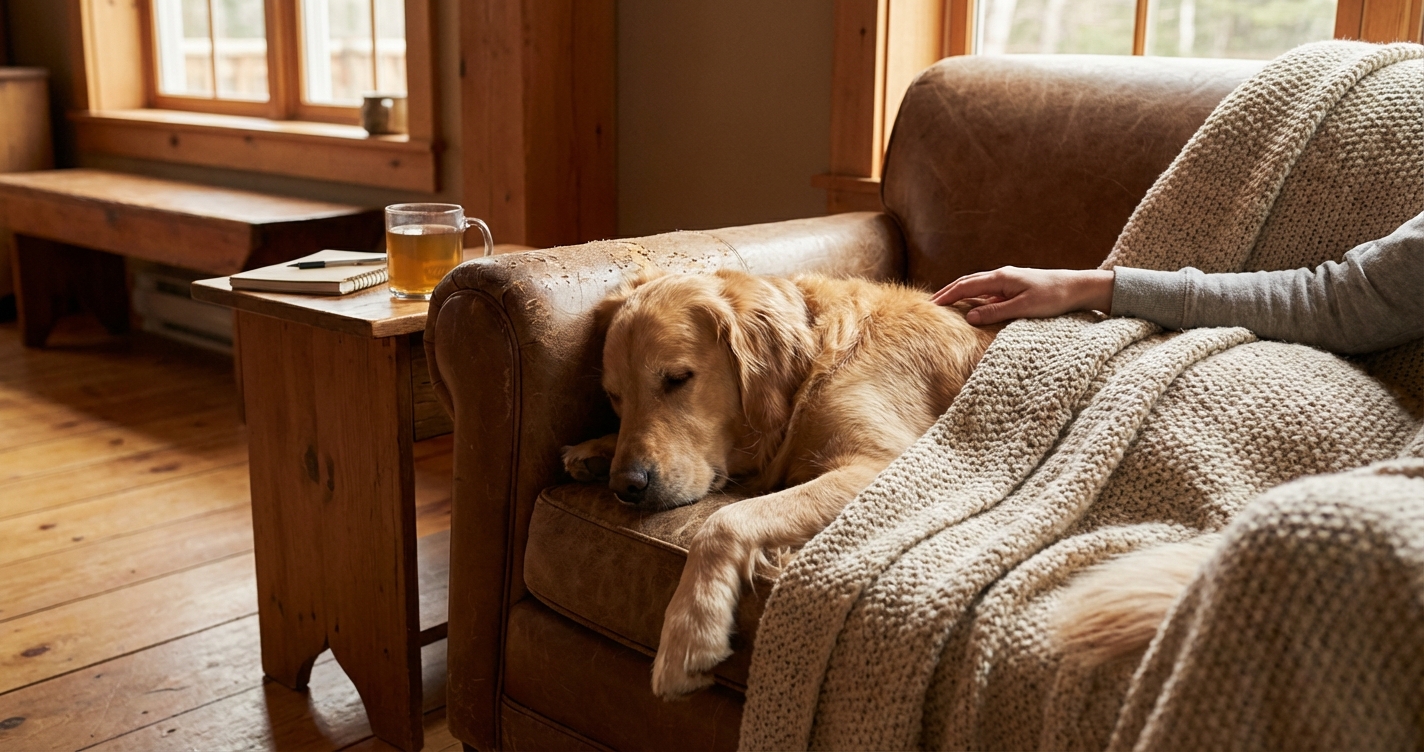
- Seeking Comfort: A dog might nuzzle into you when they’re feeling a bit anxious or just want some reassurance. You’re their safe space.
- A Big Hello: It’s often part of a greeting ritual, especially when you’ve just come home. They’re simply delighted to see you and are showing it in the best way they know how.
A Key Takeaway: A soft, gentle nuzzle, especially during a quiet moment or as a greeting, is almost always a sign of a happy, well-bonded dog.
“You’re Mine”: The Clever World of Scent Marking
Beyond simple affection, there’s some clever biology at play. Dogs have scent glands on their faces, particularly around their cheeks and muzzle. When they rub against you, they’re leaving behind their own unique scent, a bit like an invisible post-it note saying, “This person is part of my pack.”
This isn’t an aggressive claim of ownership, but rather a compliment. By marking you with their scent, they are strengthening your social bond and making you smell familiar and safe. They do the same thing to furniture, their favourite toys, and other pets in the house. It’s all part of creating a cohesive ‘family scent’ that makes them feel secure.
Think of it as them adding you to their friends list, but with pheromones instead of a button click.
When a Nuzzle Might Be a Niggle: Potential Health Worries
Right, let’s get practical. While most face rubbing is lovely, sometimes it’s a sign that something is bothering them. The key is to notice if the behaviour changes—if it becomes more frantic, frequent, or seems to cause them distress. This is when it’s time to pop your detective hat on.
That Pesky Itch: Allergies and Irritants
One of the most common medical reasons for a dog to rub their face is a simple itch. The culprit could be any number of things, and it can be a real faff to figure out.
- Environmental Allergies: Pollens, dust mites, or moulds can cause an itchy face, especially around the eyes and muzzle.
- Pesky Parasites: Fleas, ticks, and mites can cause intense irritation. Even if you can’t see them, they could be the cause.
- Contact Irritation: Think about a new plastic food bowl, a freshly washed blanket with different washing powder, or even a tight, chafing collar.
- Food Allergies: Less common, but an allergy to an ingredient in their food can manifest as itchy skin, including on the face.
Trouble in the Gums and Grinders
Dental discomfort is a sneaky one. An abscess, a broken tooth, or gum disease can cause significant pain, and a dog may rub their jaw and face against things to try and alleviate it. If the rubbing is focused on one side of their mouth, and perhaps they’re off their food, it’s definitely worth considering their teeth.
Eyes and Ears Acting Up
If something is irritating your dog’s eyes or ears, rubbing their face against you or the carpet is a go-to move for relief. Look out for:
- Eye Issues: A bit of dust, an inwardly growing eyelash, an infection (look for redness or discharge), or even conditions like dry eye can be the problem.
- Ear Infections: An itchy or painful ear will often lead to head shaking and rubbing that entire side of their head to get some relief.
A More Serious Matter: Neurological Niggles
Now, this is rare, so don’t leap to the worst-case scenario. However, for some breeds, persistent face rubbing or scratching can be a sign of a neurological condition. For example, Chiari-like malformation, which is more common in breeds like the Cavalier King Charles Spaniel, can cause pain that leads to this behaviour. It’s a very specific issue and is usually accompanied by other signs, but it’s something to be aware of.
Reading the Room: What’s the Context?
So how do you tell the difference between a happy nuzzle and a cry for help? It all comes down to context. Ask yourself a few simple questions:
- When is it happening? A soft rub on your leg when you settle on the sofa is different from a frantic scrape against the furniture right after a walk through a grassy field.
- What does their body language say? A happy dog will be relaxed, with a soft body and maybe a wagging tail. A dog in discomfort might be tense, whine, or seem agitated.
- Is it just you they’re rubbing on? If they’re rubbing on you, the sofa, the rug, and the door frame, it’s more likely to be a persistent itch rather than a targeted show of affection.
- Are they just tidying up? Many dogs give their face a good wipe on the carpet or their bed after eating. It’s often just their version of using a napkin!
The Telltale Signs: When to Ring the Vet
It’s never wrong to seek a professional opinion if you’re worried. It’s always better to be safe than sorry. You should definitely book a check-up if you notice any of the following:
- The rubbing becomes obsessive or frantic and you can’t distract them from it.
- You can see visible redness, swelling, sores, or bald patches on their face.
- They yelp, cry, or shy away when you try to touch their head or face.
- The behaviour is accompanied by other symptoms like discharge from the eyes or ears, a head tilt, loss of appetite, or general lethargy.
- You’ve ruled out the simple stuff (like a dirty face after dinner) and it’s still happening frequently.
Most of the time, a dog rubbing their face on you is one of the lovely quirks of dog ownership—a sign that you are their entire world. By being an observant owner, you can enjoy the affectionate nuzzles and be ready to step in if it ever signals that they need a bit of help.

Related Posts