
Will a Fox Attack My Cat or Small Dog? A Down-to-Earth Guide
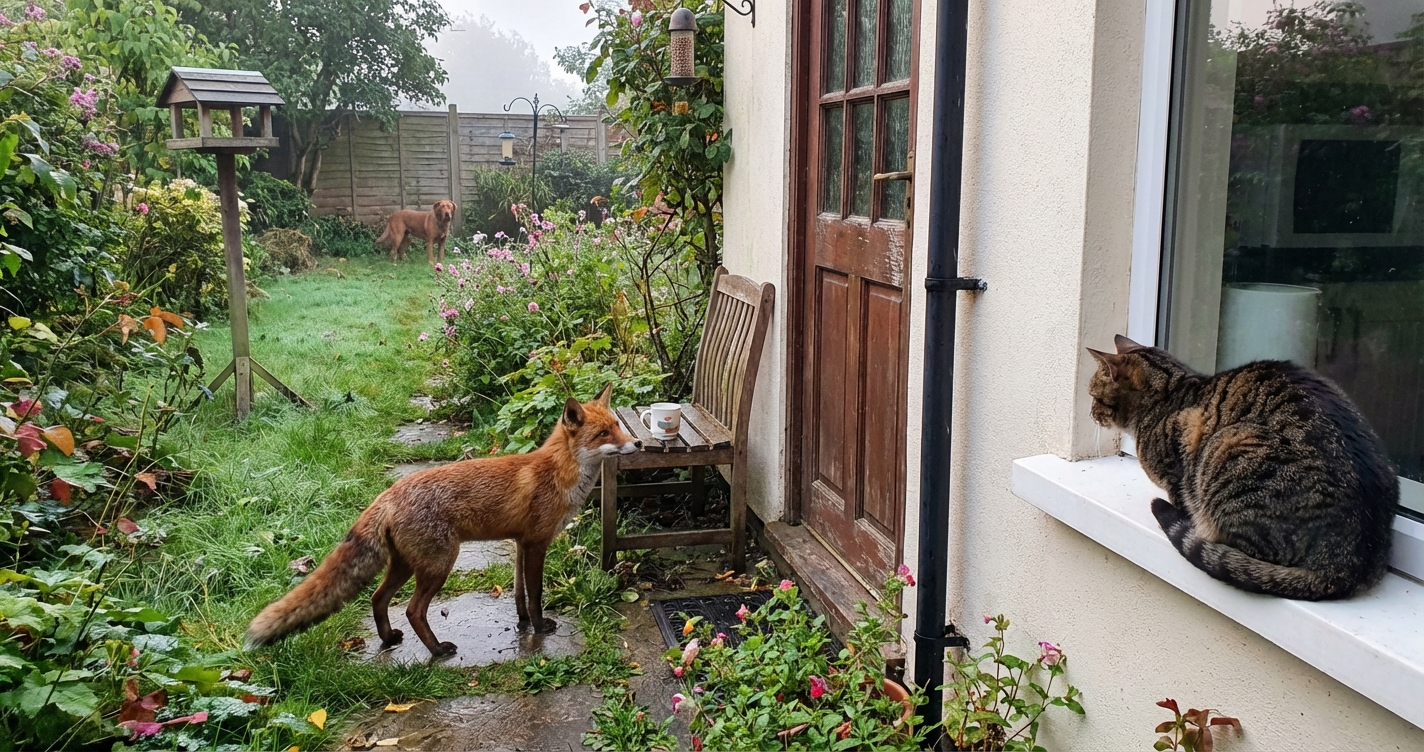
The other evening, I was stood by the back door with a mug of tea, watching the rain. Fern, my high-octane Spaniel, was doing her final patrol of the garden perimeter, while Buster the Lab was trying to telepathically open the biscuit tin. Then, a flash of orange under the bird feeder. A magnificent dog fox, looking utterly unfussed by the downpour. Fern froze, I froze. And Margo, the rescue cat who runs this entire operation, watched from her throne on the windowsill with nothing more than mild disdain. The fox gave us a sideways glance, snaffled a few fallen seeds, and trotted off into the gloom.
It’s a scene that plays out in gardens across the Peak District and beyond, and it always sparks that nagging question: is that beautiful creature a threat to my lot? The internet is awash with scare stories, but here at Pardon My Pet, we prefer facts over fear. So, let’s get the wellies on, wade through the myths, and figure out the real risk to our cats and dogs.
Understanding a Fox’s Supper: It’s Not What You Think
First things first, we need to get inside the mind of a fox. They’re not savage predators stalking prize-winning pooches. The proper term is opportunistic omnivores. In simple terms, they’re the ultimate pragmatists – they’ll eat whatever is easiest to find. Buster can relate.
A typical fox’s menu, according to wildlife biologists, looks a lot like this:
- Main Course: Earthworms, beetles, and other insects. (Yes, really).
- Regular Specials: Small mammals like mice, voles, and rabbits.
- Seasonal Treats: Berries, fruit, and bird eggs.
- The Easy Takeaway: Discarded human food from bins, carrion (animals that are already dead), and unsecured pet food.
Key Takeaway: Domestic pets are simply not on the regular menu. A fox’s entire survival strategy is based on getting the most calories for the least effort and risk. Tackling a feisty cat or a dog is far too much work for too little reward.
Foxes and Cats: A Rivalry, Not a Bloodbath
Right, let’s talk about the cat. Margo, our resident radiator queen, has had a few stand-offs with the local foxes. It usually involves a lot of tense staring before one of them gets bored and wanders off. This is typical.
A healthy, adult cat is roughly the same size as a fox, armed with five pointy ends, and possesses a level of righteous fury that most wild animals would rather avoid. Wildlife experts agree on this one: foxes and adult cats are competitors, not predator and prey. They’re rivals for territory and resources (like the sunny spot on the shed roof). An actual attack is exceptionally rare and usually only occurs under extreme circumstances, such as a fox defending its cubs or if the cat is very old, sick, or a tiny, unsupervised kitten.
The Real Risk to Small Dogs: When to Be Cautious
This is where we need to be a bit more sensible. While a fox wouldn’t dream of taking on a creature like Fern or Buster, its brain might categorise a very small dog differently. A fox that preys on rabbits could, in theory, mistake a Chihuahua, a toy poodle, or a tiny puppy for a similar-sized meal.
Is it common? No. Is it possible? Yes. The risk, while low, is not zero. This is why supervision is non-negotiable for very small breeds, especially during the hours when foxes are most active.
The Golden Rule: Never leave a puppy or a toy-sized dog unattended in the garden, particularly at dawn, dusk, or overnight. Their size and naivety make them uniquely vulnerable.
Protecting Your Pets: Practical Steps That Pass the ‘Mud Test’
Coexisting with wildlife is perfectly achievable. It just requires a bit of common sense and a few practical steps that work in the real world, even when it’s lashing it down.
- Secure Your Bins: A fox is drawn to food. If your bin is a buffet, they’ll keep coming back. Use a lock or a heavy object to secure the lid. This is the ultimate Buster-and-fox-proofing test.
- Don’t Feed Them: Deliberately leaving out food for foxes is a bad idea. It habituates them to your property and teaches them that humans are a source of food, making them bolder.
- Tidy Up Windfall Fruit: If you have fruit trees, don’t let a feast build up on the lawn.
- Secure Small Pets: If you keep rabbits or guinea pigs, ensure their hutches are solid, with strong wire and secure bolts. A determined fox can be surprisingly dextrous.
- Supervised Outings: As mentioned, always go outside with very small dogs or puppies, especially at night. A quick check with a torch before you let them out is a good habit.
Fox Diseases and Your Pets: A Sensible Look at the Health Risks
While the risk of a physical attack is low, foxes can carry diseases and parasites that could affect our pets. There’s no need to panic, just to be aware.
- Mange (Sarcoptic Mange): This is a nasty skin condition caused by mites. It’s the most common ailment you’ll see in urban foxes. While it can be transmitted to dogs, it’s not very common and requires direct contact. Good preventative vet care is your best defence.
- Worms: Foxes can carry lungworm and roundworm, which can be passed on through their faeces. This is a key reason to stay on top of your pet’s regular worming treatment.
- Rabies: A quick but important note for our UK readers – foxes in the UK do not have rabies. The UK has been rabies-free since the early 20th century.
Expert Q&A: A Wildlife Biologist Sets the Record Straight
We had a chat with a wildlife biologist to get straight answers to your most common worries.
Q: Will a fox actively hunt my healthy, adult cat?
A: Overwhelmingly, no. The data and countless observations show they coexist, often ignoring each other. A fox knows a cat is a formidable opponent and not worth the risk.
Q: My dog chased a fox from the garden. Is my dog in danger if it corners one?
A: The fox is in far more danger. Its instinct is to flee. If cornered, it will defend itself with a bite before trying to escape, but it will not initiate a fight with a larger animal. It’s best to avoid these encounters for the sake of the fox.
Q: So, what’s the final verdict?
A: The danger from foxes to domestic pets is vastly overstated. For owners of cats and medium-to-large dogs, the risk is negligible. For owners of very small dogs, puppies, and kittens, the key is not fear, but sensible supervision. By making your garden less attractive and being mindful, you can live alongside these fascinating animals without any trouble at all.

Related Posts