Can an Adult Dog Eat Puppy Food? The Short Answer
Right, let’s get this sorted before the kettle’s boiled. The long and short of it is: no, an adult dog shouldn’t regularly eat puppy food. A sneaky mouthful nicked from the pup’s bowl won’t do any lasting harm, but making it a regular meal can lead to a fair bit of bother down the line.
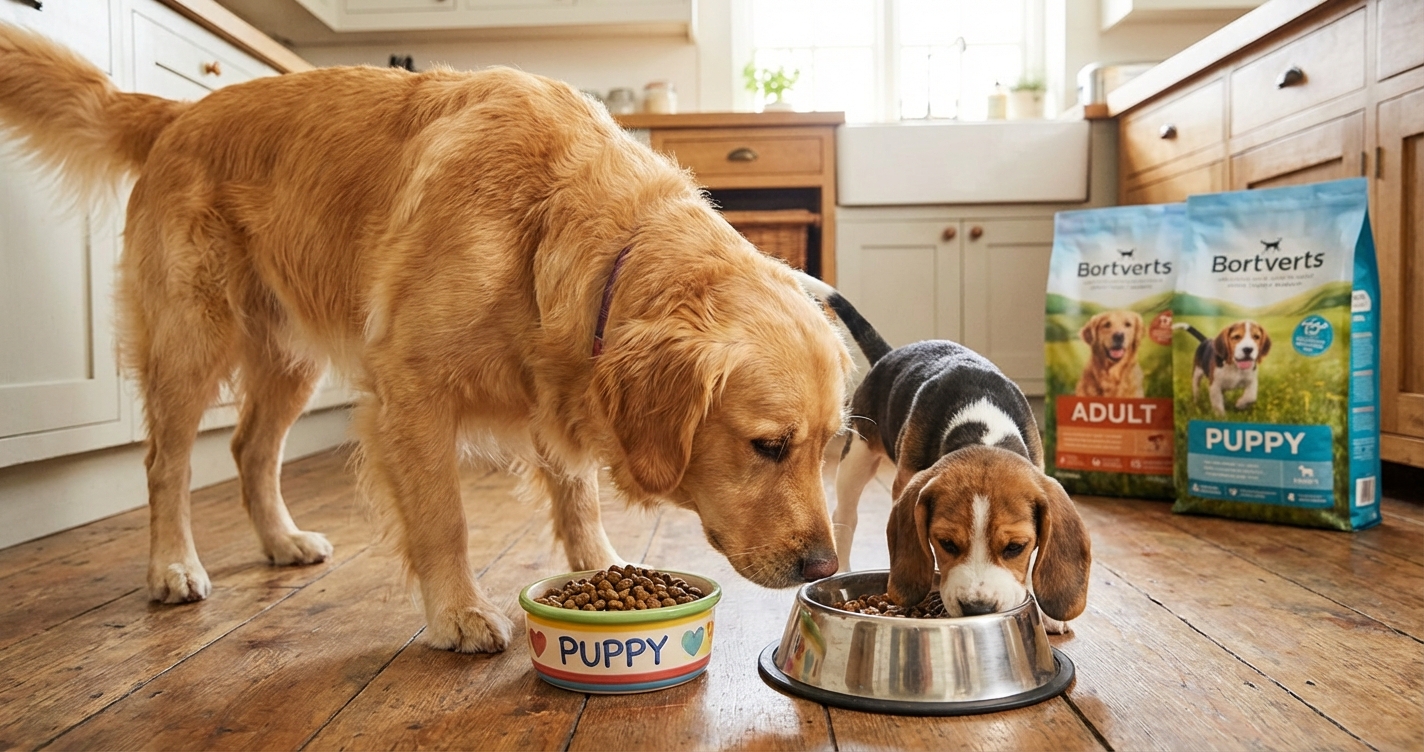
I learned this the hard way. The other day, I turned my back for a minute and Buster, my food-hoover of a Labrador, had shouldered our new spaniel pup, Fern, out of the way and was halfway through her dinner. The look of pure, unadulterated joy on his face was matched only by the gurgling from his stomach later that evening. It’s a classic multi-dog household problem, but it highlights a crucial point: food designed for a growing pup is simply not the right fuel for a fully-grown dog’s engine.
The Nutritional Divide: Puppy Grub vs. Adult Rations
You wouldn’t put rocket fuel in a tractor, would you? It’s the same principle with dog food. A puppy’s body is a construction site, working overtime to build bone, muscle, and everything else. An adult dog, on the other hand, is mostly in maintenance mode. Their food reflects this fundamental difference in their nutritional needs.
Here’s the breakdown of what sets puppy food apart:
- Higher Calories: Pups burn through energy at a tremendous rate. Their food is incredibly calorie-dense to fuel all that growing, playing, and general chaos.
- More Protein: Protein is the building block for new muscle and tissue. Puppy formulas are packed with it to support rapid development.
- Higher Fat Content: Fat is a crucial source of concentrated energy and is vital for brain and vision development in young dogs.
- Different Mineral Balance: Puppy food has carefully controlled levels of calcium and phosphorus to ensure strong, healthy bone growth. The wrong balance in an adult dog can cause problems.
What Happens if an Adult Dog Keeps Eating Puppy Food?
Letting your grown-up dog dine on puppy food isn’t a kindness; it’s a recipe for piling on the pounds and putting their health at risk. Buster’s one-off feast just led to a bit of a windy evening, but a long-term habit can cause more serious issues.
Key Takeaways on the Risks:
- Weight Gain and Obesity: This is the biggest risk. The sheer calorie density of puppy food is far too much for the slower metabolism of most adult dogs. A chubby dog might look cuddly, but obesity is linked to a whole host of health problems, from diabetes to heart disease.
- Orthopaedic Stress: Carrying extra weight puts a massive strain on a dog’s joints, ligaments, and bones. For breeds already prone to issues like hip dysplasia, this can be particularly damaging.
- Pancreatitis: For some dogs, a sudden high-fat meal (like a bowl of stolen puppy food) can trigger a painful and serious inflammation of the pancreas.
- Upset Stomach: The rich formula can simply be too much for an adult dog’s digestive system to handle, leading to diarrhoea and vomiting.
Are There Ever Exceptions to the Rule?
Now, life’s never black and white, is it? While puppy food is a no-go for the average adult dog, there are a few very specific scenarios where a vet might actually recommend it for a short period. This should only ever be done under the direct guidance of your vet.
When a Vet Might Prescribe Puppy Food:
- For Pregnant or Nursing Mothers: A mother dog producing milk for a litter of pups has immense energy demands. A calorie-dense puppy formula can help her maintain a healthy weight and provide for her babies.
- For Severely Underweight Dogs: A dog that has been rescued from neglect or is recovering from a serious illness might be prescribed puppy food to help them safely gain weight and rebuild muscle mass.
- For Some High-Performance Athletes: In rare cases, extremely active working dogs (like sled dogs or some fell-running companions) might benefit from the extra calories, but this is a specialist area that needs expert nutritional advice.
“The Hoover Just Nicked the Puppy’s Dinner!” What to Do?
First off, don’t panic. As with Buster’s opportunistic snack, a single, accidental meal is unlikely to cause any major harm. Your dog might have a bit of a dicky tummy or be unusually gassy for a day or so.
Just keep an eye on them. Make sure they have plenty of fresh water and perhaps feed them a slightly smaller portion of their regular food at the next mealtime. If you notice any serious signs like persistent vomiting, diarrhoea, or lethargy, give the vet a bell for advice.
Keeping Noses in the Right Bowls: A Multi-Dog Household Guide
Managing mealtimes with a pup and an adult is a challenge that fails the “Mud Test” daily in our house. Here are a few practical, battle-tested strategies to stop food theft:
- Separate Rooms: The simplest solution. Feed the dogs in different rooms with the doors closed. No opportunity, no crime.
- Crate Feeding: If your dogs are crate-trained, feeding them in their own dens creates a safe, personal space where they can eat in peace.
- Supervised Mealtimes: Stay with them while they eat. As soon as they are finished, pick the bowls up immediately. Don’t leave food lying around.
- Strategic Height: If you have a big dog and a little pup, you can sometimes place the smaller dog’s bowl on a raised surface the big’un can’t reach. This only works one way, mind!
Frequently Asked Questions
What about ‘all life stages’ food?
An ‘all life stages’ formula is designed to meet the nutritional requirements for all dogs, from puppy to senior. They are formulated to meet the higher needs of growing puppies, which means they are often higher in calories and fat than a standard adult maintenance diet. They can be a good option, but you’ll need to be very careful with portion control for your adult dog to prevent weight gain.
Can a senior dog eat puppy food?
Absolutely not, unless specifically directed by a vet. Senior dogs have the opposite needs; their metabolism is slowing down, and they often require fewer calories, less fat, and different nutrient profiles to support ageing joints and organ function. Puppy food would be a fast track to obesity for an older dog.
My adult dog is a picky eater. Will puppy food tempt them?
It might, as it’s often richer and more palatable. However, it’s not a healthy long-term solution. You’re better off finding a high-quality adult food they enjoy, perhaps by trying a wet food topper or a different protein source, rather than resorting to a food that is nutritionally inappropriate for their life stage.

Related Posts