So, Can Dogs Have Peanuts? The Short Answer
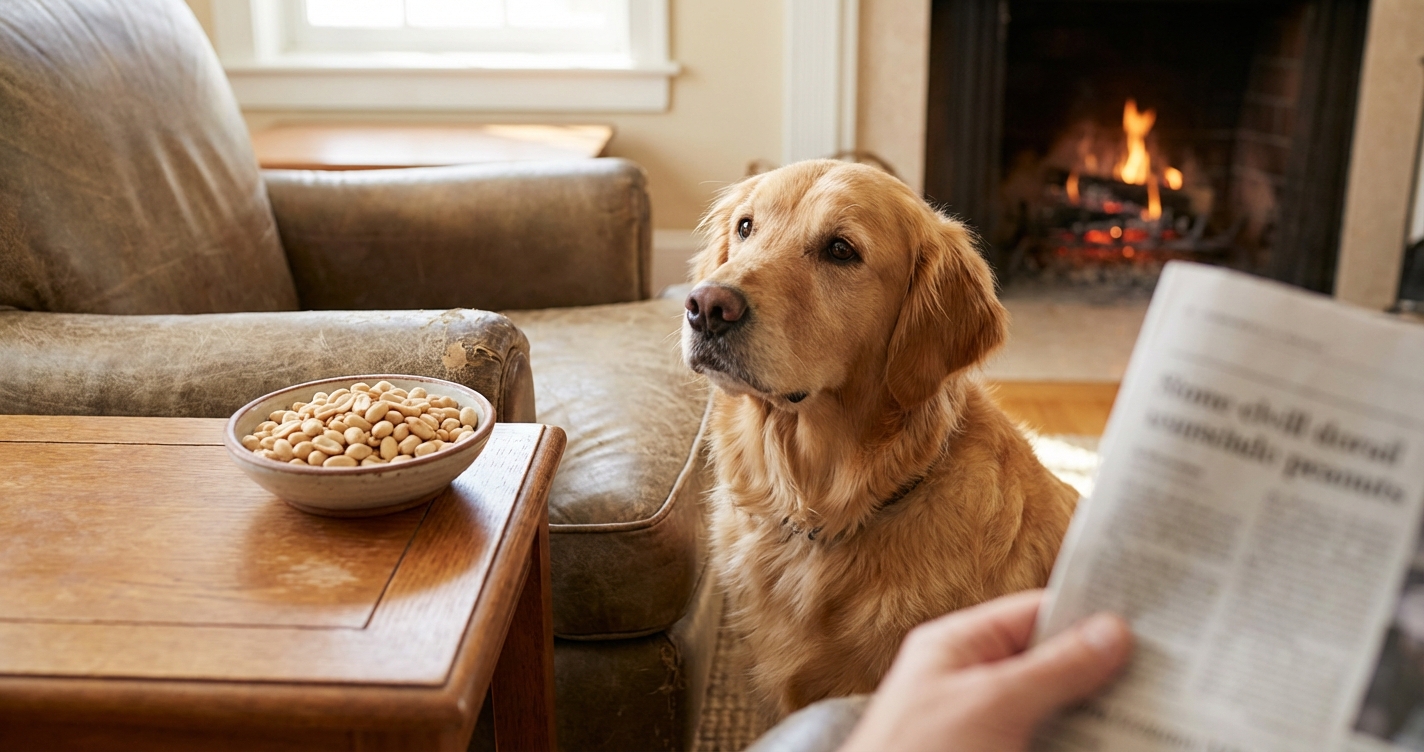
Sat by the fire, paper in hand, with a small bowl of dry roasted peanuts on the side table. A classic Saturday scene. But I’m never truly alone. A gentle thump, thump, thump of a tail against the rug and the soft, heavy breathing of Buster, my food-radar Labrador, reminds me I have company. His eyes say it all: “Right then, Dad. Are we sharing, or what?”
It’s a question every dog owner faces with a snack in hand. So, let’s get it sorted. Can dogs actually eat peanuts?
Yes, but with some serious caveats. In their purest form, plain, unsalted peanuts are not toxic to dogs. Unlike some other nuts (I’m looking at you, macadamias), they don’t contain any inherent poison. But—and this is a big but—that doesn’t mean you can just tip a bag of pub snacks into their bowl. The way peanuts are prepared and how many you offer makes all the difference between a healthy treat and an emergency trip to the vet.
The Bottom Line: Plain, unsalted, and shelled peanuts are generally safe for dogs in very small amounts.
A Look at the Nutritional Perks
When given correctly, peanuts can offer a little nutritional boost for your four-legged friend. They’re packed with some decent stuff:
- Protein: Good for muscle maintenance and energy.
- Healthy Fats: Contains heart-healthy monounsaturated fats.
- Niacin (Vitamin B3): Essential for a whole host of bodily functions.
- Vitamin E: A brilliant antioxidant that helps protect cells from damage.
But remember, these benefits are only present when peanuts are treated as a rare, high-value snack, not a staple of their diet. Their regular grub should be providing everything they need.
The Big Risks: The ‘Pardon My Pet’ Peanut Safety Checklist
Right, this is the important bit. Before a single peanut passes your dog’s lips, you need to be aware of the potential pitfalls. Think of this as our official “Peanut Mud Test”—if it doesn’t pass these checks, it doesn’t go near the dog.
High Fat Content & Pancreatitis
Peanuts are loaded with fat. While it’s the “good” kind for us, a dog’s digestive system isn’t built for it. Too much fat can lead to an upset stomach, vomiting, and diarrhoea. Worse, it can trigger a painful and potentially fatal condition called pancreatitis—a severe inflammation of the pancreas. This is a particular risk for smaller breeds or dogs already prone to being a bit portly (looking at you again, Buster).
Choking Hazard
This is a pure and simple mechanical risk. Peanuts, especially for smaller dogs or eager eaters like my spaniel, Fern, can be a serious choking hazard. They can easily get lodged in the windpipe. Never give a whole handful.
Salt & Flavourings are a No-Go
The peanuts we snack on are almost always salted, honey-roasted, or spiced. All these additions are bad news for dogs. Excessive salt can lead to sodium ion poisoning, which causes vomiting, tremors, seizures, and can be extremely dangerous. Flavourings and spices can irritate their stomach.
Key Takeaway: Only ever use plain, unsalted, unflavoured peanuts. Dry-roasted or raw are the only safe options.
Aflatoxins (The Hidden Mould Risk)
This is a non-obvious one. Peanuts can sometimes be contaminated with a type of fungus that produces a substance called aflatoxin. It’s a nasty toxin that can cause liver damage in dogs. Reputable brands of peanuts and peanut butter for human consumption have very low risk, but it’s another reason to only buy fresh, quality products and never feed your dog old or mouldy nuts.
Allergic Reactions
While much rarer than in humans, dogs can have peanut allergies. Signs can range from skin irritation and itching to, in severe cases, anaphylaxis. If you’re giving a peanut for the first time, give only one and watch your dog closely for any adverse reactions.
Can Dogs Eat Peanut Shells? A Hard No.
Absolutely not. Peanut shells are highly fibrous and indigestible. They pose a significant choking risk and can cause gastrointestinal blockages. Always, always remove the shell before feeding.
Is Peanut Butter Safe for Dogs? The Xylitol Warning
Ah, peanut butter. The go-to for stuffing a Kong toy. Most of the time, it’s fine. But you MUST check the label for one ingredient: Xylitol.
What is Xylitol? It’s an artificial sweetener often found in “sugar-free” or “low-calorie” products, including some brands of peanut butter. While perfectly safe for humans, it is extremely toxic to dogs. Even a small amount can cause a massive insulin release, leading to a life-threatening drop in blood sugar (hypoglycemia), liver failure, and death.
The Peanut Butter Rule: Always read the ingredients list. If it contains Xylitol (sometimes listed as ‘birch sugar’), it’s poison for your dog. Stick to natural peanut butters that contain nothing but 100% peanuts.
A Dog’s Portion: How Many Peanuts Can They Safely Eat?
Moderation is everything. A good rule of thumb is the 10% rule: treats should make up no more than 10% of your dog’s daily calorie intake. For peanuts, this means very little.
- Large Dogs (like a Labrador): A few shelled, plain peanuts (maybe 4-5) as a very occasional treat is plenty.
- Small Dogs (like a Terrier): One or two peanuts is a suitable amount.
Think of them as a jackpot reward for a brilliant recall out on the fells, not a daily biscuit.
How to Safely Prepare Peanuts for Your Dog
Ready to offer a nutty treat? Follow these steps to the letter to ensure it’s a safe experience.
- Select the Right Nuts: Choose plain, raw or dry-roasted, unsalted peanuts. Avoid all flavoured, salted, or candied varieties.
- Remove the Shell: Completely de-shell every single peanut. No exceptions.
- Check for Freshness: Discard any nuts that look discoloured, shrivelled, or mouldy.
- Serve in Moderation: Offer one or two nuts based on your dog’s size. For very small dogs, consider crushing the nut into smaller pieces to minimise choking risk.
What to Do If Your Dog Raids the Peanut Bowl
So, you turned your back for a second and your dog has inhaled a bowl of salted peanuts. First, don’t panic. Check what they ate. If it was peanut butter, check the label for Xylitol immediately. If it contains Xylitol, call your vet or an emergency vet service right away. This is a true emergency.
If they’ve just had too many plain or salted peanuts, watch them closely for:
- Vomiting or diarrhoea
- Lethargy or weakness
- Stomach pain or a bloated abdomen
If you see any of these signs, it’s best to ring the vet for advice. They’ll know your dog’s history and can give you the best guidance.
Better Bites: Healthy Peanut Alternatives
If the risks feel a bit much, there are plenty of other fantastic, crunchy, and safe treats for your dog.
- Carrot sticks: Great for their teeth.
- Apple slices: (Just remove the pips and core).
- Green beans: A brilliant low-calorie option.
- Specially formulated dog biscuits: The safest bet of all!
Frequently Asked Questions About Dogs and Peanuts
A few quick-fire answers to common queries.
Can puppies eat peanuts?
It’s best to avoid it. Puppies have very sensitive stomachs, and the high fat content and choking risk are just not worth it. Stick to proper puppy treats.
Can dogs eat boiled peanuts?
Generally, no. Boiled peanuts are often prepared with a huge amount of salt, making them unsuitable for dogs.
My dog ate one salted peanut, what should I do?
A single salted peanut is highly unlikely to cause any harm to a medium or large dog. Just ensure they have access to fresh water and don’t make a habit of it.

Related Posts