Can Dogs Eat Sweet Potatoes? The Short Answer Over a Quick Pint
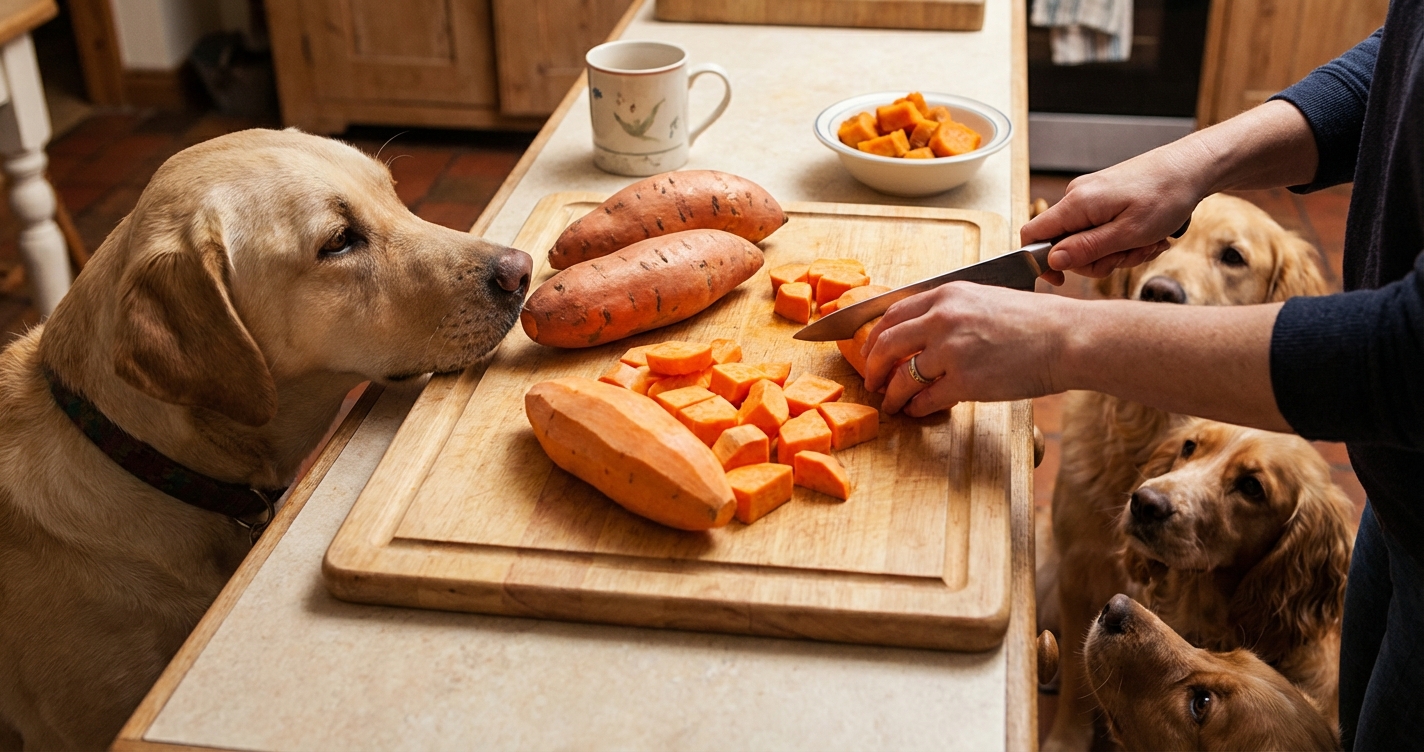
The other Sunday, I was in the kitchen wrestling with a mountain of veg for a roast. Buster, my food-obsessed Lab and chairman of the board, had his nose glued to my chopping board, leaving a small puddle of drool on the floor. His eyes were locked on the bright orange sweet potatoes. He looked at me, then at the spud, with that classic, heart-melting expression that says, “Is that for me, dad?” It’s a question many of us have asked while our four-legged supervisors watch our every culinary move.
So, let’s get straight to it. Can dogs eat sweet potatoes?
Yes, absolutely. In moderation, and when prepared correctly, sweet potatoes are a fantastic, nutrient-packed treat for most dogs. They are a common ingredient in high-quality dog foods for a reason. But, as with anything you’d share from your own plate, there are a few crucial rules to follow.
What’s the Fuss About? The Good Stuff in Sweet Potatoes
This isn’t just about giving your dog a tasty morsel. Sweet potatoes are bursting with goodness that can give your mate a real health boost. They’re what I call a ‘proper’ vegetable, full of substance and benefits, unlike some of the flashier but less useful options out there.
- Rich in Dietary Fibre: This is a big one. The fibre in sweet potatoes is brilliant for your dog’s digestive system, promoting regular bowel movements and good gut health. If your dog has the occasional bout of loose stools, a bit of mashed sweet potato can help firm things up.
- Packed with Vitamins: They are a powerhouse of essential vitamins. Most notable is Vitamin A, which is vital for vision, skin, coat health, and muscle function. They also contain plenty of Vitamin C for immune support and Vitamin B6, which is crucial for countless bodily functions.
- Full of Minerals: Your dog will get a good dose of potassium, which supports heart health and nerve function, as well as manganese.
- A Source of Antioxidants: These help protect the body’s cells from damage and support overall wellness as your dog ages.
Hold Your Horses: The Potential Pitfalls to Avoid
Before you start tossing chunks of sweet potato at your dog, let’s talk about the risks. It’s not a free-for-all. My high-energy Spaniel, Fern, would happily eat a whole tray of them, but that would be asking for trouble.
- NEVER Feed Raw Sweet Potato: This is the most important rule. Raw sweet potato is difficult for dogs to digest and can cause an upset stomach or even a blockage. It’s also a serious choking hazard, especially for a gobbler like Buster.
- Watch the Sugar Content: While they are complex carbohydrates, they are still starchy and have a high sugar content. This makes them a treat to be given in moderation, especially for overweight or diabetic dogs. Always chat with your vet if your dog has underlying health conditions.
- No Seasonings, Fats, or Oils: The sweet potatoes you feed your dog should be completely plain. No salt, no butter, no garlic, no fancy herbs you’ve used for your own roasties. These additions can be toxic or cause pancreatitis.
- The Grain-Free Diet Debate: You may have heard whispers linking potatoes and legumes in grain-free diets to a heart condition called Canine Dilated Cardiomyopathy (DCM). The investigation is ongoing, but it appears to be related to diets where these ingredients are the main bulk, not when given as a small, occasional treat. As part of a balanced diet, it’s not a concern for most.
The Right Way to Prep a Spud (The Mud Test Approved Method)
Here’s the practical bit. This method passes my “Mud Test” – it’s simple, creates minimal mess, and is easy to do even after a long, muddy walk through the Peaks when you can barely be bothered to make your own tea.
The best methods are boiling, steaming, or baking until soft.
- Wash and Peel: Give the sweet potato a good scrub under the tap. It’s best to peel the skin off. While the skin isn’t toxic, it can be tough to digest and may cause an upset stomach for some dogs.
- Chop: Cut it into bite-sized chunks appropriate for your dog.
- Cook It Plain: Boil, steam, or bake it with absolutely nothing added. Cook until it’s soft enough to be easily pierced with a fork.
- Cool and Serve: Let it cool down completely before serving. You can serve the chunks as they are, or mash them up.
Sweet Potatoes vs. Regular Potatoes: The Tuber Tussle
This is a common point of confusion. While they share a name, they are not from the same family. Your standard white or red potato is a nightshade, whereas a sweet potato is a root vegetable from the morning glory family.
Key Takeaway: Never, ever feed a dog raw regular potatoes. They contain a compound called solanine which is toxic to dogs. Even cooked, plain white potatoes are mostly starchy filler with fewer nutritional benefits than their sweet counterparts. If you have a choice, sweet potato wins every time.
How Much is Too Much? A Guide to Portions
Remember the 10% rule: treats should make up no more than 10% of your dog’s daily calorie intake. Sweet potato is a treat, not a meal replacement.
- For a small dog: A teaspoon or two of mash is plenty.
- For a medium dog (like Fern): A tablespoon is a good guideline.
- For a big lad (like Buster): A couple of tablespoons will do.
Start with a very small amount to see how your dog’s stomach handles it, and introduce it gradually.
Your Sweet Potato Questions Answered
Can dogs eat sweet potato skins?
It’s best to avoid them. The skins are fibrous and can be difficult for a dog to digest, potentially leading to an upset stomach. Peeling is the safest option.
Can puppies eat sweet potatoes?
Yes, once they are weaned and on solid food, a tiny amount of cooked, mashed sweet potato can be a nice treat. Their digestive systems are sensitive, so keep the portion minuscule.
What about sweet potato pie or shop-bought chips?
A firm no. Sweet potato pie is loaded with sugar, spices (like nutmeg, which is toxic to dogs), and fat. Sweet potato chips or fries are often cooked in oil and covered in salt. Stick to the plain, home-cooked stuff only.
The Verdict from the Board of Directors
So, there you have it. Sweet potatoes get a resounding paws-up from Buster and Fern (Margo, the cat, remains unimpressed on her radiator throne). They are a healthy, tasty, and safe treat when you follow the rules. Just remember: cook it plain, serve it cooled, and keep the portions small. Now, if you’ll excuse me, I think I see a certain Labrador trying to ‘help’ with the washing-up.

Related Posts