Why Bother Boiling Chicken for Your Dog?
It’s one of those things, isn’t it? One minute they’re charging through the bracken like a furry cannonball, the next they’re giving you *that look*. The one that says their tummy’s doing the cha-cha and dinner is absolutely off the cards. For times like these, or just as a high-value treat, a bit of plain boiled chicken is an absolute godsend.
It’s wonderfully simple, easy for a dog’s digestive system to handle, and packed with lean protein. It’s the cornerstone of a ‘bland diet’ that often gets recommended for a dog feeling a bit poorly. But getting it right is key to keeping it safe and beneficial.
Picking the Right Chicken: Keep It Simple
Right then, let’s not get clever. When you’re at the shop, you’re looking for one thing: boneless, skinless chicken breasts. You can use thigh meat, but it’s a bit fattier, so for a dog with a sensitive stomach, breasts are your best bet.
- Why boneless? Cooked bones are a massive no-no. They become brittle and can splinter, causing serious internal damage. Never, ever give a dog cooked bones.
- Why skinless? Chicken skin is very high in fat, which can be hard for a dog to digest and can even trigger pancreatitis in some cases. Best to leave it off.
How to Boil Chicken for Your Dog: The Step-by-Step Bit
This is a doddle, honestly. You don’t need any fancy kit, just a saucepan, some water, and the chicken.
- Prep the Bird: Pop your boneless, skinless chicken breasts into a saucepan. Make sure the pan is big enough that they aren’t all squashed together.
- Just Add Water: Pour enough cool water into the pan to cover the chicken completely. Don’t add anything else – no salt, no stock cubes, nothing. Just plain old water.
- Bring to the Boil: Put the pan on the hob over a medium-high heat and bring the water to a rolling boil.
- Simmer Down: Once it’s boiling, turn the heat down so the water is at a gentle simmer. Now, the important bit: the timing. For average-sized chicken breasts, you’ll want to let them simmer for about 12 to 15 minutes. If you’re using frozen chicken, you’ll need to increase that time by at least 50%, so aim for 20-25 minutes.
- Check It’s Done: The chicken must be cooked all the way through. The easiest way to check is to take a piece out and slice it in half. There should be absolutely no pink meat and the juices should run clear. If you have a meat thermometer, the safe internal temperature for chicken is 74°C (165°F).
Serving and Storing the Goods
Once it’s cooked, don’t just chuck it in their bowl. Let the chicken cool down completely on a plate. This is important – hot food can burn your dog’s mouth.
When it’s cool, you can either dice it into small, bite-sized pieces or shred it with two forks. Shredding is brilliant as you can mix it into their usual kibble more easily.
A quick word on storage:
- In the Fridge: Leftover boiled chicken will keep in an airtight container in the fridge for up to three days.
- In the Freezer: It freezes beautifully. Pop it in a freezer-safe bag or container and it will last for a couple of months. Perfect for having a bland meal on standby.
Common Blunders to Avoid
It’s easy to make a simple mistake with the best of intentions. Keep these points in mind to ensure the treat stays safe:
- Adding Seasoning: It might seem bland to us, but your dog doesn’t need it. Onions, garlic, and excessive salt are toxic to dogs. Keep it plain.
- Using the Cooking Water Recklessly: The water you boiled the chicken in is now a weak chicken broth. While you can pour a small amount over their food for extra flavour and moisture, don’t use the broth if you’ve boiled the chicken from frozen or if a lot of fat has rendered out into it. When in doubt, chuck it out.
- Giving Cooked Bones: I’m saying it again because it’s that important. Raw bones can be a risk, but cooked bones are a definite danger. They splinter. Bin them.
- Forgetting It’s a Treat: Boiled chicken is not a complete meal. It lacks the essential vitamins and minerals your dog gets from their balanced, regular food. Use it as a temporary meal for an upset tummy or as a small part of their daily food allowance.
Your Questions Answered
Can I give my dog the chicken broth?
Yes, in moderation. The plain, unseasoned water the chicken was cooked in makes a nice, hydrating food topper. Just let it cool completely and skim off any fat that has collected on the surface before serving a spoonful or two.
How much boiled chicken can my dog have?
This depends entirely on the size of your dog and why you’re feeding it to them. As a general rule, treats and extras shouldn’t make up more than 10% of their daily calorie intake. If you’re using it as a meal replacement for an upset stomach, consult your vet for advice on portion sizes and duration.
What about a boiled chicken and rice diet?
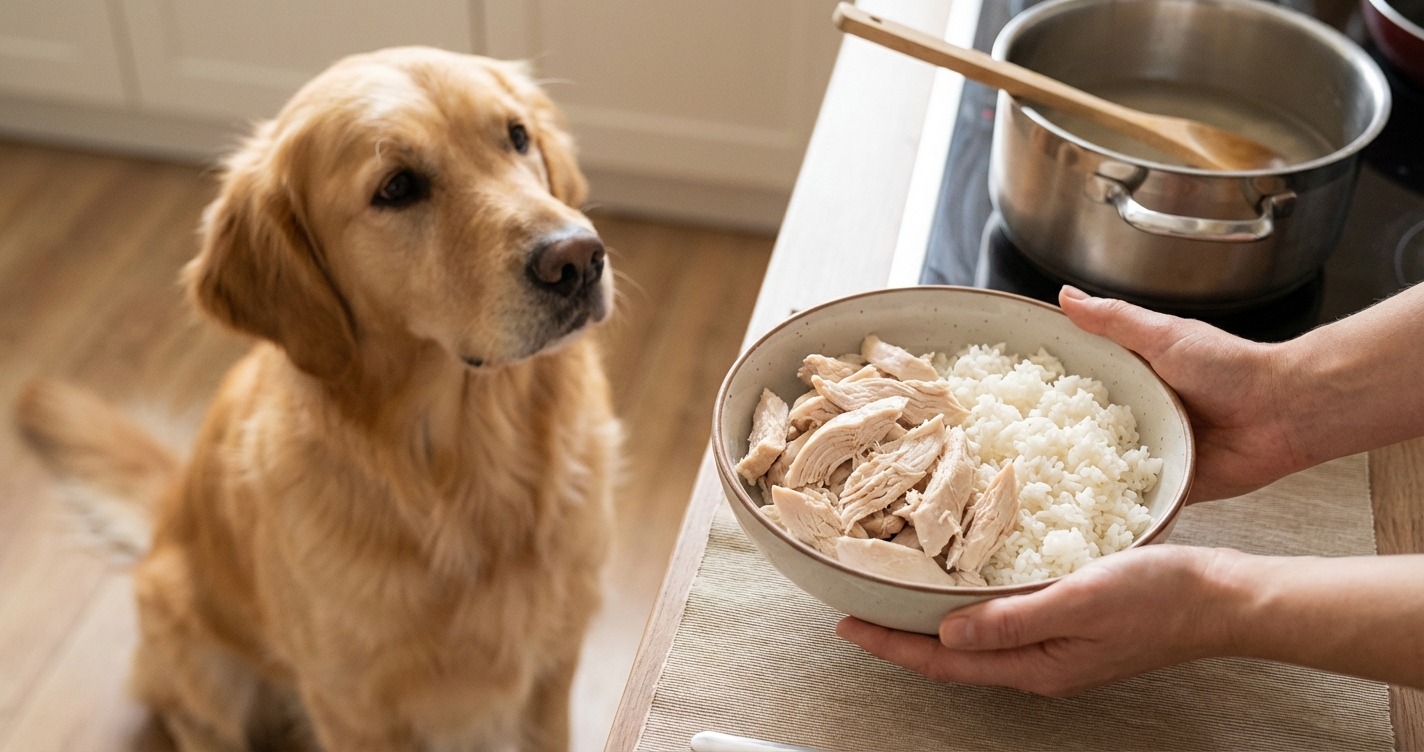
A classic combination for a dog with digestive upset. Cook some plain white rice (not brown, as it’s harder to digest) and mix it with the shredded chicken. A good starting ratio is often two parts rice to one part chicken. Again, this is a short-term solution, not a long-term diet.

Related Posts