Can Dogs Eat Boiled Eggs? The Short Answer from the Peak District
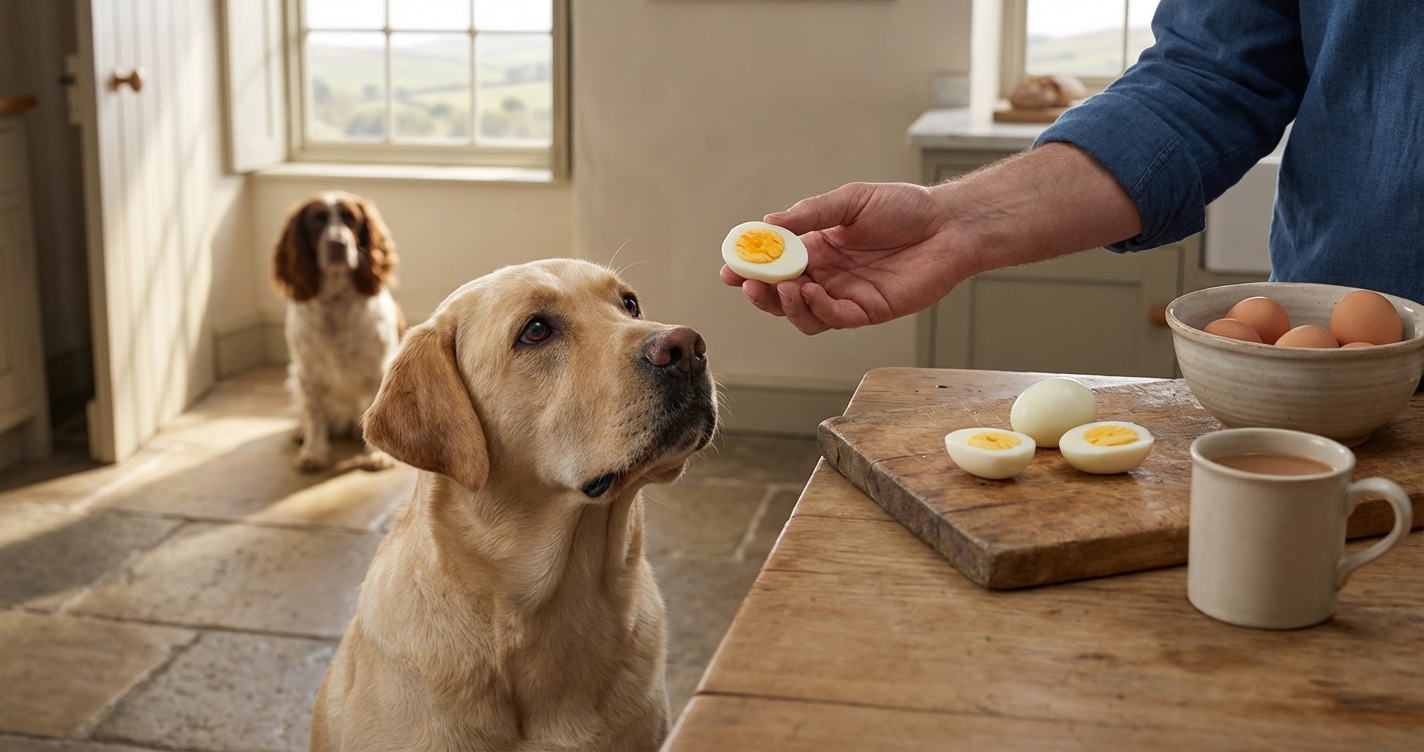
The smell of a boiled egg in the morning. For me, it’s the smell of a proper breakfast. For Buster, my food-obsessed Labrador, it’s the smell of opportunity. He’ll sit there, tail thumping a steady rhythm against the flagstones, eyes locked on my toast like a hawk. It always gets me thinking: is it alright to share a bit? And how much is too much?
Let’s get straight to it, pint-in-hand style. Yes, dogs can absolutely eat boiled eggs. They are a fantastic, nutrient-dense treat when given in moderation. But like a good ale, moderation is the key. Overdo it, and you’ll both regret it later.
Key Takeaways: The Pub Notes Version
- Cooked is Crucial: Always serve eggs fully cooked (boiled or scrambled plain) to avoid risks like Salmonella.
- Plain is Perfect: No salt, no pepper, no butter, no oil. Just the pure, unadulterated egg.
- The 10% Rule: Treats, including eggs, should not make up more than 10% of your dog’s daily calorie intake.
- One a Day is Plenty: For a medium to large dog like a Lab, one egg a day is generally the maximum. Smaller dogs need much less.
The Nutritional Power Packed in a Single Shell
Think of a boiled egg as nature’s little nutrient bomb. It’s not just filler; it’s packed with high-quality stuff that does a dog a world of good. While Fern, the high-energy Spaniel, is rocketing around the garden, I know a little bit of egg is helping fuel that engine properly.
Here’s what you’re giving them:
- High-Quality Protein: The building blocks for strong muscles and tissue repair.
- Essential Amino Acids: A complete source, which is brilliant for their overall health.
- Vitamins Galore: Rich in Vitamin A, Vitamin D, and various B vitamins like Riboflavin and B12, which are vital for metabolism and nerve function.
- Healthy Fats: A good source of fatty acids that contribute to a healthy skin and a gleaming coat.
- Key Minerals: Contains selenium and iron, important for immune function and carrying oxygen in the blood.
The Big Question: How Many Eggs is Too Many?
Right, this is the heart of the matter. It’s not a one-size-fits-all answer. Giving an egg to a Jack Russell is a different kettle of fish to giving one to a Great Dane. The best guide is what vets call the “10% rule” – treats should only be about 10% of your dog’s daily diet. An average large egg contains around 75-80 calories, so you need to factor that in.
A Simple Serving Guide: From Terriers to Wolfhounds
To make it a bit easier, here’s a rough guide. Remember, this is a treat, not a meal replacement. If your dog is on the chunky side or has specific health issues, have a word with your vet first.
| Dog Size | Example Breeds | Recommended Serving |
|---|---|---|
| Toy/Tiny (Under 5kg) | Chihuahua, Yorkshire Terrier | A couple of small pieces (about a quarter of an egg) a few times a week. |
| Small (5-10kg) | Jack Russell, Border Terrier | Up to half an egg, 2-3 times per week. |
| Medium (11-25kg) | Cocker Spaniel, Beagle | One whole egg, but not necessarily every day. A few times a week is ideal. |
| Large (26-45kg) | Labrador, German Shepherd | One whole egg per day is generally safe, but monitor their weight. |
Potential Pitfalls: When a Good Egg Goes Bad
While generally safe, there are a few things to watch out for. Too much of a good thing can lead to problems.
- Weight Gain: The biggest risk. Those calories add up quickly and can lead to obesity, which puts a real strain on a dog’s joints.
- Gastrointestinal Upset: A sudden introduction of any new food can cause a dodgy tummy. Start with a small amount to see how they tolerate it.
- Pancreatitis: Eggs are high in fat, and too much fatty food can trigger this painful condition in susceptible dogs.
- Allergies: Though uncommon, some dogs can be allergic to eggs. Look for signs like itchy skin, ear infections, or stomach upset after they’ve eaten some.
The ‘Pardon My Pet’ Mud Test: Best Egg Preparation
How do we prepare eggs for the board of directors? Simple is best. The less faff, the better, especially when you have a muddy Spaniel waiting impatiently.
Hard-boiling is king. It’s clean, easy, and cooks the egg through and through. Just boil it, let it cool completely, peel off the shell, and chop it up. No additions. Margo, the cat who rules the radiator, looks on with complete disdain, which is how you know you’re doing it right for the dogs.
What About the Pups? Boiled Eggs for Puppies
Yes, puppies can have boiled eggs too, and the protein is great for their development. However, their digestive systems are more sensitive, and their calorie needs are very specific. Only give them a very small amount as a high-value training treat, and it’s always wise to have a quick chat with your vet about it first.
Your Boiled Egg Questions Answered
Can my dog eat a boiled egg every single day?
For most medium to large dogs, yes, but it depends on the rest of their diet and their activity level. For smaller dogs, definitely not. A few times a week is a safer and more balanced approach for most.
Is the eggshell safe to eat?
Technically, yes. The shell is a great source of calcium. However, it needs to be washed and ground into a fine powder to be digestible and safe. Otherwise, sharp pieces can be a choking hazard or cause internal irritation. For most of us, it’s just easier and safer to pop the shell in the compost bin.
What about scrambled or fried eggs?
Plain scrambled eggs (no milk, butter, or salt) are perfectly fine. Fried eggs are a no-go. The oils and fats used for frying can easily upset a dog’s stomach and add far too many calories.
What are the signs of an egg allergy?
Look for persistent scratching, licking paws, red or inflamed skin, recurring ear infections, or digestive issues like vomiting or diarrhoea shortly after eating the egg.
So there you have it. That little boiled egg can be a wonderful, healthy addition to your dog’s treat rotation. Just remember to keep it plain, cooked, and in proportion to their size. Buster certainly gives them two paws up.

Related Posts