Figuring Out Your Dog’s Dinner
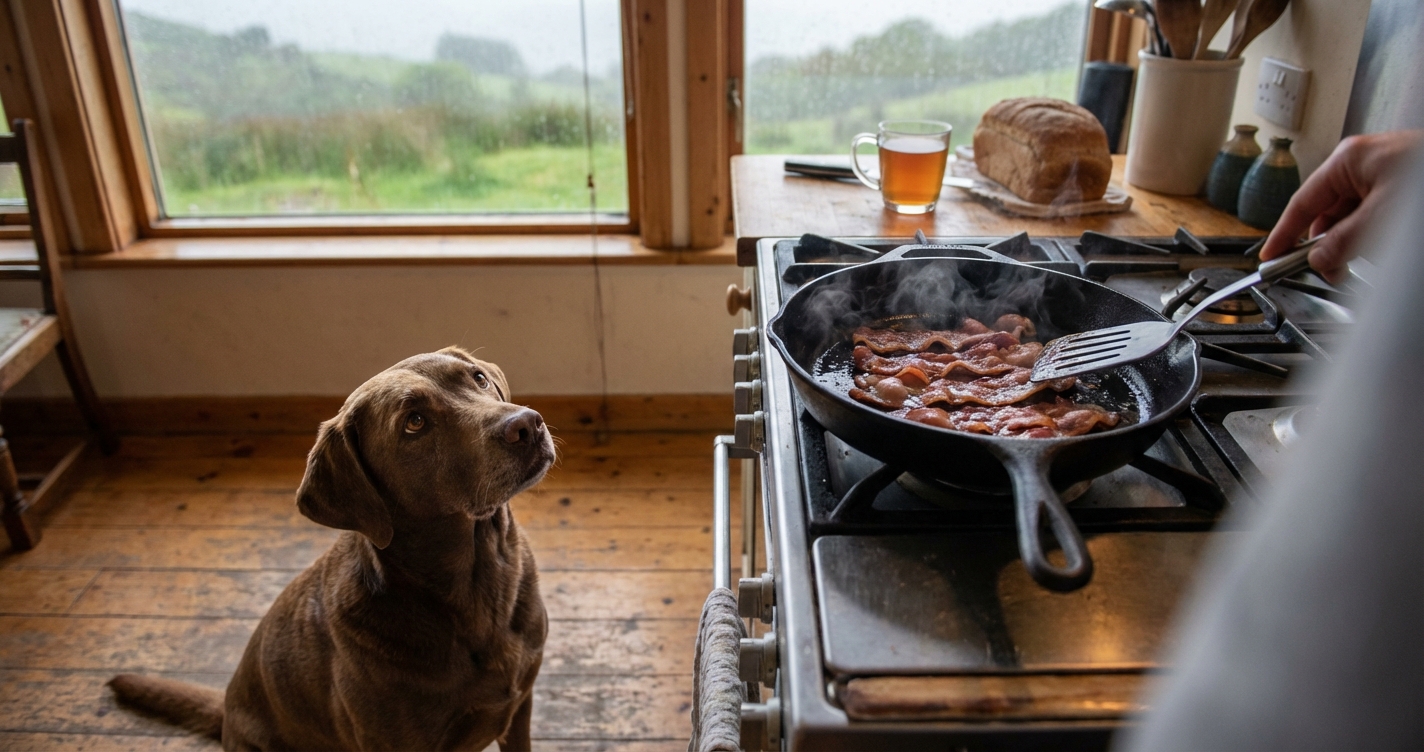
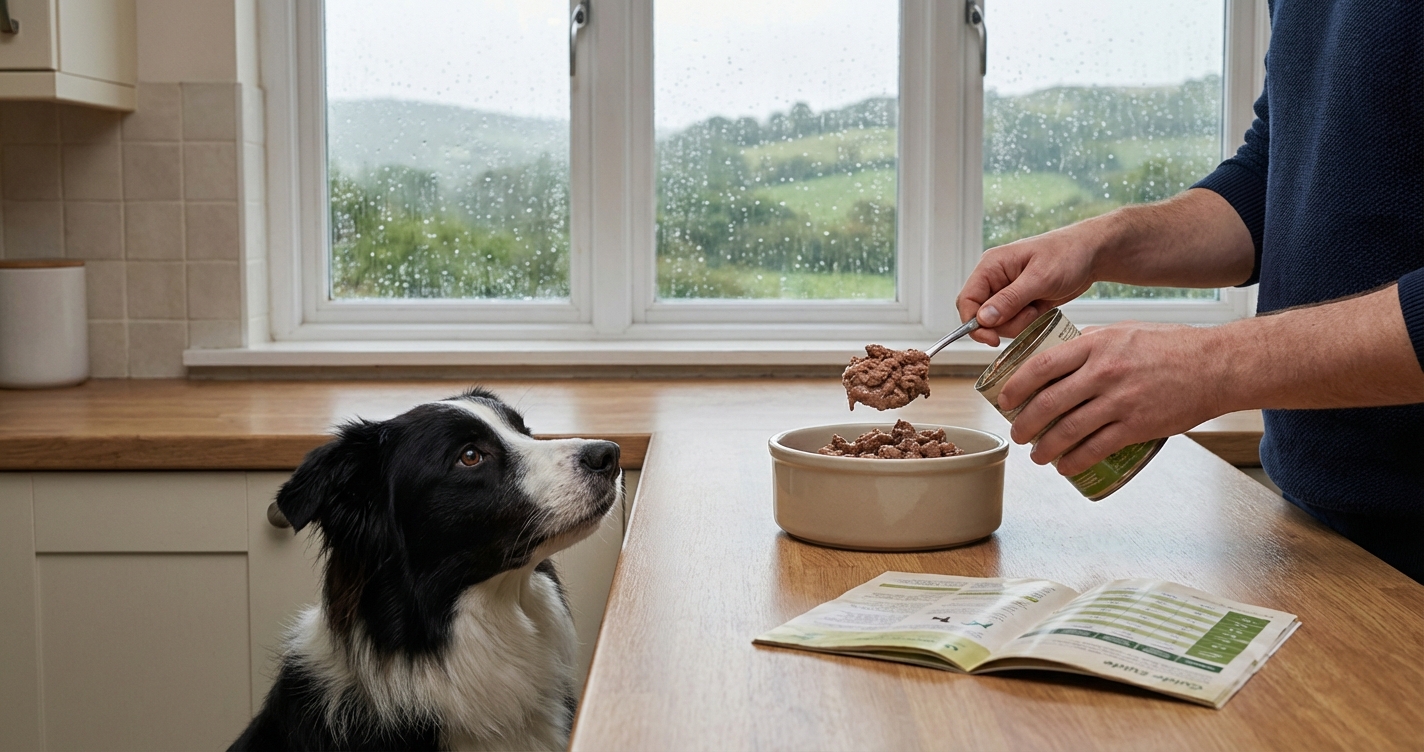
The rain was lashing against the kitchen window, a proper Peak District welcome. Inside, my collie, Bess, was staring at me with those ‘is it dinner time yet?’ eyes. I was staring at a new tin of dog food, utterly baffled by the chart on the back. A dog of her weight needs ‘1 to 1 ½ tins’? That’s a 50% difference! It’s like a recipe telling you to use ‘one or two bags of flour’. Not exactly helpful, is it?
Figuring out the right amount of wet food for your dog can feel like a bit of a dark art. The tins are vague, your dog is giving you the hungry eyes, and you’re just trying to do right by them without turning them into a furry little barrel. Well, let’s chuck the confusion out with the bathwater. Getting the portion size right is mostly common sense when you know what to look for.
More Than Just a Number on the Scales
Before you even look at a feeding chart, remember that your dog is an individual. The ‘right’ amount of food depends on much more than just their weight. Think about these factors as your dog’s personal dinner equation:
- Age: A bouncy, growing puppy needs more fuel than a chilled-out senior who’s more interested in naps than laps around the park.
- Activity Level: Is your dog a working sheepdog, a weekend warrior climbing Mam Tor, or a certified couch potato? The more they move, the more calories they burn.
- Breed: A stocky Bulldog has a different metabolism to a lanky Lurcher. Breed size and typical energy levels play a big part.
- Current Condition: Be honest. Is your dog a healthy weight, a bit on the lean side, or carrying a few extra pounds? You should be able to feel their ribs easily but not see them sticking out.
- Neutered Status: Dogs that have been ‘done’ often have a slightly slower metabolism, so they may need a little less food to maintain a healthy weight.
The key takeaway: Any feeding chart is just a starting point. The best measure is looking at your dog’s body condition and adjusting from there.
Making Sense of the Tin’s Instructions
Right then, let’s look at that confusing label on the back of the tin or pouch. Those feeding guidelines are a manufacturer’s best guess for the ‘average’ dog using their specific product. They’re not gospel, but they are your most important first step.
Here’s what to do:
- Find the Chart: It’s usually a small table with your dog’s weight on one side and the recommended number of tins/pouches per day on the other.
- Note the Calories: Look for the calorie content, often written as ‘kcal/100g’ or ‘kcal/tin’. This is the most accurate way to compare different foods if you ever switch brands.
- Start in the Middle: If the recommendation is ‘1 to 1 ½ tins’, start with 1 ¼ tins and monitor your dog’s weight and condition for a couple of weeks.
Remember, these amounts are for a 24-hour period, not per meal. So, if the recommendation is two tins a day and you feed twice a day, that’s one tin per meal.
A Handy Starting Point: Wet Food Portions by Dog Weight
To give you a rough idea, here is a general chart. This assumes an average activity level for an adult dog and is based on a standard 400g tin of wet food. Always check the specific recommendations on your dog’s food first!
| Dog’s Weight | Approx. 400g Tins Per Day |
|---|---|
| Up to 5 kg (e.g., Toy Poodle) | Up to ½ tin |
| 5 – 10 kg (e.g., Jack Russell) | ½ to 1 tin |
| 10 – 25 kg (e.g., Springer Spaniel) | 1 to 2 tins |
| 25 – 45 kg (e.g., Labrador) | 2 to 3 tins |
| 45+ kg (e.g., Great Dane) | 3+ tins |
The Best of Both Worlds: Mixing Wet and Dry Food
Lots of us like to mix a bit of wet food in with dry kibble – it’s a nice treat for the dog and can help fussy eaters clear their bowl. This is sometimes called combination feeding, and it’s perfectly fine as long as you adjust the amounts.
The simplest way to do this is the 50/50 method:
- Find the recommended daily amount for both the wet and dry food.
- Simply feed half the recommended amount of each.
- For example, if your dog needs one tin of wet food OR 200g of kibble per day, you would feed them half a tin of wet food AND 100g of kibble.
You can adjust the ratios however you like, but this simple method prevents you from accidentally overfeeding.
Special Cases: Pups, Seniors, and Slimmers
A dog’s needs change throughout their life. Here’s a quick rundown on the different life stages.
For the Growing Pups
Puppies are little balls of energy and need a lot of calories and specific nutrients to grow. Always choose a food specifically formulated for puppies. They need to be fed smaller meals more frequently, usually three to four times a day, until they are about six months old.
For the Golden Oldies
As dogs get older, their metabolism slows down and they become less active. Senior dogs are more prone to weight gain. Many benefit from a senior-specific food that is often lower in calories but still packed with joint-supporting nutrients. Portion control is extra important here.
For Dogs Watching Their Figure
If the vet has suggested your dog needs to lose a few pounds, the first step is to reduce their portion size slightly – by about 10% – and cut back on treats. If you’re feeding the ‘recommended’ amount and they’re still gaining weight, it means that amount is too much for their individual metabolism and activity level.
Your Wet Food Worries, Answered
Is it okay to only feed my dog wet food?
Absolutely. As long as it is labelled a ‘complete’ food, it has all the nutrients your dog needs to be healthy. Wet food is also great for hydration, which is a bonus.
How can I tell if I’m feeding the right amount?
Your dog is the best guide. A healthy dog should have a visible waist when you look down at them from above, and you should be able to feel their ribs with a light touch. If you have to press hard to find the ribs, they might be carrying too much weight. If the ribs are very visible, they may be underweight.
How many times a day should I feed my adult dog?
Most adult dogs do well with two meals a day, one in the morning and one in the evening. This helps manage hunger and can be better for their digestion than one large daily meal.
A quick but important note: I’m just a dog owner sharing my own experiences and research. This isn’t a substitute for professional veterinary advice. If you’re ever worried about your dog’s weight, diet, or health, the best thing to do is have a chat with your local vet.

Related Posts