The Slip of the Fork: A Kitchen Confession
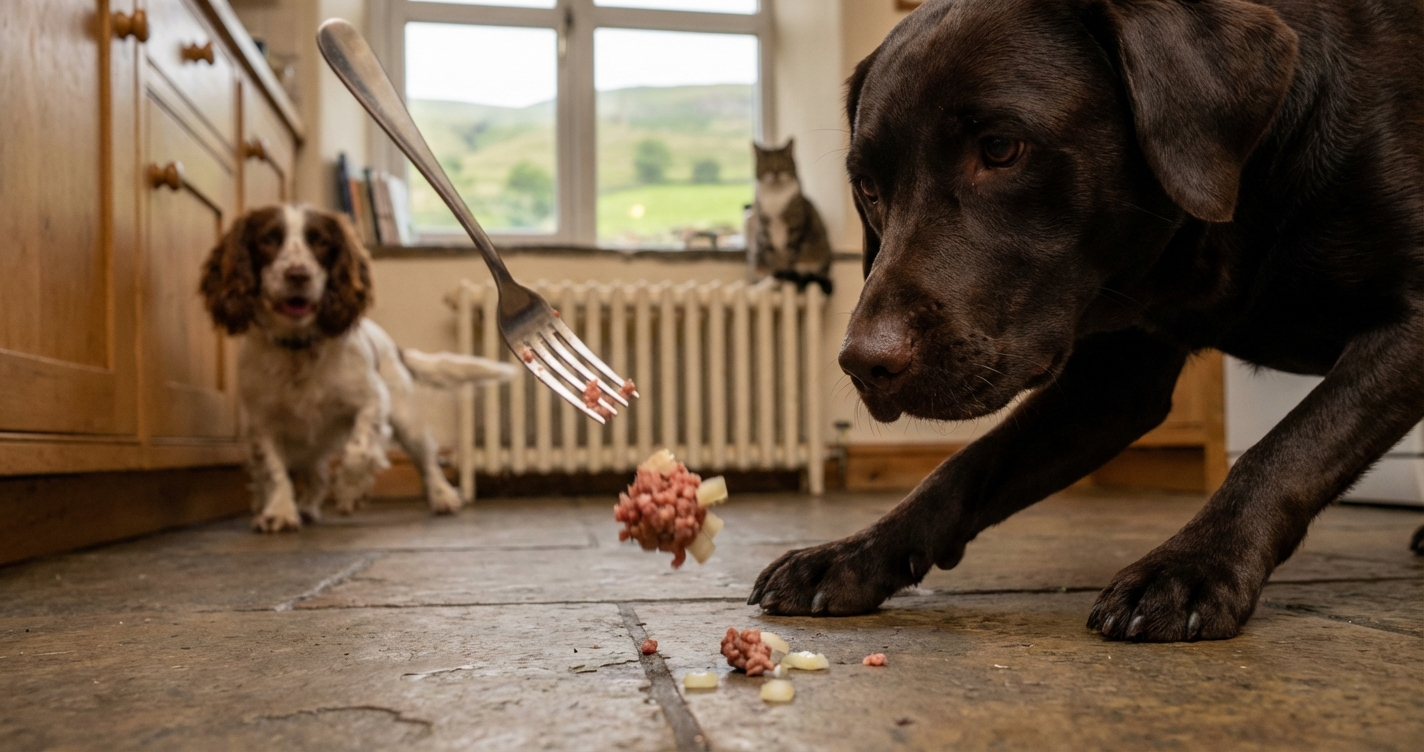
It’s a familiar scene in our Peak District cottage. I’m plating up a hearty shepherd’s pie, the kitchen smells divine, and the ‘board of directors’ are assuming their positions. Buster, my food-obsessed Labrador, is practically a furry tripod at my feet. Fern, the high-energy Spaniel, is doing a frantic happy dance. Even Margo, the rescue cat who usually rules the radiator, is peering down from her perch. A stray bit of mince and onion gravy slips from the fork, and before I can even shout “Leave it!”, Buster’s world-class hoovering skills have kicked in. It’s gone. And a cold knot of dread forms in my stomach. The onion.
We’ve all been there. A dropped scrap, a moment of inattention. But when it comes to onions, it’s not something to brush off. Let’s have a proper chat, pint-in-hand so to speak, about why this common vegetable is a serious problem for our dogs.
Why Are Onions a Problem for Dogs, Then?
Right, let’s get the science bit out of the way, but without the white lab coat. Onions, and their relatives in the Allium family – that’s your garlic, leeks, chives, and shallots – contain a compound called N-propyl disulfide. Now, humans can handle this stuff just fine, but for dogs, it’s a different story.
This compound wreaks havoc on their red blood cells, causing what’s known as oxidative damage. Think of it like this: it makes the red blood cells fragile and causes them to burst. This leads to a nasty condition called hemolytic anemia, which basically means the body doesn’t have enough healthy red blood cells to carry oxygen around. It’s a serious business that can leave your dog feeling weak and very unwell.
How Much Onion is Actually Dangerous?
This is the million-dollar question, isn’t it? The general rule of thumb from vets is that toxicity can occur if a dog consumes more than 0.5% of its body weight in onions at one time.
Let’s put that through the ‘Mud Test’ for a bit of real-world context:
- For a little terrier weighing about 7kg, as little as 35g of onion (a small piece) could be enough to cause trouble.
- For a strapping Labrador like Buster, tipping the scales at 30kg, he’d need to scoff around 150g, which is about one medium-sized onion.
Key Takeaway: Don’t get bogged down in the maths. Some dogs are more sensitive than others, and Japanese breeds like the Akita and Shiba Inu are known to be particularly susceptible. The safest bet is to treat any amount of onion as a potential risk.
Spotting the Signs: Symptoms of Onion Poisoning
One of the trickiest things about onion toxicity is that the signs might not show up for a few days. It’s not usually an instant reaction. If your dog has pinched some onion, you need to be on high alert for the following signs:
- Lethargy and general weakness (not wanting to go for a walk)
- Pale gums (a tell-tale sign of anemia)
- Vomiting and diarrhoea
- Loss of appetite
- Rapid breathing or an increased heart rate
- Dark-coloured urine (it might look reddish-brown or tea-coloured)
- Occasional collapse in severe cases
Right, the Dog’s Eaten Onion. What’s the Plan?
Okay, you’ve seen it happen or you strongly suspect it. First, take a breath. Panic helps no one. Here’s your immediate action plan.
1. Secure the Area: Get your dog away from the source and make sure there’s no more they can get their paws on. Remove any other pets from the room.
2. Gather Intelligence: Try to work out what they ate, how much, and when. Was it a slice of raw onion? A dollop of gravy? A whole onion bhaji from last night’s takeaway? This information is gold for your vet.
3. Ring the Vet. Immediately. This is not a ‘wait and see’ situation. Your vet is the only person who can give you proper advice. They’ll ask you the questions from step 2 and tell you whether you need to bring your dog in straight away.
Crucial Point: Never, ever try to make your dog sick yourself unless your vet has explicitly told you how to do it. It can be dangerous and cause more harm than good.
What to Expect at the Vet’s
If your vet asks you to come in, they’ll be focused on two things: getting the toxin out and supporting your dog’s body. Depending on how long it’s been since the onion was eaten, treatment might involve:
- Induced Vomiting: If the onion was eaten recently, the vet can give an injection to make your dog sick and get the offending stuff out of their stomach.
- Activated Charcoal: This stuff is brilliant. It works like a magnet, binding to any remaining toxins in the gut to stop them from being absorbed into the bloodstream.
- Supportive Care: In more serious cases, your dog might need to be put on a drip (intravenous fluids) to stay hydrated and support their kidneys. They may also need oxygen therapy or, in the most severe cases of anemia, a blood transfusion.
Are All Onions Off the Menu? Cooked, Raw, Powdered?
Yes. Simple as that. The toxic compounds in onions are not destroyed by cooking or drying. This is where many owners get caught out. They’ll be careful with raw onions but won’t think twice about a spoonful of leftover stew.
Beware the hidden onions! Onion powder and granules are particularly potent because they are highly concentrated. Always check the labels on human foods you might be tempted to share. You’ll find them in:
- Gravy mixes and stock cubes
- Many soups and sauces
- Sausages and burgers
- Some baby foods
- Ready meals and takeaways
The Mud Test: Keeping Onions Away from Your Dog
Prevention is always better than a frantic trip to the vet. A bit of kitchen discipline goes a long way.
- Secure Your Bins: Make sure your food waste and rubbish bins have secure lids. A determined dog can knock over a flimsy bin in seconds.
- Clean Up Spills: After chopping veg or cooking, wipe down surfaces and hoover the floor to catch any dropped bits.
- Be a Label Reader: Before giving your dog any human food as a treat, scan the ingredients list for onion, onion powder, or garlic.
- Manage the Barbecue: Outdoor cooking can be chaotic. Keep a close eye on dropped sausages, burgers, and onion-laden salads.
Ultimately, keeping our four-legged family members safe is just part of the deal. It just means being a little more mindful in the kitchen, and ensuring the only thing Buster gets to hoover up is his own vet-approved grub. It’s far less stressful for everyone involved.

Related Posts