From Manic to Magic: A Natter About Dog Crates
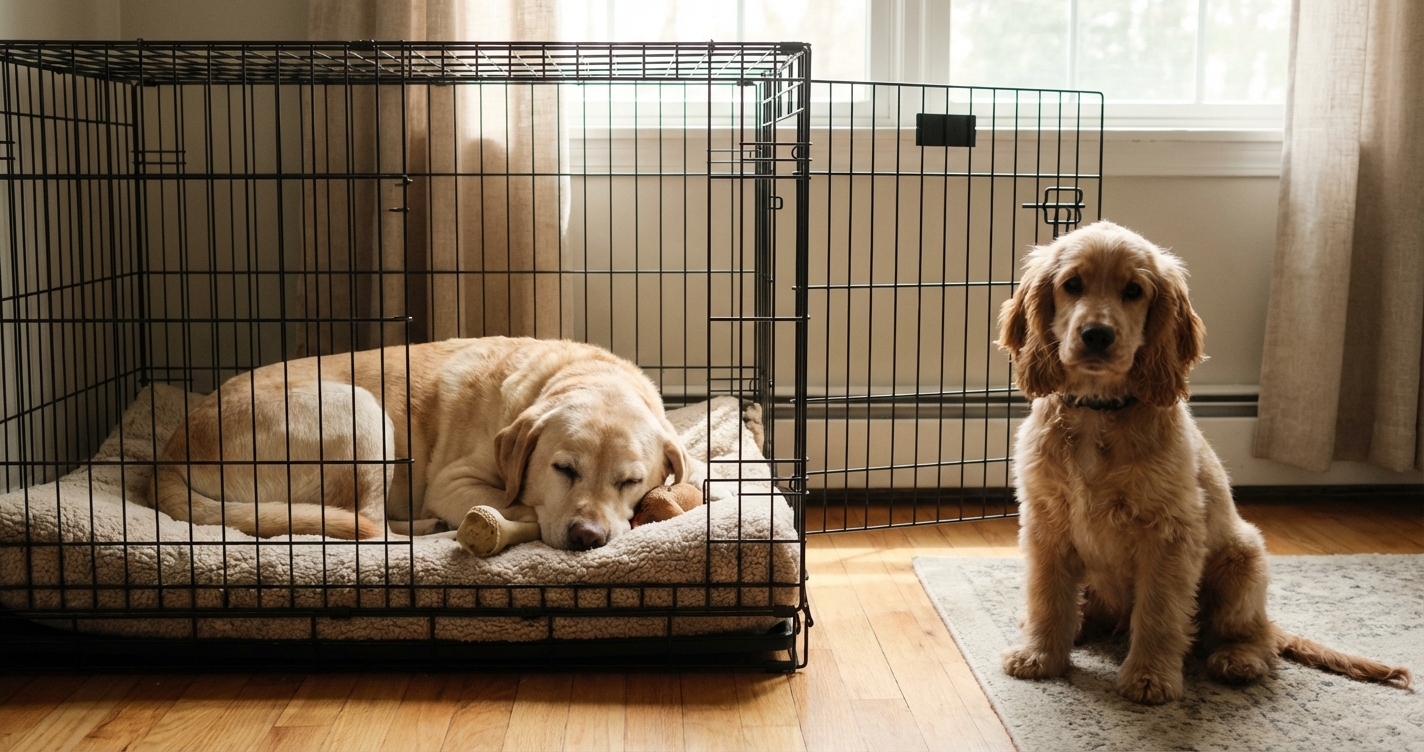
I remember the first night with Fern, our whirlwind of a Spaniel. The house was quiet, the lights were out, and then it started: a high-pitched, heart-wrenching whine from the new crate in the kitchen. Every instinct screamed to go and let her out for a cuddle. My wife gave me ‘the look’. Buster, our old pro of a Labrador, just sighed from his bed as if to say, “Here we go again.” It’s a proper test of resolve, that is. But getting it right, turning that box of bars into a safe, happy den, is one of the best things you can do for your dog, and your sanity.
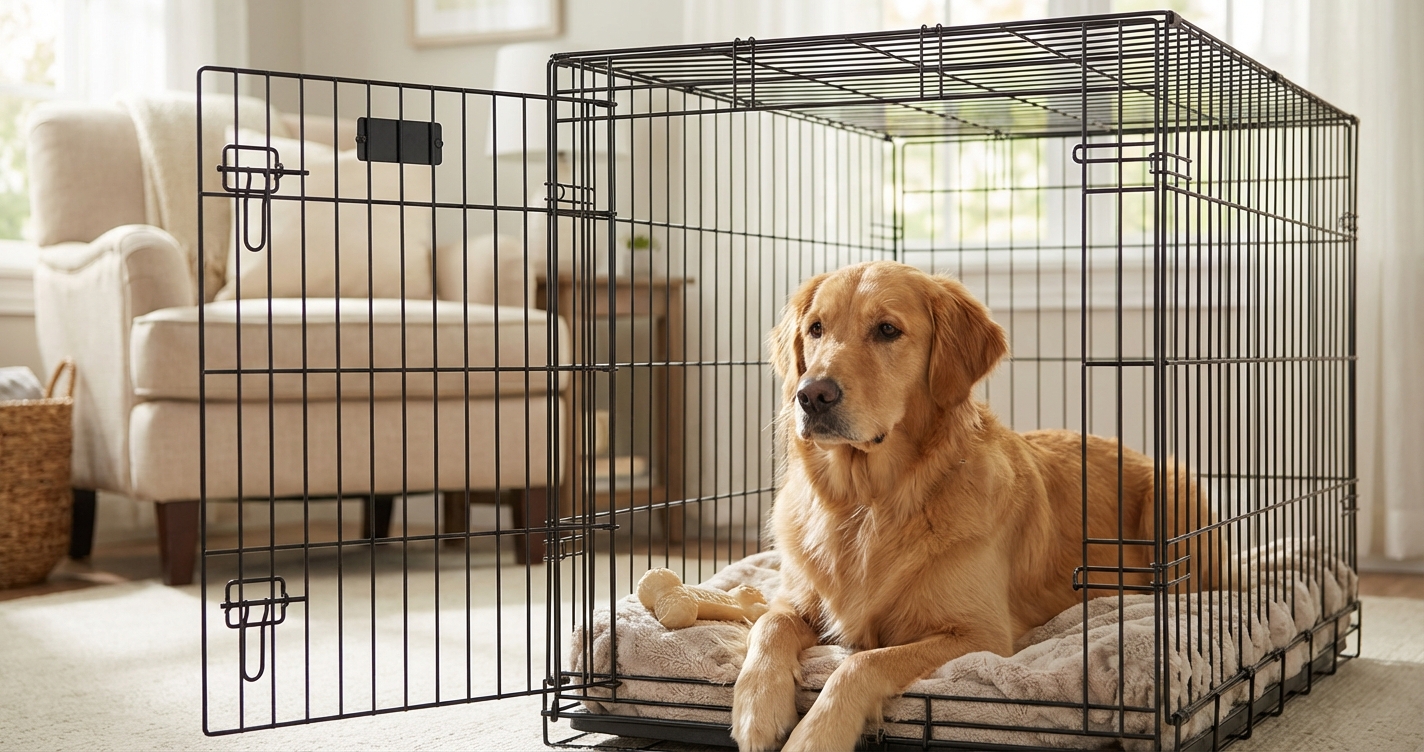
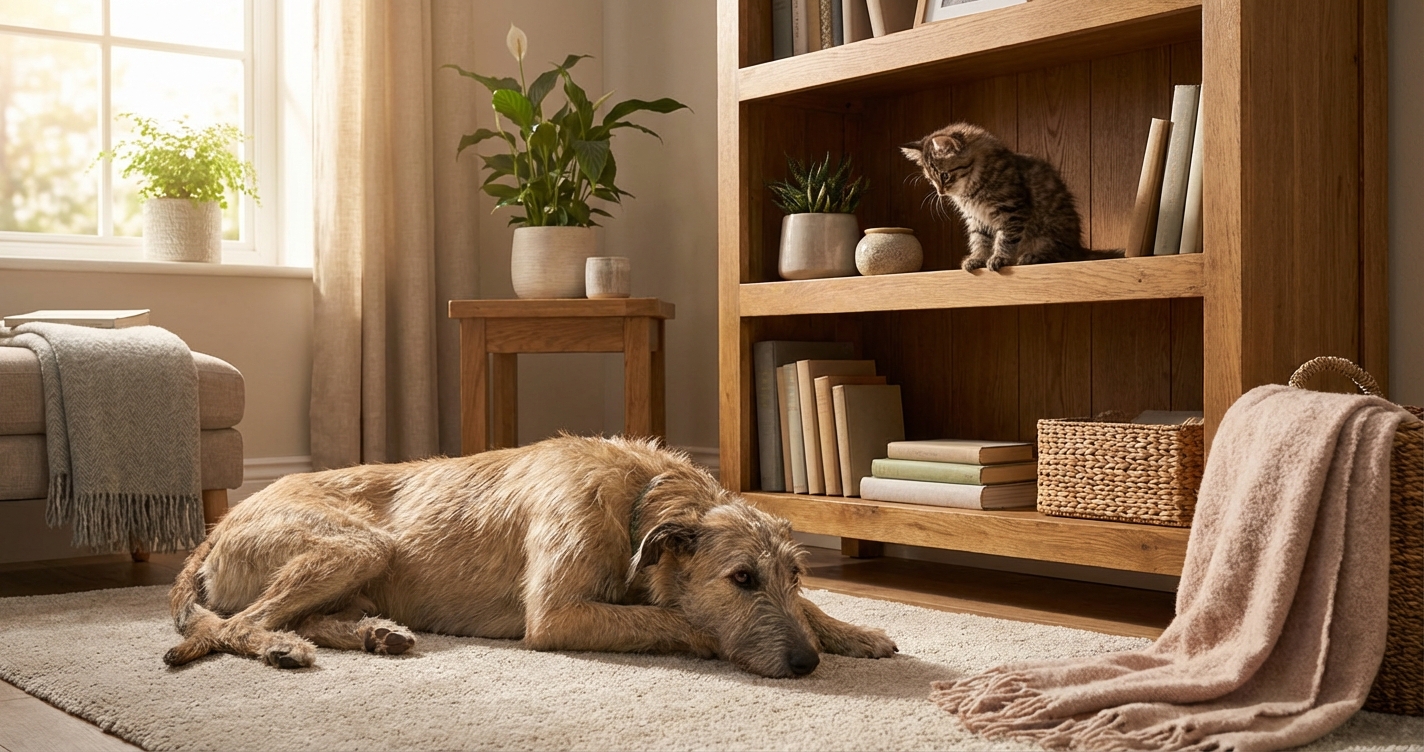
Forget thinking of it as a ‘cage’. That’s not what this is about. A dog’s natural instinct is to seek out a small, secure den. With a bit of patience, a crate becomes their personal bedroom—a place for snoozing, safety, and a bit of peace and quiet away from the chaos. Even Margo, our cat who rules the radiator, seems to understand the need for a personal space she can call her own.
Right Then, Why Bother With a Crate?
It’s a fair question. To me, it boils down to a few very practical, common-sense reasons. It’s not about locking a dog away; it’s about clever management for a happy life together.
- A Godsend for House Training: Dogs are clean animals and instinctively avoid soiling their own bed. A crate uses this to your advantage, helping a puppy learn to ‘hold it’ for reasonable periods.
- Creating a Safe Space: When the house is full of visitors, or the hoover comes out, the crate is a guaranteed sanctuary where your dog can retreat and feel secure.
- Safety First: Whether it’s keeping a chewy pup from gnawing on electrical cables when you can’t supervise them, or ensuring they’re secure in the boot of the car, a crate is a vital safety tool.
- Post-Op Peace: If your dog ever needs an operation, the vet will likely advise ‘crate rest’. Having them already comfortable with a crate makes a stressful time that much easier.
Choosing Your Dog’s New Bedroom
Don’t just grab the first one you see. Size is crucial. Your dog should be able to stand up, turn around, and lie down comfortably. Any bigger, and they might be tempted to use one end as a toilet. Any smaller, and it’s not comfortable. For a growing pup, get one that will fit their adult size and use a divider to make it smaller to begin with.
We’ve always used the wire-fold-flat types. They’re great for ventilation and for chucking in the car, but the plastic, more enclosed ones can feel a bit more ‘den-like’ for some dogs. It’s a matter of what works for you and your furry mate.
The Game Plan: Making the Crate a Happy Place
This is the important bit. You can’t just shove the dog in and hope for the best. The goal is to build a rock-solid positive association. This isn’t a race; it’s a marathon of patience and consistency.
- The Grand Tour: Plonk the crate in a communal area like the kitchen or living room. Leave the door wedged open. Don’t make a big fuss. Let your dog explore it in their own time. Randomly drop some really high-value treats (bits of chicken or cheese work a treat for Buster) inside for them to find.
- Dining In: Start feeding your dog their meals inside the crate. At first, put the bowl right at the front with the door open. Gradually, as they get more comfortable, move the bowl further towards the back.
- Closing Time (For a Second): Once they are happily eating at the back of the crate, you can gently swing the door shut while they eat. Open it again the second they finish. The aim is to show them that a closed door is no big deal.
- Add a Cue: Start using a simple cue word every time they go in. Something like “In your bed” or “Den up!” said in a cheerful, upbeat tone.
- Stretch The Clock: Now, ask them to go in using your cue. When they do, give them a fantastic, long-lasting chew—something they only get in the crate. Close the door for a minute, stay in the room, then let them out. Slowly, over days and weeks, increase the time.
Key Takeaway: This process could take days or it could take weeks. Fern, with her boundless energy, took a lot longer than food-obsessed Buster. Go at your dog’s pace and never, ever force them.
The Big “Don’ts” of Crate Training
Getting this wrong can set you back weeks and damage the trust between you and your dog. These are the absolute, unbreakable rules.
- NEVER use the crate as a punishment. Ever. Sending a dog to their crate for being naughty will poison it for good. It must always be a place of safety and reward.
- Don’t leave them in for too long. A puppy can only hold its bladder for so long (a rough guide is their age in months plus one hour). Adult dogs shouldn’t be crated for more than four hours at a stretch during the day.
- Don’t let them out for whining. This is a tough one. If you’re sure they don’t need the toilet, letting them out when they cry teaches them that crying gets them what they want. Wait for a moment of silence, then open the door.
A Final Thought…
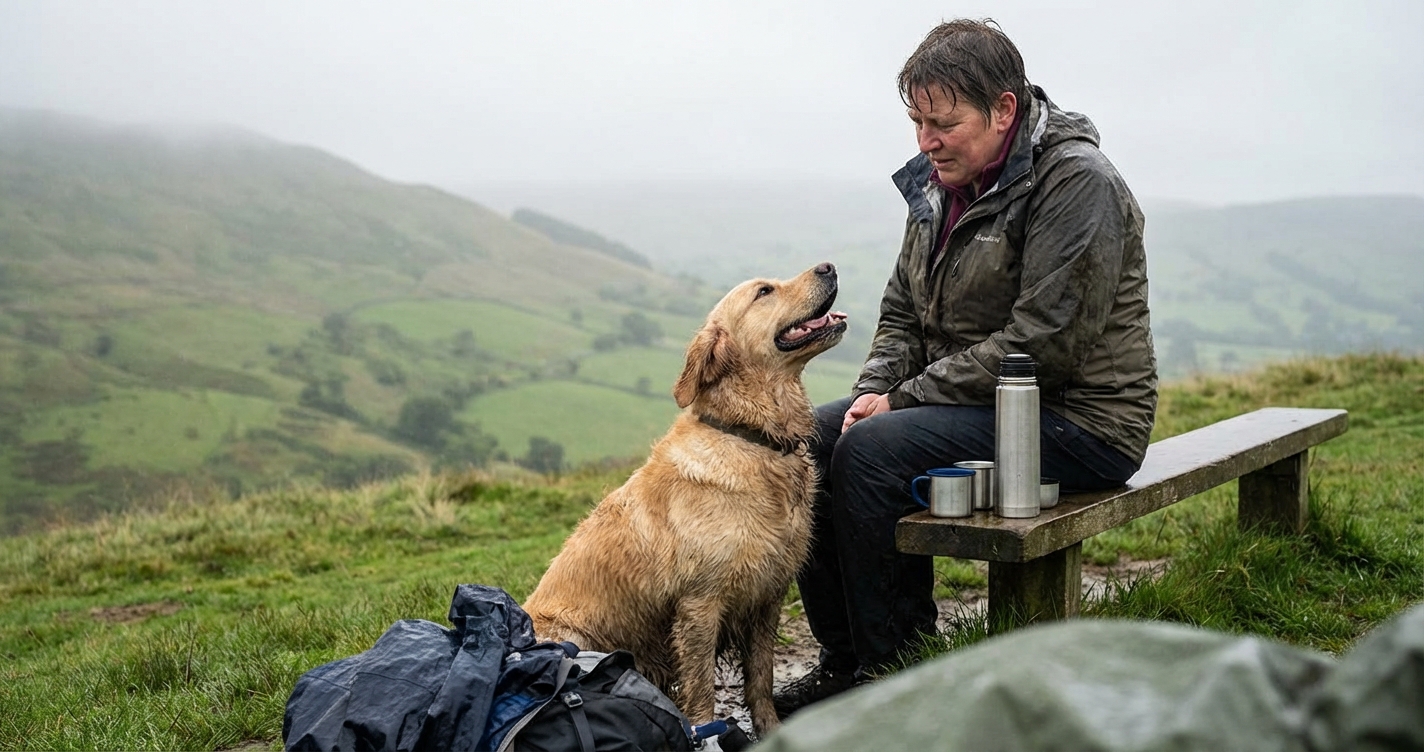
Look, I’m no vet or fancy behaviourist. I’m just a bloke from the Peaks who’s learned a thing or two from a food-mad Lab and a hyperactive Spaniel. Crate training, done with kindness and patience, is a skill that will serve you and your dog for their entire life. It gives them a den of their own and gives you peace of mind. Now, if you’ll excuse me, I think Buster’s just heard the biscuit tin open.

Related Posts