Is It Scent Marking or Just a Potty Accident?
First, we need to be clear on what we’re dealing with. It’s easy to assume your house-trained dog has forgotten their manners, but urine marking is quite different from a full-blown potty accident.
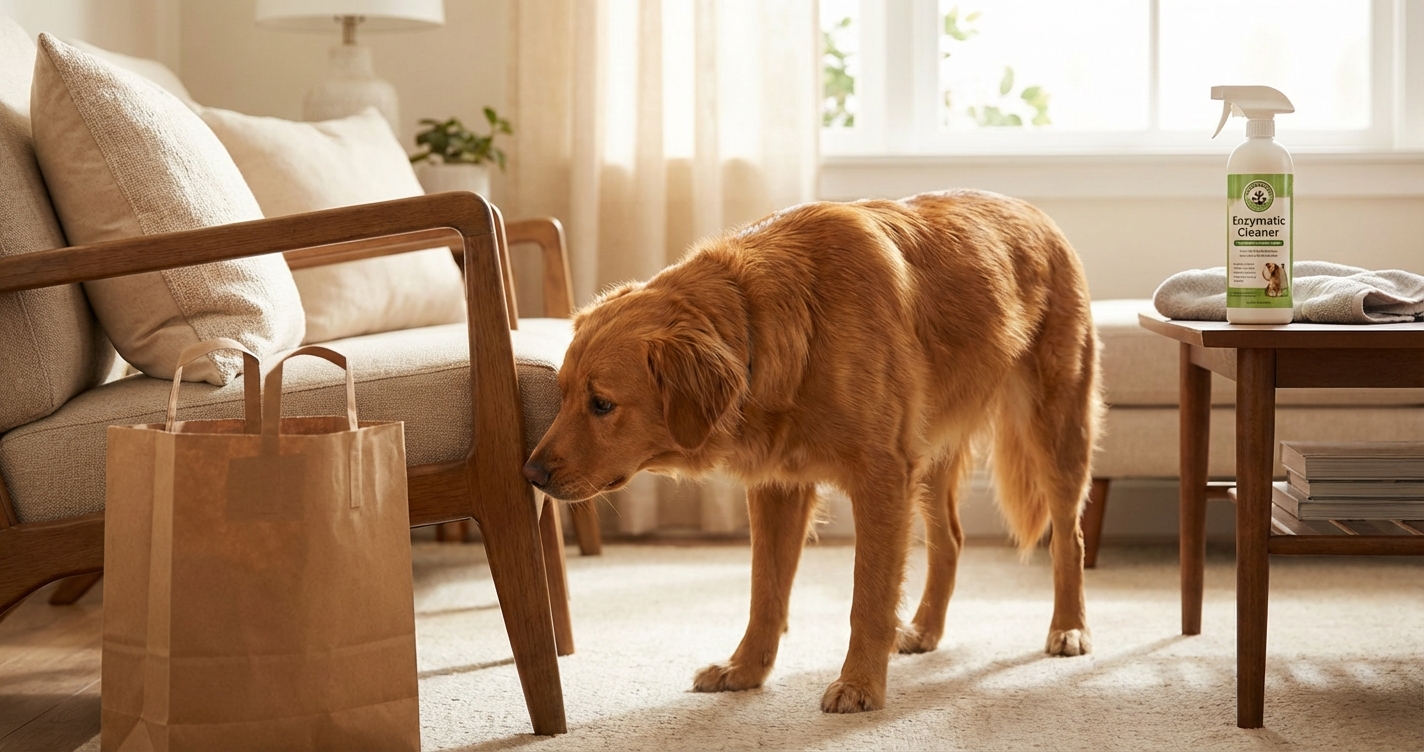
- Urine Marking is about communication. Your dog is leaving a small calling card, not emptying their bladder. You’ll often find small amounts of urine on vertical surfaces like furniture legs, curtains, or a new shopping bag you’ve left on the floor.
- A Potty Accident is usually a puddle on the floor. It happens when a dog simply can’t hold it in any longer, which might be a house-training issue or, importantly, a medical one.
Key takeaway: Marking is a deliberate social signal; an accident is a physical release. Understanding the difference is the first step in tackling it.
First Port of Call: A Trip to the Vet
Before you even think about behaviour, your first move should always be to book a check-up with your vet. A sudden change in urinary habits can be a red flag for an underlying medical condition. It’s crucial to rule out health issues before assuming it’s a behavioural problem.
Your vet will want to check for things like:
- Urinary tract infections (UTIs)
- Kidney disease
- Canine cognitive dysfunction (especially in older dogs)
- Other conditions that increase thirst and urination
Once your dog has a clean bill of health, you can confidently move on to addressing the behaviour itself.
Practical Steps to Stop Dog Marking Indoors
Right, with medical causes ruled out, it’s time to get down to business. Stopping marking behaviour requires a multi-pronged attack of cleaning, management, and understanding your dog’s motivations.
1. The Clean-Up Operation Must Be Thorough
If your dog can smell a previous spot, they’ll see it as a designated toilet area. Standard household cleaners won’t cut it.
- Use an enzymatic cleanser: This is non-negotiable. These cleaners contain enzymes that physically break down the uric acid and proteins in urine, completely eliminating the odour that your dog can detect (even if you can’t).
- Avoid ammonia-based cleaners: To a dog’s nose, ammonia smells a lot like urine. Using it is like putting up a flashing neon sign that says, “Pee here again!”
- Practical Tip: A black light (UV torch) can be a real eye-opener, revealing old urine stains you had no idea were there.
2. Identify Your Dog’s Triggers
Marking doesn’t happen in a vacuum. It’s a reaction to something. Put on your detective hat and figure out what’s causing your dog to feel the need to mark their territory.
Common triggers include:
- New people, pets, or even a baby in the house.
- New furniture or objects being brought inside.
- Conflict or tension with another pet in the home.
- Stress and anxiety, such as from changes in routine or separation anxiety.
- Seeing or smelling other dogs passing by the window.
3. Consider Spaying or Neutering
Desexing your dog can significantly reduce their urge to mark. It’s driven by hormones, after all. However, it’s not a guaranteed magic cure, especially if the behaviour has become a habit over time.
- The Data: Various studies have shown that neutering male dogs can reduce marking in about 90% of them, though it may only stop the behaviour completely in less than half. It’s a powerful tool, but not the only one.
4. Manage the Environment and Revisit Training
Make it harder for your dog to make a mistake. This is about being proactive, not reactive.
- Block Access: If your dog has a favourite spot to mark, make it inaccessible. Use baby gates, close doors, or place furniture to block the area.
- Back to Basics: A refresher course on house training can work wonders. Increase the frequency of trips outside and reward them enthusiastically for toileting in the right place.
- Create Calm: If stress seems to be a trigger, focus on creating a predictable, peaceful environment. Ensure your dog has a safe space, like a crate or a quiet room, where they can retreat.
5. A Quick Note on Belly Bands and Nappies
Belly bands (for male dogs) and dog nappies (for females) can be useful, but they must be seen for what they are: a temporary management tool, not a solution. They can prevent damage to your furniture while you work on the underlying behaviour.
- Important Warning: Never leave a band or nappy on for more than a few hours. They must be changed as soon as they become wet to prevent nasty and painful skin infections.
When You’ve Tried Everything: Call for Backup
If you’re at your wits’ end and the marking continues, don’t despair. It’s time to seek professional help. Your vet can refer you to a certified animal behaviorist who can help identify the root cause of the issue and create a tailored plan for you and your dog. Sometimes you just need an expert eye to see what you’re missing.

Related Posts