From Peak District Puddles to Crate Conundrums
The rain was doing that classic Peak District thing – coming down sideways – and I was staring at a brand-new puppy crate in the middle of the kitchen. Next to it, a small, furry creature was methodically un-stuffing a cushion, looking utterly pleased with his work. That’s when the big question hit me, the one every new dog owner faces: just how long can this little chap actually stay in his new den without it being unfair?
It’s a proper minefield, isn’t it? One person tells you it’s a godsend for toilet training, the next looks at you as if you’ve suggested locking him in the boot. The truth, as with most things dog-related, is somewhere in the middle. A crate isn’t a prison; it’s meant to be your dog’s personal, safe space. A cosy den. But using it correctly is key, and that starts with knowing the time limits.
The General Rule of Paw: A Starting Point
Before we get into the nitty-gritty, there’s a handy formula that trainers and welfare groups often share for puppies. It’s a good baseline, but remember, every dog is an individual.
The most common advice is the “age in months plus one” rule. In simple terms, a puppy can generally hold their bladder for the number of months of their age, plus one, in hours.
| Puppy’s Age | Maximum Recommended Crate Time |
|---|---|
| 8-10 weeks (2 months) | 3 hours |
| 10-12 weeks (3 months) | 4 hours |
| 12-16 weeks (4 months) | 5 hours |
A key takeaway: This is the absolute maximum, not the target! For a young pup, more frequent breaks are always better, especially during the day when they are more active.
A Crating Timetable for Different Life Stages
A lanky adolescent dog has different needs to a tiny eight-week-old fluffball. Here’s a more practical breakdown.
Young Pups (8-16 weeks): The Revolving Door Phase
This is the most intensive period. Your pup has a tiny bladder and zero control over it. During the day, they’ll need to go out for a toilet break every 1-2 hours. The crate is brilliant for managing this, especially for short naps or when you can’t supervise them directly for 30 minutes while you have a shower. Overnight, they might manage a 4-hour stretch, but be prepared for a middle-of-the-night garden trip.
Adolescent Dogs (4-6 months): Testing the Boundaries
As they get a bit older, they can hold on for longer, and the ‘months + 1’ rule is more reliable. You might be able to leave them for a 3-4 hour stretch while you pop to the shops. However, this is also when they have boundless energy and can get bored easily. A good run-around before a crate spell is non-negotiable to prevent them from getting destructive.
Adult Dogs (6+ months): The Settled Routine
An adult dog can physically hold on for longer, but that doesn’t mean they should. Most experts agree that four to five hours is a reasonable maximum for an adult dog to be crated during the day. Beyond that, they need to stretch, relieve themselves, and have some mental stimulation.
Keep in mind that breed matters. A Basset Hound might be perfectly happy snoozing for four hours, whereas a high-energy Border Collie might get restless and stressed much sooner. Likewise, senior dogs may need more frequent toilet breaks again, much like when they were puppies.
Is My Dog Unhappy? Spotting the Signs of Crate Stress
A happy dog will see their crate as a bed and go in willingly. A stressed dog will show clear signs that it’s not a happy place. Watch out for:
- Excessive noise: Persistent, anxious whining, howling, or barking that doesn’t stop after a few minutes.
- Destructive behaviour: Frantically chewing or digging at the bars, or destroying their bedding.
- Soiling the crate: If a dog is consistently having accidents in its crate, it’s a sign they’ve been left too long or are highly distressed (as they instinctively try to keep their ‘den’ clean).
- Physical signs: Excessive drooling or panting when they know it’s time to go in the crate.
Making the Crate a Five-Star Kennel
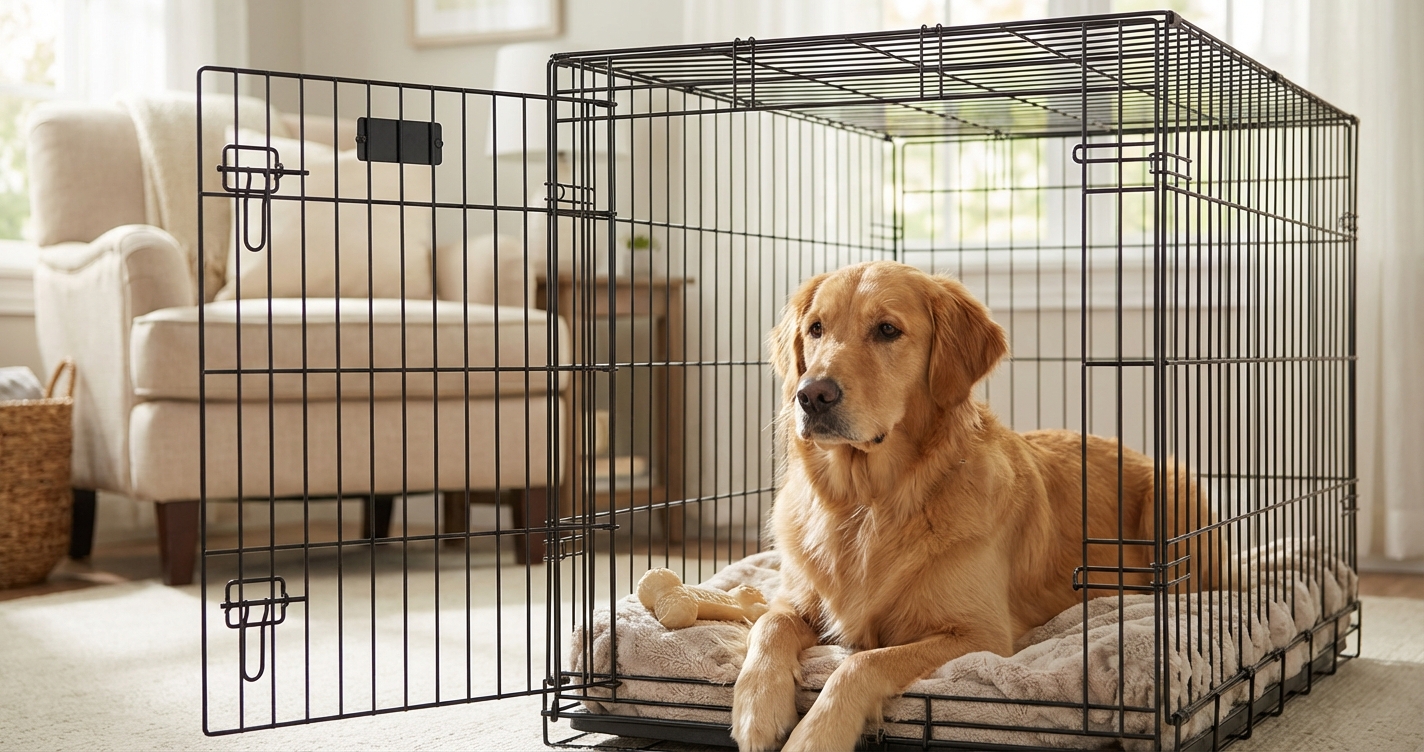
You can do a lot to build a positive association with the crate. The goal is for them to choose to go in there on their own.
- Make it comfy: Use soft, comfortable bedding that’s easy to wash.
- Use high-value treats: Have special toys or long-lasting chews that they only get inside the crate.
- Feed meals in there: Place their food bowl inside the crate with the door open to build a positive connection.
- NEVER use it for punishment: This is the cardinal rule. Sending a dog to its crate for being naughty will poison it as a safe space.
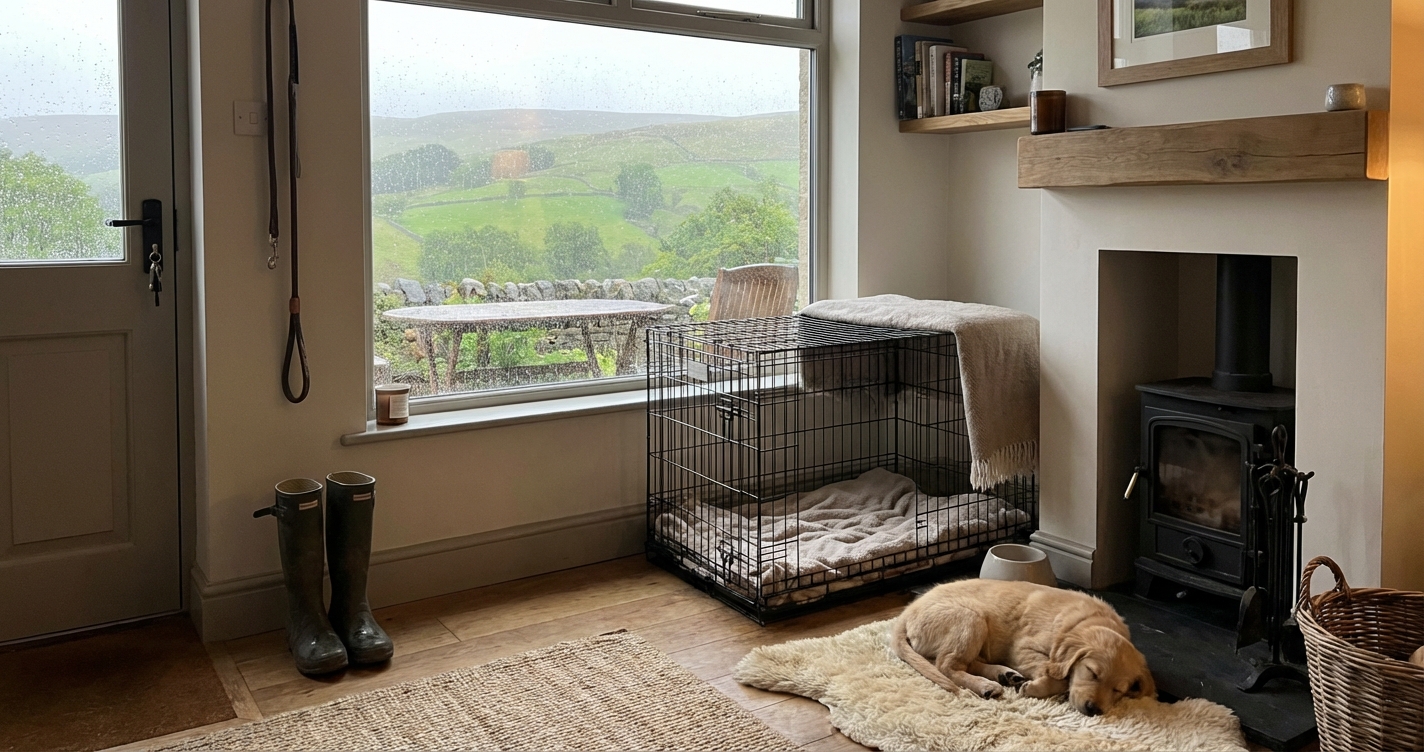
- Location, location, location: Place the crate in a communal area of the house, like the living room, so they don’t feel isolated.
What If You Work Full-Time? Realistic Crate Alternatives
Let’s be honest, crating a dog for 8-9 hours a day while you’re at work isn’t fair or practical. It’s simply too long. If you’re out for extended periods, you need another plan:
- Doggy Daycare: A fantastic option for social dogs to play and burn off energy.
- Dog Walkers or Pet Sitters: Someone who can pop in midday to let your dog out for the toilet and a good run.
- A Dog-Proofed Room: Use a baby gate to section off a safe, dog-proofed area like a kitchen or utility room. This gives them more space to move around than a crate allows.
The Big Debate: Is Crating Cruel?
You’ll find fierce opinions on both sides. In my view, it’s not the tool, but how you use it. When used as a short-term management tool for training, a safe place for travel, or a cosy den for a few hours, a crate is an invaluable part of dog ownership. When used as a convenient box to leave a dog in all day, it absolutely can be cruel.
The aim is to give your dog a space they feel secure in, not trapped. If you follow the time guidelines and make it a positive place, you’re on the right track.
A Final Thought
There’s no single, magic number for how long a dog can be in a crate. It comes down to their age, their personality, and their physical and mental needs. Pay attention to your dog—they’ll tell you what’s working and what isn’t. The crate should be their comfy, personal space, not a place they dread. Get that right, and you’ll have a happy, well-adjusted dog… and your cushions might just stay in one piece.

Related Posts