The Great British Stand-off: Navigating the First Meeting
I still remember the drive home from the rescue centre, a tiny ball of fluff protesting loudly in a carrier on the passenger seat. At home, my trusty old Lurcher, Barney, was blissfully unaware that his reign as the sole furry occupant was about to be challenged. The feeling was a cocktail of excitement and pure dread. How on earth was this going to work? Bringing a new kitten into a dog’s domain can feel like brokering a very delicate, very fluffy peace treaty. But with a bit of planning and a lorry-load of patience, you can skip the drama and set them up for a lifetime of, if not friendship, then at least peaceful coexistence.
Forget everything you’ve seen in cartoons. Tossing them in a room together and ‘letting them sort it out’ is a recipe for disaster. The key is a slow, steady, and controlled process. Let’s break it down into manageable chunks.
Before the Kitten Arrives: Laying the Groundwork
The hard work starts before your new arrival even crosses the threshold. A bit of prep now will save you a world of bother later. Think of it as decorating the nursery before the baby comes home, but with more scratch posts and fewer pastel colours.
Step 1: Create a Kitten Safe Haven
Your kitten needs a dedicated room where the dog absolutely cannot go. This isn’t a temporary measure; it’s their sanctuary. This space allows the kitten to acclimatise to the new sounds and smells of your home without the stress of a big, bouncy dog in their face.
- The Essentials for the Safe Room: Make sure this room is kitted out with everything they need: a litter tray, food and water bowls (kept far away from the tray!), a comfy bed, and a few toys.
Step 2: The Power of Scent Swapping
Animals learn about each other through smell long before they meet face-to-face. Getting them used to each other’s scent is a massive head start.
- How to do it: Take a blanket or cloth that your dog has slept on and place it in the kitten’s room. Do the same with a blanket from the kitten’s bed and let your dog have a good sniff of it. Do this for a few days before any visual introduction.
- Top Tip: You can also gently stroke one pet with a cloth and then the other to transfer scents directly. Don’t force it, just let them investigate in their own time.
The Introduction Process: A Step-by-Step Approach
Patience is your best friend here. This isn’t a race to the finish line. Rushing the process is the single biggest mistake people make. Each animal is different, so let them set the pace.
Phase 1: Visual Contact, No Physical Contact
After a few days of scent swapping, once the kitten seems confident in their room, you can allow them to see each other. The safest way to do this is through a barrier.
- Use a baby gate: A stackable baby gate is brilliant for this. It allows them to see and smell each other properly without any risk of a physical altercation.
- Keep it positive: Feed them their meals on opposite sides of the gate. This helps them build a positive association – seeing that other creature means something good (dinner!) is about to happen.
Phase 2: The First Supervised Meeting
When they both seem calm and curious around the baby gate, it’s time for a proper, but very controlled, meeting in a neutral space (like the living room). This is a two-person job if possible.
- Keep your dog on a lead: Use a loose, comfortable lead. This isn’t for yanking them back, but for gentle control in case your dog gets a bit too excited.
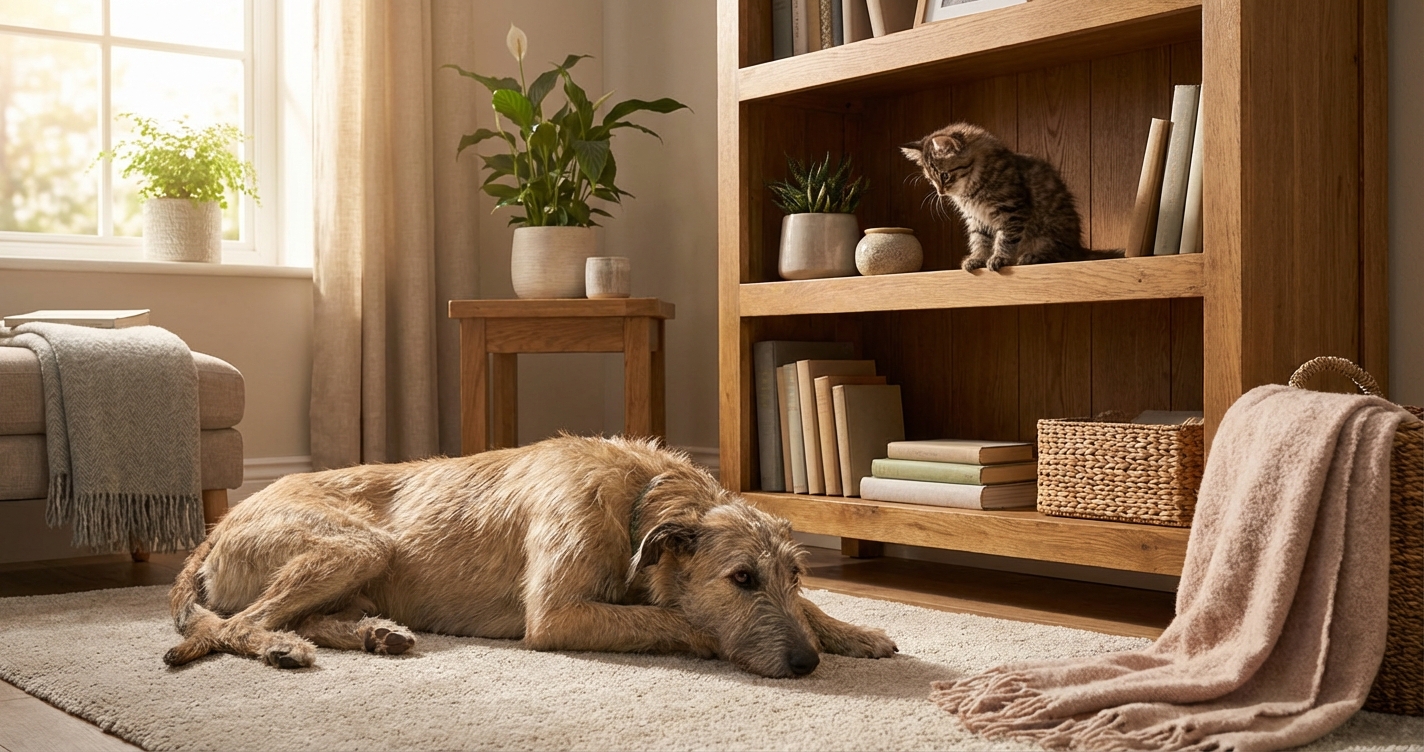
- Ensure the kitten has an escape route: The kitten must be able to retreat easily, either back to their safe room or up high onto a cat tree or bookshelf. Feeling trapped will cause panic.
- Keep it short and sweet: The first few meetings should be just a few minutes long. End on a positive note, before either pet gets stressed, and reward them both with a treat.
Learning Their Language: Reading the Signs
Understanding what your pets are telling you is crucial. You’re looking for calm, neutral behaviour. Ignoring each other is actually a fantastic sign! It means they don’t see one another as a threat.
Signs of Stress to Watch For:
- In the Dog: A stiff body, staring intently, ‘whale eye’ (showing the whites of his eyes), excessive lip licking, yawning when not tired.
- In the Kitten: Hissing, spitting, growling, ears flattened back, fur standing on end (a ‘bottle brush’ tail), hiding.
If you see any of these signs, calmly end the interaction immediately. Take a step back in the process and give them more time at the previous stage.
Positive Signs to Encourage:
- A relaxed, loose body posture in both animals.
- The kitten slow-blinking in the dog’s direction (a sign of trust).
- Gentle, curious sniffing followed by moving away.
- Both pets being able to eat or play in the same room without anxiety.
What If It’s Not Going Smoothly?
Sometimes, despite your best efforts, they just don’t click. Don’t panic. Go back to the very beginning – separate rooms and scent swapping – and proceed even more slowly this time. Some relationships can take months to build.
However, consistent aggression from either pet is a serious issue. If you’re concerned about their safety or the introductions are causing extreme stress, it’s time to call in a professional. A qualified animal behaviourist can provide a tailored plan for your specific situation. It’s always better to seek help early.
Ultimately, bringing a kitten into your dog’s life is a marathon, not a sprint. With a solid plan, a watchful eye, and plenty of patience, you’re giving them the best possible chance of becoming, at the very least, amicable flatmates.

Related Posts