
Why Is My Dog So Interested in the Cat’s Litter Tray?
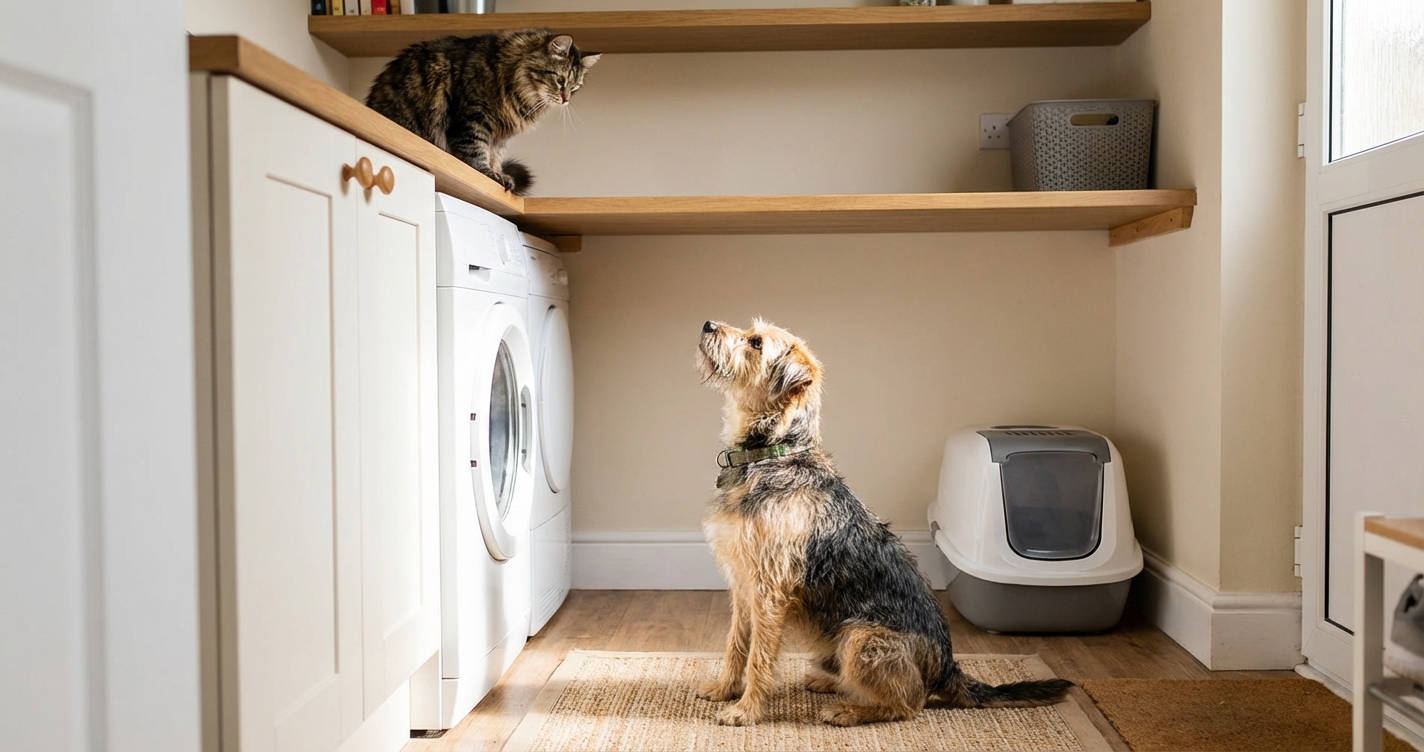
Right, let’s have a frank chat. I once walked into the utility room to find my terrier, Pip, snout-deep in the cat’s litter tray, looking up at me with what I can only describe as a face of pure, crunchy bliss. The cat, looking on from the top of the washing machine, was utterly disgusted. It’s a grim scene, but if you’re here, it’s probably a familiar one.
So, why this mucky habit? It’s not just your dog being difficult. To dogs, the cat’s poo can be, well, a delicacy. It often contains undigested protein from their food, making it strangely appealing. This behaviour of eating faeces even has a fancy name: coprophagia. It’s a bit gross, but it’s a surprisingly common canine instinct. Understanding this is the first step—it’s not personal, it’s just… lunch.
The First Line of Defence: Simple Management Tactics
Before you start building barricades or spending a fortune, let’s start with the basics. A bit of simple management can often make a massive difference without costing you a penny.
The Scoop on Scooping
The most straightforward fix is also the most obvious: don’t leave any ‘treats’ for the dog to find. The more often you clean the litter box, the fewer opportunities your dog has for a forbidden snack.
- Key Takeaway: A clean litter tray is an uninteresting litter tray. Aim to scoop at least twice a day, or as soon as your cat has used it, if you’re around.
If you have the budget and can’t stand the scooping, a self-cleaning or automatic litter box can be a game-changer. They sift the waste away after each use, meaning the box is almost always clean and temptation-free.
A Change of Scenery: Strategic Placement
Think about where the litter tray lives. Can you move it somewhere the cat can easily reach, but the dog can’t? This is all about using your home’s layout to your advantage.
- Put it up high: Cats are natural climbers. Placing the tray on a sturdy chest of drawers, a counter in the utility room, or inside a deep-silled window might work. Just make sure your cat, especially if they’re a bit older, can get up and down safely.
- Tuck it away: Pop the tray behind a sofa or in a narrow gap that the cat can squeeze into but your broader dog can’t.
Fort Knox for Felines: Physical Barriers That Actually Work
If simple management isn’t cutting it, it’s time to bring in the hardware. Creating a physical barrier is often the most foolproof method. The trick is to block the dog but not the cat.
Baby Gates (With a Feline-Friendly Twist)
A standard baby gate can be a brilliant solution. You can place it in the doorway of the room where the litter box is.
- For a large dog and a cat, you can set the gate a few inches off the floor, allowing the cat to slink underneath while the dog remains blocked.
- For smaller dogs, look for a gate that has a small cat-flap built into it. This gives the cat exclusive access to their private facilities.
Door Latches and Cat Doors
A simple door latch that holds the door open just wide enough for a cat to slip through, but not a dog, is a fantastically cheap and effective option. It’s ideal for keeping nosy Labradors out of the downstairs loo or utility room. Alternatively, if you own your home and don’t mind a bit of DIY, you can install a proper cat flap in an internal door.
Rethinking the Box: Choosing a Dog-Resistant Litter Tray
Sometimes the solution lies with the litter box itself. The market is full of clever designs aimed at solving this very problem.
- Top-Entry Litter Boxes: These are essentially deep bins with a hole in the lid. The cat hops on top and drops down to do their business. Most dogs are completely baffled by this and can’t get their heads in. Practicality Check: This is a great option, but might not be suitable for elderly, arthritic, or particularly chunky cats who can’t manage the jump.
- Covered or Hooded Litter Boxes: A simple covered box can deter a lazy or large dog who can’t be bothered to stick their head through the opening. However, a small and determined dog (like my terrier) will see it as a minor inconvenience rather than a real barrier.
- Litter Box Furniture: A more stylish, albeit pricier, option is to hide the litter box inside a piece of furniture, like a cabinet or side table. These enclosures have an entrance hole for the cat, creating a physical barrier that also looks much nicer in your living room.
The Power of Training: Teaching the “Leave It” Command
While physical barriers offer an immediate fix, training provides a long-term solution. Teaching your dog a solid “leave it” command is an invaluable skill for all sorts of situations, not just litter box raiding.
A Quick How-To for “Leave It”:
- Start with a low-value treat in one hand. Show it to your dog and close your fist. Let them sniff and lick, but don’t give it to them.
- The moment they pull their head away, even for a second, say “Yes!” and give them a much tastier treat from your other hand.
- Repeat this until your dog backs away from your closed fist as soon as you present it.
- Once they’ve got the hang of it, you can start saying “Leave it” as you present the fist, and then progress to practising with toys and other items on the floor. Consistency is key!
A Quick Word on Health (If the Deed is Done)
Let’s be clear: I am not a vet, and this is not medical advice. If you’re ever worried about your pet’s health, the first and only port of call should be your local vet.
While eating a bit of cat poo is usually harmless (if disgusting), there are a couple of things to be aware of. Cat faeces can transmit parasites to your dog. Furthermore, if your dog ingests a large amount of cat litter, particularly the clumping kind, there’s a risk of it causing an internal blockage.
- When to call the vet: If your dog seems unwell, is vomiting, becomes lethargic, or you suspect they’ve eaten a significant amount of litter, please don’t hesitate to seek professional advice.
Finding the right solution is a bit of trial and error. What works for a Jack Russell and a sprightly young cat might not work for a Great Dane and a senior kitty. But with a bit of patience and practicality, you can restore peace, and hygiene, to your home. Good luck!

Related Posts