Decoding Your Dog’s Licks: Affection, Communication, or Something Else?
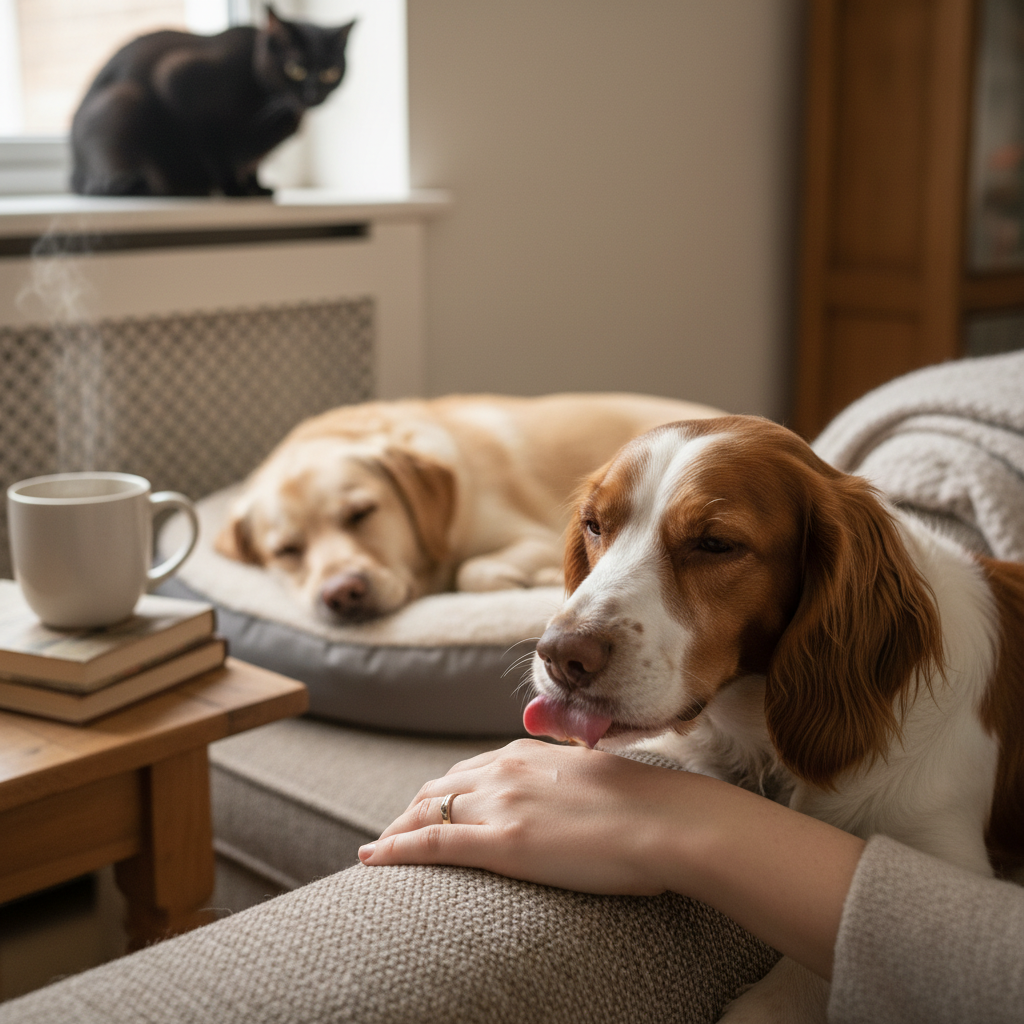
It’s a familiar scene in our house. I’m settled on the sofa with a cuppa, ready for a bit of telly. I start stroking Fern, our whirlwind of a Spaniel, behind the ears. Her leg starts thumping, her eyes go soft, and then it comes… the long, slurpy lick right across the back of my hand. Every single time. Meanwhile, Buster the Labrador is likely snoozing, dreaming of biscuits, and Margo the cat is judging us all from her throne on the radiator. But Fern’s constant licking got me thinking: what is she actually trying to say?
If you’ve ever found yourself with a soggy hand mid-cuddle, you’re not alone. This is one of the most common questions dog owners have. The good news is, it’s usually nothing to worry about. Licking is a completely natural behaviour for dogs, but the meaning can change depending on the situation. It’s their multi-tool for communication.
The Instinctive Reasons: Why Licking is Hard-Wired
Long before they were snoozing on our sofas, dogs and their ancestors used licking for fundamental reasons. Understanding this helps make sense of why your modern-day companion does it.
- Bonding and Grooming: A mother dog licks her puppies from the moment they are born to clean them, stimulate breathing, and create a powerful bond. This grooming and comforting behaviour is an instinctive way for dogs to show care and strengthen social ties within their pack—and you are part of their pack.
- A Natural Soother: The repetitive action of licking releases endorphins in a dog’s brain. These are the body’s natural ‘feel-good’ chemicals, which help to calm and soothe them. So, when you’re petting your dog and they feel relaxed and happy, a bit of licking can make them feel even better.
- Information Gathering: A dog’s sense of taste and smell are their superpowers. When they lick your skin, they’re not just being affectionate; they’re gathering a world of information. They can taste the natural salts on your skin and pick up scents from where you’ve been and what you’ve touched.
Common Translations for Licks During a Cuddle
So, when your dog starts licking you mid-pet, what’s the most likely message? It’s all about context, but here are the most common reasons.
Key Takeaway: Most of the time, licking during petting is a positive sign that your dog is relaxed, happy, and feels a strong bond with you.
- It’s a Sign of Affection: This is the simplest and most common reason. Think of it as your dog’s version of a kiss. They are returning the affection you’re showing them through petting. It’s their way of saying, “I like this, please continue!”
- They Like How You Taste: It might sound a bit odd, but human skin is naturally salty, which many dogs find appealing. If you’ve been exercising or have just put on hand lotion, you become even more interesting to their palate. Buster the Lab is a prime example—if I’ve been handling his food, my hands get a thorough cleaning.
- It’s an Attention-Seeking Habit: Dogs are clever. If they licked you once while you were petting them and you responded with more attention (even telling them to stop!), they might have learned that licking gets a reaction. It can become a go-to move to keep the focus on them.
- A Gesture of Submission: In the world of dogs, licking can be a sign of respect or submission to a higher-ranking pack member. While you’re not a dog, they might be showing you that they see you as the one in charge and feel safe and secure in your presence.
The Lick Decoder: Reading the Full Story
To truly understand what your dog is trying to tell you, you need to look at more than just the lick itself. Pay attention to their body language. Here’s a practical guide to help you tell the difference between a happy slurp and a sign of trouble.
The ‘Happy & Affectionate’ Lick
- The Lick Itself: Soft, gentle, and relaxed.
- Body Language: A loose, wiggly body. A soft, gently wagging tail. Relaxed ears and soft eyes. They may lean into your touch. This is Fern in a nutshell.
The ‘Anxious or Appeasement’ Lick
- The Lick Itself: Often frantic, fast, and darting, sometimes licking the air near you rather than your skin.
- Body Language: A tense or stiff body. A low or tucked tail. Wide “whale” eyes where you can see the whites. Yawning or lip-licking (not just after eating). This lick says, “I’m a bit uncomfortable with this situation.”
The ‘Something Might Be Wrong’ Lick
- The Lick Itself: Compulsive, incessant, and hard to distract them from. It might be focused on one spot on you, or on themselves.
- Body Language: This can vary, but the key is the obsessive nature of the licking. If a dog is constantly licking their paws, a joint, or their flank, it could signal pain, allergies, or a skin issue.
When Licking Becomes a Worry
While mostly harmless, excessive licking can sometimes be a red flag. It’s important to know when a simple behaviour crosses the line into something that needs a bit more attention.
Please remember, I’m just a chap with a keyboard and a house full of animals. This is based on my own experience and research. If you are genuinely concerned about your dog’s behaviour, the best thing you can do is have a chat with your vet or a qualified canine behaviourist.
- Compulsive Behaviour: If the licking is constant and seems out of your dog’s control, it could be a sign of canine compulsive disorder (CCD), which is often triggered by stress, anxiety, or boredom.
- Underlying Medical Issues: Persistent licking, especially of surfaces or themselves, can sometimes be linked to gastrointestinal problems, allergies, or pain. It’s their way of trying to self-soothe a physical discomfort.
How to Manage Excessive Licking
Don’t fancy a wash every time you have a cuddle? That’s fair enough. If you want to reduce the licking, the key is gentle redirection, not punishment.
- Redirect the Behaviour: When the licking starts, calmly offer a toy or a healthy chew to lick instead. This gives them an appropriate outlet for the behaviour.
- Manage Your Reaction: Don’t make a big fuss. Simply remove your hand and briefly ignore them. When the licking stops, resume petting. They will quickly learn that licking makes the good stuff (your attention) go away.
- Increase Exercise and Enrichment: A bored dog is more likely to develop nuisance behaviours. Ensure they’re getting enough physical exercise and mental stimulation through puzzle toys, training games, or sniffing walks to tire them out in a healthy way.
At the end of the day, a lick from your dog is usually a compliment. It’s a complex, instinctive behaviour that shows a deep level of trust, affection, and communication. By paying attention to the context and their body language, you can get a much clearer picture of what your four-legged friend is trying to say—even if it does mean keeping a towel handy by the sofa.

Related Posts