A Familiar Scene: The Post-Walk Lick
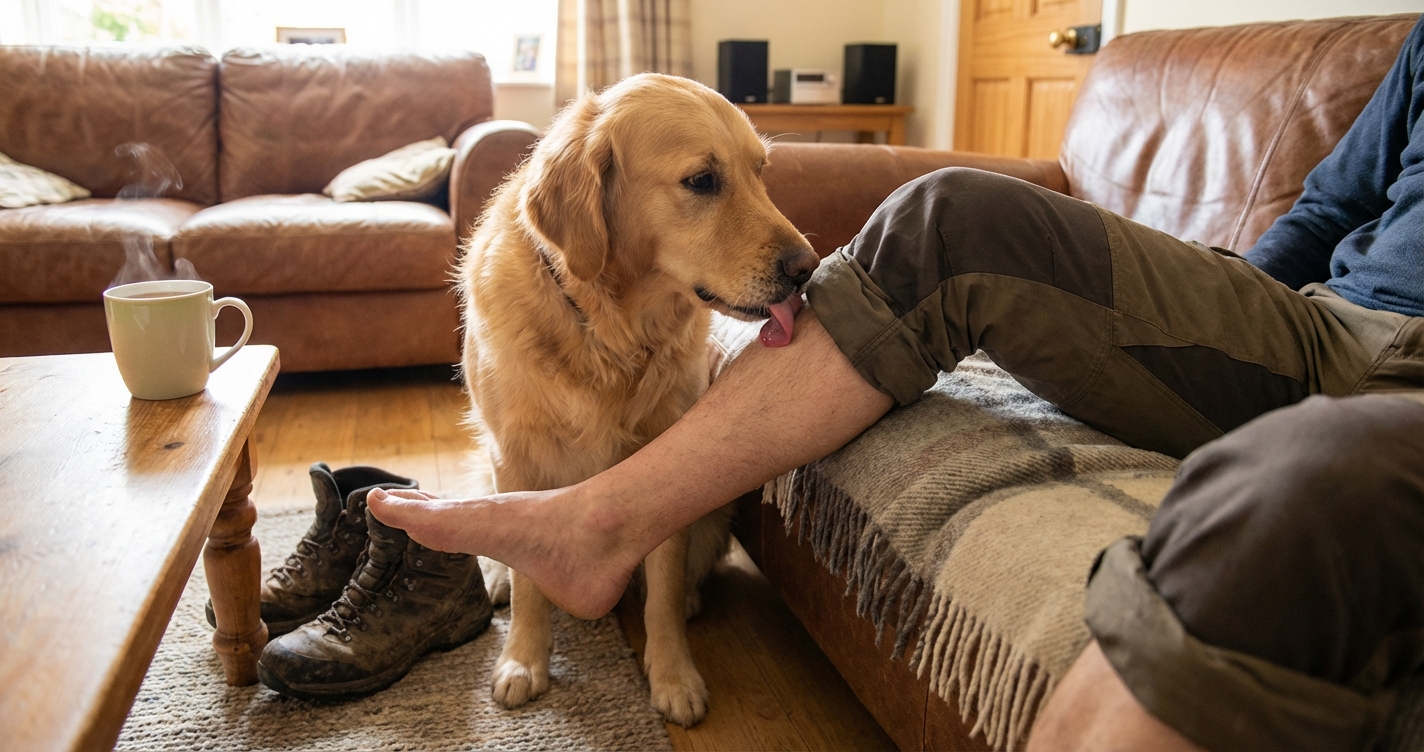
Picture this. You’ve just kicked off your muddy walking boots after a proper yomp across the hills. You slump onto the sofa with a brew, and within seconds, you feel it: a wet, persistent, rhythmic licking on your calf. It’s the dog, of course, giving your leg a thorough wash. It’s a bit ticklish, a bit slobbery, and leaves you wondering, “Right then, what’s all that about?”
If you’ve ever found yourself on the receiving end of a leg-licking session, you’re not alone. This canine behaviour, while a bit odd to us humans, is a perfectly normal and instinctual part of how dogs communicate and interact with their world. It’s rarely something to fret about, but understanding the reasons behind it can tell you a lot about what your four-legged mate is thinking.
Is It Just a Big, Sloppy Kiss?
More often than not, yes. The most common reason your dog licks you is simply to show affection. Think back to when they were a pup. Their mother would have licked them to groom, comfort, and show care. They, in turn, would lick their mother’s face to communicate and ask for food. This licking behaviour is deeply ingrained as a way to bond and strengthen social ties.
When your dog licks your legs, they are often extending that same grooming and bonding instinct to you, their family. It’s their way of saying, “You’re part of my pack, and I care for you.”
7 Other Reasons Your Dog Might Be Licking Your Legs
While affection is the front-runner, there are a few other messages your dog might be trying to send with their tongue. The context of the situation is usually the biggest clue.
1. You Taste Rather Good, Apparently
Our skin can be a treasure trove of interesting tastes for a dog. The natural salts from a bit of sweat, the residue from a lotion you’ve put on, or even just the lingering scent of the great outdoors can make your legs an appealing target. If the licking happens right after you’ve exercised or come in from the garden, there’s a good chance they’re just enjoying the flavour.
2. “Oi, Human! Look at Me!”
Dogs are clever creatures. If they lick your leg and you immediately react—by laughing, pushing them away, or telling them to stop—they’ve learned something important: licking gets your attention. It can become a learned behaviour, their go-to method for saying, “Stop looking at that telly and throw my ball.”
3. A Sign of Respect
In the canine world, licking can be a form of communication that shows deference or submission to a higher-ranking pack member. While we don’t have a rigid pack structure in our homes, this instinct can still surface. A gentle lick can be your dog’s way of showing they respect you and are comfortable in your presence.
4. A Bit of a Tidy Up
Grooming is a natural social activity for dogs. They groom each other to maintain bonds and hygiene. By licking you, they might just be including you in this ritual, giving you a quick once-over to make sure you’re clean. It’s their version of straightening your collar.
5. A Calming Mechanism
Licking releases endorphins in a dog’s brain, which have a calming, comforting effect. If your dog seems a bit anxious or stressed, they might lick you (or themselves) as a self-soothing behaviour. It’s like a nervous person fiddling with their hands; it helps them to settle down.
6. Gathering Information
A dog’s sense of taste and smell are their primary tools for exploring the world. Their tongue can pick up a huge amount of information about where you’ve been and what you’ve been doing. That leg lick could just be them ‘reading the news’ on your skin.
7. Hunger or Thirst
Sometimes, the simplest answer is the right one. Licking can be a way for a dog to signal that their food or water bowl is empty. It harks back to the puppy instinct of licking their mother’s mouth for food. Check their bowls if the licking seems persistent around mealtimes.
When a Lick Might Be a Worry
While almost always harmless, very occasionally, excessive licking can be a clue that something isn’t quite right. It’s less about the licking itself and more about the intensity and focus.
Key Takeaway: If the licking is relentless, focused on one single spot, and comes with other changes in behaviour, it’s worth paying closer attention.
- Compulsive Licking: If your dog licks one area on their own leg or paw obsessively, sometimes until it’s raw, it could be a sign of a compulsive behaviour, sometimes called acral lick dermatitis. This can be triggered by boredom, anxiety, or an underlying allergy.
- Pain or Discomfort: A dog might repeatedly lick a specific spot on their body (or yours, if they’re near it) that is painful. If they are focusing on an area over a joint, for example, it could be a sign of arthritis or an injury.
- Allergies: Skin allergies can cause itchiness and irritation, leading a dog to lick themselves for relief.
If you notice any of this, or if the behaviour just feels ‘off’ to you, a quick chat with your vet is the best course of action to rule out any medical issues.
How to Gently Discourage the Slobber
If the licking has become a bit much, you don’t need to make a massive fuss. A few simple, practical steps can help redirect the behaviour.
- Ignore and Redirect: The moment the licking starts, calmly get up and walk away without saying a word. This teaches them that licking makes the fun (you) go away. When you return, offer them a toy or a chew to engage with instead.
- Offer an Alternative: Keep a favourite toy handy. When they start to lick, gently interrupt them and start a game of fetch or give them the toy. You’re not punishing them, just showing them a better way to interact.
- Praise the Quiet: When you’re sat together and they *aren’t* licking you, give them some calm praise and a gentle stroke. This reinforces that calm, non-licky behaviour is what gets them positive attention.
The Long and Short of It
At the end of the day, a dog licking your legs is usually just them being a dog. It’s a form of affection, communication, and exploration all rolled into one slobbery package. By watching when and how they do it, you can get a better sense of what they’re trying to say. And if you’re ever in any doubt, especially if the behaviour seems obsessive, trust your gut. A quick phone call to the vet can provide peace of mind and ensure your best mate is happy and healthy.

Related Posts