Decoding the Canine Cuddle: Why Your Dog Chooses You for a Chair
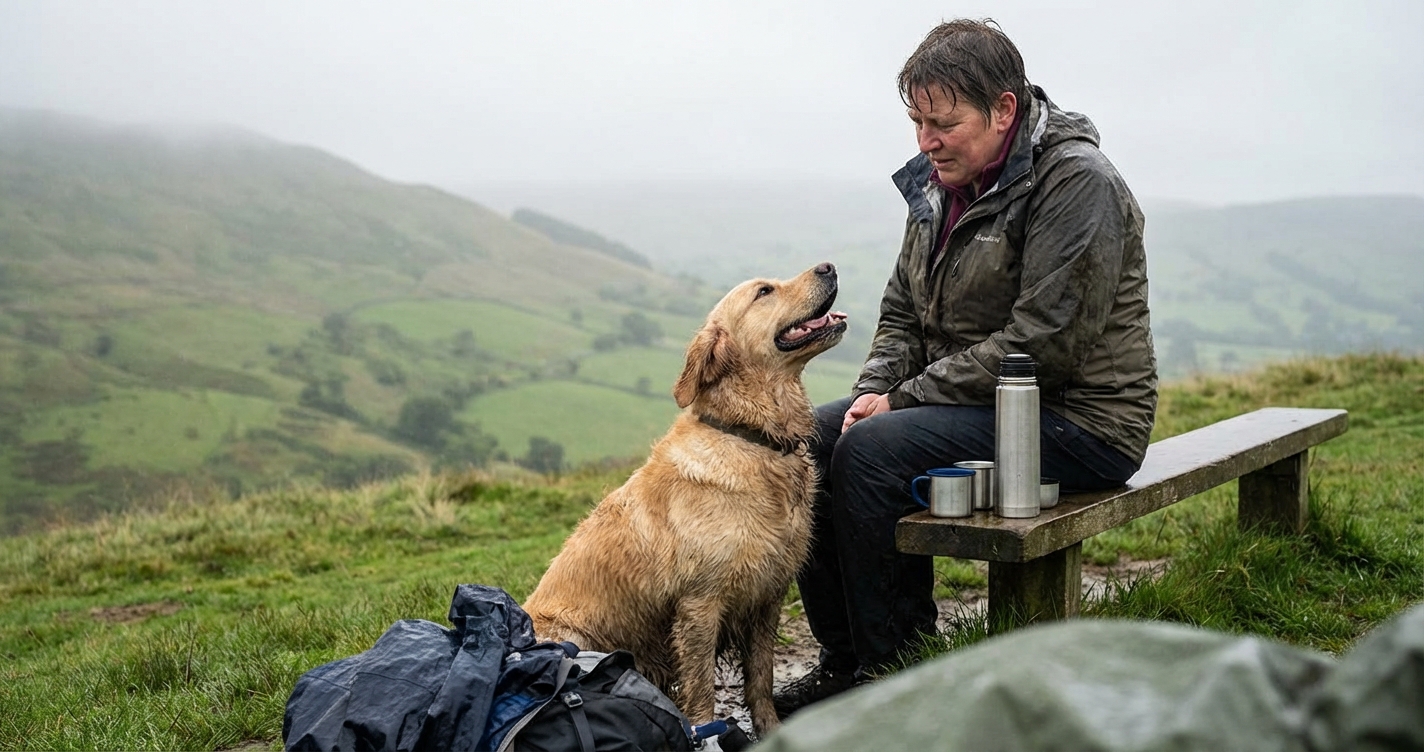
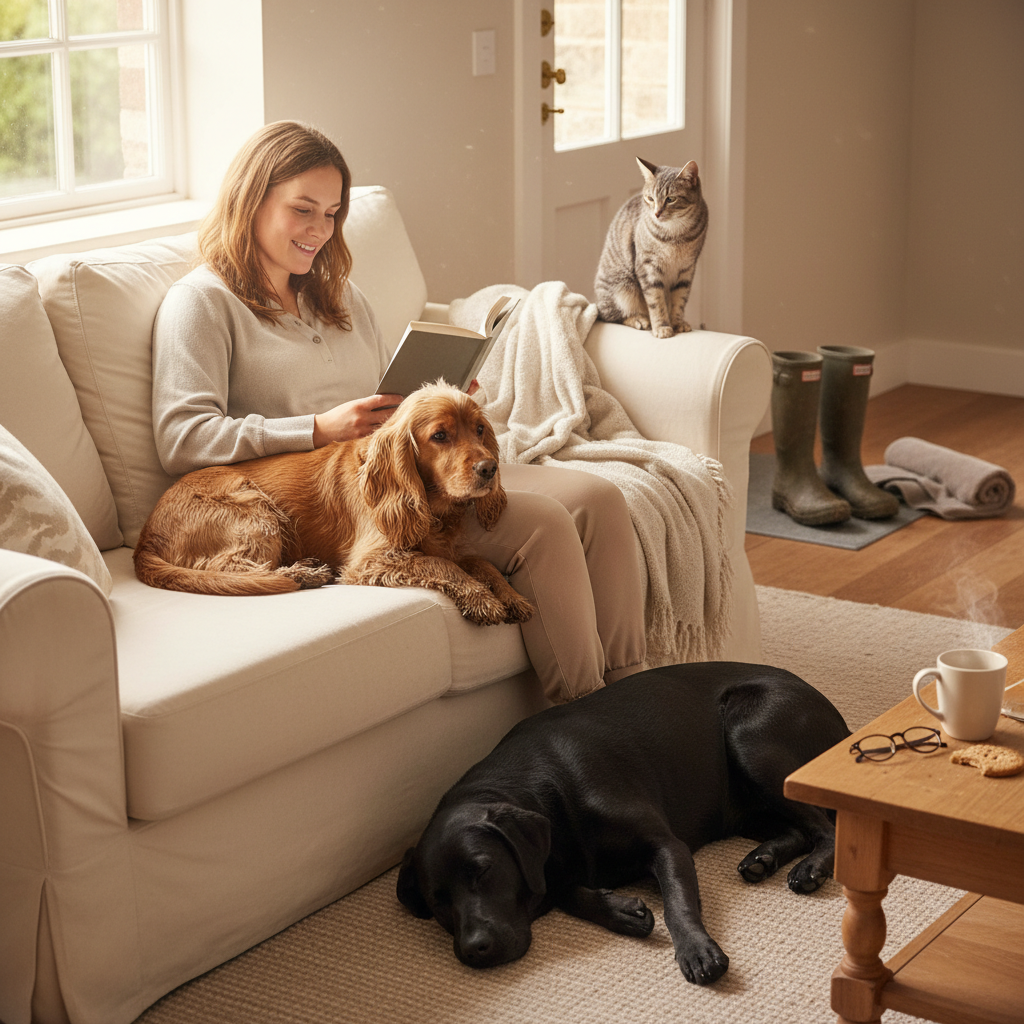
The other day, I’d just got back from a particularly squelchy walk across the moors. Fern, my high-octane Spaniel, was caked in a frankly impressive amount of mud. Before I could even get the wellies off, she’d launched herself onto the sofa and promptly reversed into my lap, tail thumping a muddy tattoo on my clean trousers. It’s a familiar scene for many of us. You provide a perfectly good dog bed, maybe even a corner of the sofa, yet your dog’s preferred perch is you. But why? Is it a power play? A plea for attention? Or something else entirely?
Forget what you’ve heard about ‘alpha’ dogs and dominance. More often than not, when your dog sits on you, it’s a form of communication—a physical message that says a lot about your relationship. The board of directors here—Buster the Lab, Fern, and even Margo the cat when she’s feeling generous—all use physical contact to convey something. Let’s break down what your personal, four-legged hot water bottle might be trying to tell you.
The Real Reasons Your Dog Uses You as a Cushion
Canine behaviour is rarely about just one thing. When your dog plonks themselves on your lap, it’s usually down to a mix of instinct, learning, and the unique bond you share. Here are the most common reasons.
A Quest for Comfort and Security
At their core, dogs are pack animals. There is safety in numbers and immense comfort in physical closeness. By sitting on you, your dog is getting a double dose of security. You’re warm, you’re soft (well, softer than the floor), and most importantly, you smell like their family. Your scent is incredibly reassuring to them. For a dog, being in physical contact with their trusted human is the safest place in the world. Buster, my big Labrador lump, does this most when there’s a thunderstorm brewing; he’s not seeking to be in charge, he’s seeking reassurance.
It’s All About Affection (and a Bit of Scent-Swapping)
This is the big one. A dog sitting on you is often a straightforward, beautiful sign of affection. It’s the dog equivalent of a hug. This physical contact is known to release oxytocin—the ‘love hormone’—in both dogs and humans, strengthening your bond. It’s a quiet way of saying, “I trust you completely.”
- Key Takeaway: A relaxed dog with soft body language sitting on you is demonstrating trust and love.
There’s also a bit of scent-marking going on, but not in a territorial, aggressive way. It’s more of a social exchange. By sitting on you, they leave their scent, and they pick up yours. It’s a passive way of saying, “This is my person, and we belong together.” It’s a calling card that tells other dogs, “this human is part of my pack.”
The “Look at Me!” Manoeuvre
Dogs are clever. They quickly learn what works. If your dog sat on you once and you responded with ear scratches, happy chatter, or a good fuss, you’ve unintentionally rewarded the behaviour. This is a classic example of learned behaviour. They’ve made the connection: sitting on the human gets good things. It can be a simple request for attention, play, or perhaps a hint that Buster’s dinner time is five minutes overdue, not that he ever needs to remind me.
Standing Guard From the Sofa
Some dogs have a protective instinct. By positioning themselves on you, they can feel secure while also keeping an eye on things. They’re not necessarily ‘guarding’ you in an aggressive sense, but rather fulfilling an innate desire to be close to their pack member and aware of the surroundings. Fern often does this, planting herself on my feet and watching the door. She’s not being hostile; she’s just on duty.
Let’s Debunk the Dominance Myth, Shall We?
For years, people chalked this behaviour up to ‘dominance’. The idea was that your dog was trying to assert its authority and claim you as a possession. Thankfully, our understanding of dog behaviour has moved on. Modern, qualified behaviourists largely agree that this theory is outdated and misunderstands canine social structures.
True signs of a dog trying to assert itself are very different: they often involve stiff body language, a hard stare, or resource guarding (like growling if you approach their food). A dog who is relaxed, with a soft body and a wagging tail who just happens to be using your legs as a pillow, is not making a power play. They’re seeking connection.
When Could It Be a Sign of Something More?
While usually a harmless and lovely quirk, a sudden increase in this behaviour could occasionally point to an underlying issue. It’s all about the context.
- Separation Anxiety: If your dog becomes frantic when you prepare to leave and is exceptionally ‘clingy’ when you’re home, the constant need for physical contact might be a symptom of deeper anxiety. This isn’t just affection; it’s a need for constant reassurance that you’re not going to disappear.
- Resource Guarding: This is an important distinction. Does your dog sit on you and then growl, snap, or get tense if another person or pet approaches? If so, the issue isn’t the sitting itself. The dog may be ‘guarding’ you as a valuable resource, and this is behaviour that needs addressing with help from a professional.
A Practical Word of Advice: If you notice any sudden, dramatic changes in your dog’s behaviour or if the sitting is paired with signs of stress like lip-licking, yawning, or growling, it’s always best to have a chat with your vet to rule out any medical causes before speaking with a qualified behaviourist.
Setting Boundaries: How to Manage Your Personal Space
Whether you encourage this behaviour or not is entirely up to you. If you have a Great Dane and a bad back, you might feel differently than someone with a tiny terrier.
If you want to discourage it:
- Don’t make a fuss. The moment they sit on you, calmly stand up. Don’t push them off or scold them. You just become a less comfortable place to sit.
- Teach an alternative. Reward them heavily for sitting next to you on the sofa. Create a positive association with their own space.
- Use a command. A clear ‘Off’ or ‘Place’ command, taught with positive reinforcement, gives you a simple way to ask for your space back.
For most of us, though, a dog using us as a cushion is just one of the many lovely, sometimes muddy, perks of having them in our lives.
The Final Verdict From the Board of Directors
So, next time your dog decides your lap is the best seat in the house, take it as the compliment it almost certainly is. They’re telling you that you are their safe place, their source of comfort, and the centre of their world. As I look down now, I have a snoozing Labrador on my feet and a Spaniel’s head on my knee. It seems the board has voted, and they’ve decided I make a perfectly good piece of furniture. And honestly, I wouldn’t have it any other way.

Related Posts