Decoding Your Dog’s Under-the-Bed Habit
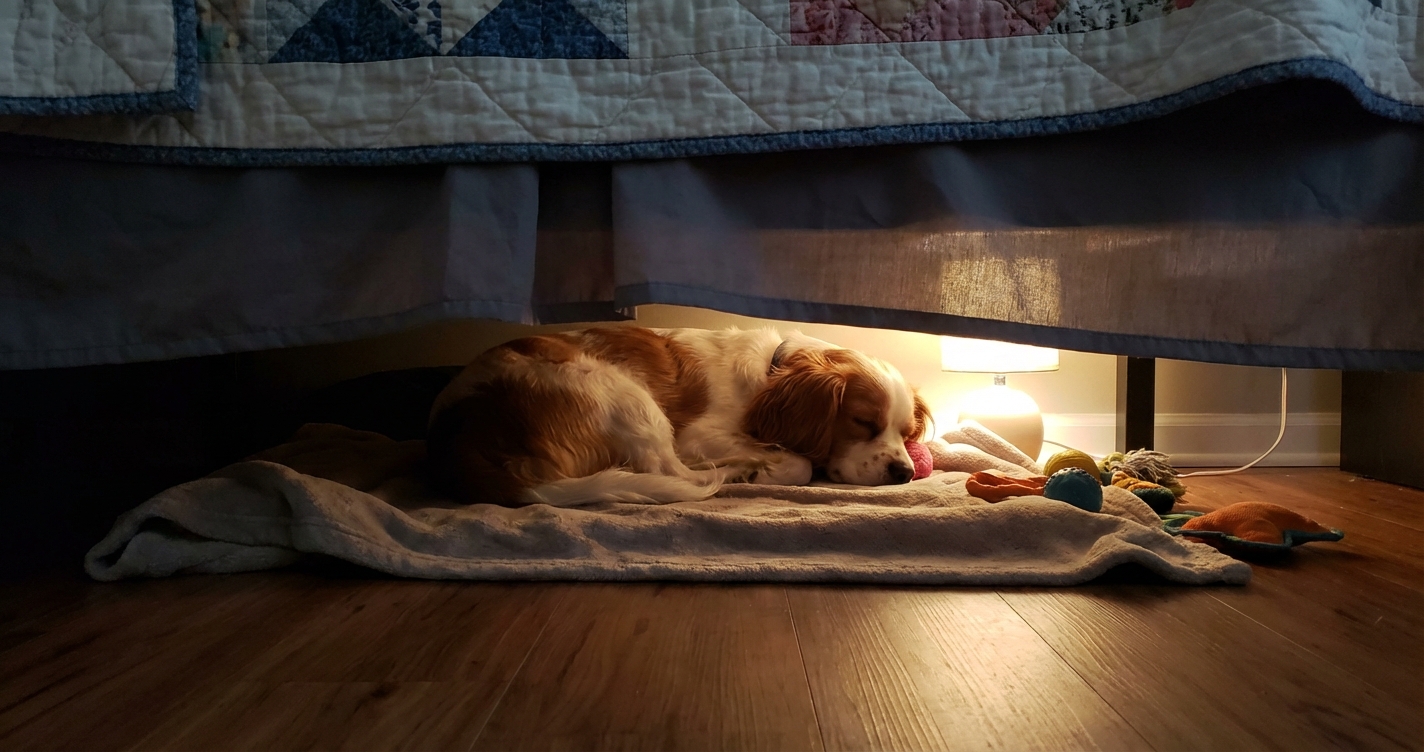
The other night, a proper Peak District thunderstorm rolled in. The whole house was rattling. I did a quick headcount of the board of directors: Buster the Lab was flat out, dreaming of cheese, and Margo the cat hadn’t moved from her post on the radiator. But Fern, our whirlwind of a Spaniel, was nowhere to be seen. A quick look revealed just the tip of her tail sticking out from under the bed. It wasn’t fear; for her, it was the safest, cosiest place to be while the sky was making a racket. It’s a common sight for many of us, isn’t it? Finding our four-legged friends tucked away in their self-made fortress. But why do they do it? More often than not, this burrowing behaviour is perfectly normal, stemming from a mix of instinct, a need for comfort and security, or simply wanting to be close to you. Let’s get to the bottom of it.
The Call of the Wild: Understanding Your Dog’s Denning Instinct
Deep down, even the most pampered pooch has a bit of their wild ancestry knocking about. For their wolf cousins, a den was a critical bit of kit. It was a safe, enclosed space to rest, raise pups, and hide from predators. The space under your bed is the perfect modern-day equivalent.
A den is essentially a dog’s private, safe space. It’s usually dark, enclosed on three sides, and has a low ceiling. This structure makes them feel protected and secure, allowing them to relax completely without having to keep one eye open.
- Security: The enclosed nature of the space means they don’t have to worry about anyone sneaking up on them.
- Ancestral Memory: It’s a hardwired behaviour that has been passed down for thousands of years.
- A Perfect Fit: The low, dark, and tight space under a bed ticks all the boxes for a prime canine den.
A Personal Bothy: Comfort, Quiet, and Temperature Control
Beyond instinct, there’s a good dose of simple, practical comfort involved. Our homes can be a bit of a sensory overload for dogs—the telly blaring, people coming and going, the hoover making its monstrous rounds. The space under the bed is a quiet retreat from all that chaos.
It’s also a clever way for them to manage their own central heating. On a hot summer’s day, the cool floorboards or lack of direct sunlight under the bed can be a welcome relief. In winter, the same space can be a cosy, draught-free spot to curl up in. You might notice your dog using it more during particularly hot or cold spells.
A Security Blanket with Legs: Feeling Safe and Close
For a dog, being near their pack is everything. And in your home, you are the pack leader. Sleeping under your bed means they can be incredibly close to you all night, surrounded by your scent, without being in the way. It’s a source of immense comfort and reassurance for them, reinforcing that bond you share.
This space also becomes a safe haven when things get a bit stressful. Fearful dogs will often retreat under the bed during fireworks, thunderstorms, or when unfamiliar guests are over. It’s their panic room, a place where they feel untouchable until the ‘threat’ has passed.
When is Hiding Under the Bed a Worry? A Practical Checklist
While usually a harmless quirk, a sudden change in this behaviour can sometimes be a sign that something’s amiss. This isn’t about diagnosing anything—that’s a job for the vet—but about being an observant owner. If you’re feeling a bit concerned, run through this simple checklist.
- Is this a sudden change? If your dog has never been an under-the-bed sleeper and has suddenly started, it’s worth paying closer attention. A new behaviour can be a signal that something in their world has changed, be it physical or emotional.
- Are there other signs of illness or pain? Look for other changes. Are they off their food? Seemingly tired all the time (lethargic)? Are they reluctant to move, or do they seem stiff and sore? A dog in pain will often seek a quiet, out-of-the-way place to hide.
- What’s the context? Do they only hide when the grandkids visit or during a storm? If the behaviour is tied to a specific, stressful event, it’s likely a fear response. If it’s happening constantly for no apparent reason, it might warrant a closer look.
- Are they guarding the space? If your dog growls, snaps, or shows their teeth when you approach them under the bed, this could be ‘resource guarding’. They see the space as a high-value possession. This is a behavioural issue that is best tackled with guidance from a professional trainer or behaviourist.
The Golden Rule: If your dog’s behaviour changes suddenly and you have any concerns about their health or well-being, the best thing you can do is have a chat with your vet. It’s always better to be safe than sorry.
Creating a Five-Star Alternative to the Under-Bed Hotel
Perhaps you need your dog to sleep elsewhere, or you just want to give them another safe space to choose from. The key isn’t to ban them from under the bed, but to make another spot so unbelievably appealing that they choose it themselves. Think of it as a luxury upgrade.
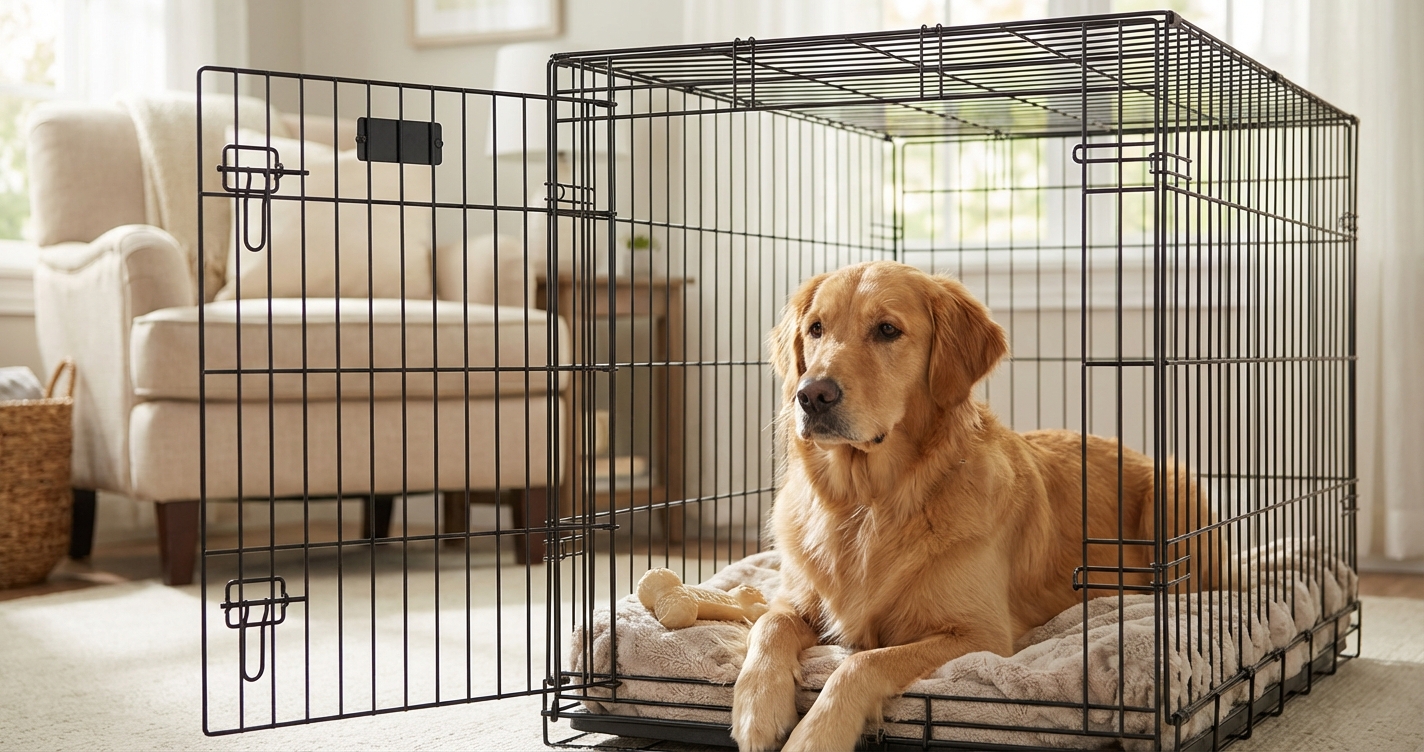
- Get a Crate: A crate, when introduced properly, is not a cage but a den. Cover it with a blanket to make it dark and cosy, and put their favourite bed inside. Leave the door open so they can come and go as they please.
- Choose the Right Location: Place their new bed or crate in a quiet corner of a room you use often, like the living room or your bedroom. They want to be with you, but not in the middle of a busy walkway.
- Make it Comfy: Invest in a good quality, comfortable bed. If your dog is a ‘nester’, give them extra blankets to burrow into.
- Build Positive Associations: Make the new spot a fantastic place to be. Leave a high-value chew or a favourite toy in there for them to discover. Never use the space for punishment.
Should I Stop My Dog Sleeping Under the Bed?
Honestly, if your dog is happy, healthy, and not causing any trouble, there’s little reason to stop them. It provides them with comfort and security, which is a wonderful thing. The only real downsides are the amount of dust they might accumulate and the faff of trying to get them out if you need to leave in a hurry!
However, if you have an older dog who might struggle to get out, or if you simply need the space for under-bed storage, you can gently discourage the habit. The best way is to simply block access. Use storage boxes or purpose-made blockers to fill the gap. At the same time, be sure you’ve set up that five-star alternative we talked about, so you’re not taking away their safe space without giving them a new one. It’s all about providing a practical, comforting alternative, not just taking their favourite spot away.

Related Posts