Why Does My Dog Stand On Me? Unpacking 9 Common Reasons
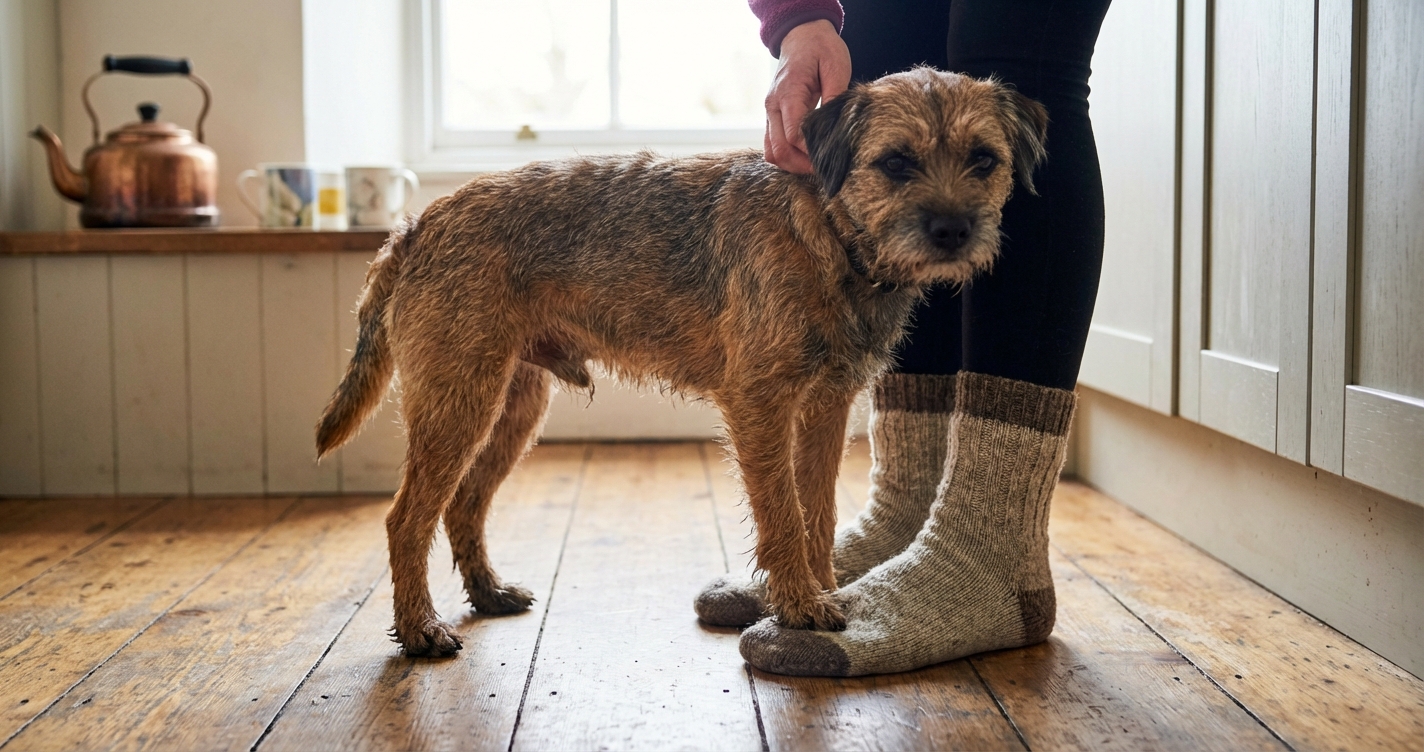
The other morning, I was stood in the kitchen, still half-asleep, waiting for the kettle to boil for that first essential brew. My border terrier, Pip, trotted in from the garden, took one look at my clean walking socks, and promptly planted both muddy front paws squarely on my feet. He just stood there, tail giving a slow, happy wag, looking up at me as if to say, “Right then. We’re both up. What’s the plan?”
If you’ve got a dog, you’ve likely experienced some version of this. Whether it’s a tiny terrier on your toes or a lanky lurcher trying to sit in your lap, being used as a piece of furniture is a peculiar part of dog ownership. It’s often endearing, sometimes a bit clumsy, but it always leaves you wondering: why on earth do they do it?
Well, let’s have a chat about it. It’s rarely a single, simple answer. A dog standing on you is a complex bit of communication, a message sent through body language. Let’s unpack some of the most common reasons.
More Than Just a Furry Footstool: How Dogs ‘Talk’
Before we dive in, it’s worth remembering that dogs communicate physically. Where we use words, they use their entire bodies. Physical contact—a nudge, a lean, or a full-on stand—is a massive part of their vocabulary. It’s how they build bonds, show trust, and make their feelings known. So, when your dog is standing on you, they’re not just being heavy; they’re having a conversation.
So, Why Are They Using You as a Climbing Frame?
Most of the time, this behaviour is rooted in something positive. But it’s good to know the full range of possibilities, from the lovely to the slightly more concerning.
1. It’s Their Way of Giving You a Cuddle
Let’s start with the most obvious and common reason: it’s a sign of affection. For a dog, physical closeness reinforces your bond. Standing on your feet or leaning against your legs is their version of a hug. They trust you, they feel safe with you, and they want to be as close to their favourite human as possible. Simple as that.
2. You’re Their Human Hot Water Bottle
Dogs are creatures of comfort and security. When they feel a bit anxious or unsure—perhaps there’s a loud noise outside, or a new person in the house—they seek out their safe space. And that safe space is you. By standing on you, they are grounding themselves. You’re their ‘social anchor’ in a world that can sometimes be a bit scary for them.
3. They’re Marking Their Territory (That’s You!)
This sounds a bit more dramatic than it is. Dogs have scent glands in their paws, and when they stand on you, they leave their unique scent behind. It’s a subtle, instinctual way of saying, “This person is part of my pack. They belong with me.” It’s less of a possessive power play and more of a social statement to other dogs.
4. On Sentry Duty
Sometimes, a dog standing over you, especially when you’re sat down, can be a protective gesture. They might be placing themselves between you and something they perceive as a potential threat—even if it’s just the postman. It’s their instinct to guard a valued member of their family.
5. They’re After a Bit of Attention
Dogs are clever. They learn very quickly what actions get a reaction. If standing on you usually results in a pat, a scratch behind the ears, or even just you talking to them, they’ll repeat the behaviour. It’s a very effective way of saying, “Ahem, excuse me, I’m right here. And I believe it’s time for a fuss.”
6. You Might Have Taught Them To!
This is linked to the point above. Think about it: when your puppy first clambered onto your lap, you probably thought it was adorable and gave them loads of positive reinforcement. You may have unintentionally trained them that standing on you is a brilliant and rewarding thing to do. They’re not being naughty; they’re just doing the trick you taught them.
7. The Old ‘Dominance’ Myth
For years, people chalked this behaviour up to ‘dominance’ or the dog trying to be the ‘alpha’. Modern thinking on dog behaviour has largely moved away from this. While it can be an assertive gesture in some contexts, it’s very rarely a calculated move to take over the household. It’s more likely about securing a resource (like your attention) than a Game of Thrones-style power grab.
8. They’re Trying to Tell You Something
A dog standing on you and staring intently can be a very direct form of communication. They might be telling you they need to go out to the loo, their water bowl is empty, or they’ve heard a strange noise in the shed they’d like you to investigate immediately. It’s worth checking the basics before you assume it’s just for a cuddle.
9. Could It Be a Health Twinge?
This is the one to watch out for, especially if the behaviour is new. Sometimes, a dog that is feeling unwell or is in pain will seek extra comfort from their owner. Clinginess, including standing on you, can be a sign of discomfort. If it’s a sudden change and seems out of character, it’s worth paying closer attention to how they’re moving and behaving in general.
What to Do When Your Dog Uses You as a Doormat
When It’s Fine: Enjoy the Connection
For most of us, most of the time, this is a harmless and rather lovely quirk. If your Jack Russell is warming your feet while you watch the telly, there’s no harm in it. It’s a sign of a strong, healthy bond between you both. Soak it up.
When It’s a Nuisance: A Bit of Gentle Redirection
Of course, it’s a different story when a 40-kilo Labrador is trying to perch on your shoulders. If the behaviour is inconvenient or uncomfortable, the key is gentle discouragement. Don’t make a big fuss or scold them. Instead, simply step away and redirect their attention. Teach them an alternative, more polite way to ask for a fuss, like sitting next to you. A command like “off” or “on your bed,” followed by a treat when they comply, works wonders.
When to Ring the Vet
While I’m no vet, common sense goes a long way. This behaviour is usually nothing to worry about, but you should consider getting a professional opinion from your vet if you notice the following:
- It’s a sudden and new behaviour, especially in an older dog that has never done it before.
- It’s accompanied by other signs of illness or pain, such as yelping, stiffness, limping, or a reluctance to be touched elsewhere.
- The dog seems unusually anxious, distressed, or is suddenly much more clingy than normal.
The key takeaway: Any abrupt change in your dog’s typical behaviour warrants a bit of investigation. When in doubt, a quick call to the vet provides peace of mind.
A Quirky Sign of a Strong Bond
In the end, that heavy paw on your foot is usually just a conversation. Your dog is telling you they love you, they trust you, and that you are the centre of their world. Understanding these little quirks is what turns dog ownership into a true friendship. Now, if you’ll excuse me, Pip has just reminded me his water bowl won’t fill itself.

Related Posts