The Great Cuddle Conundrum
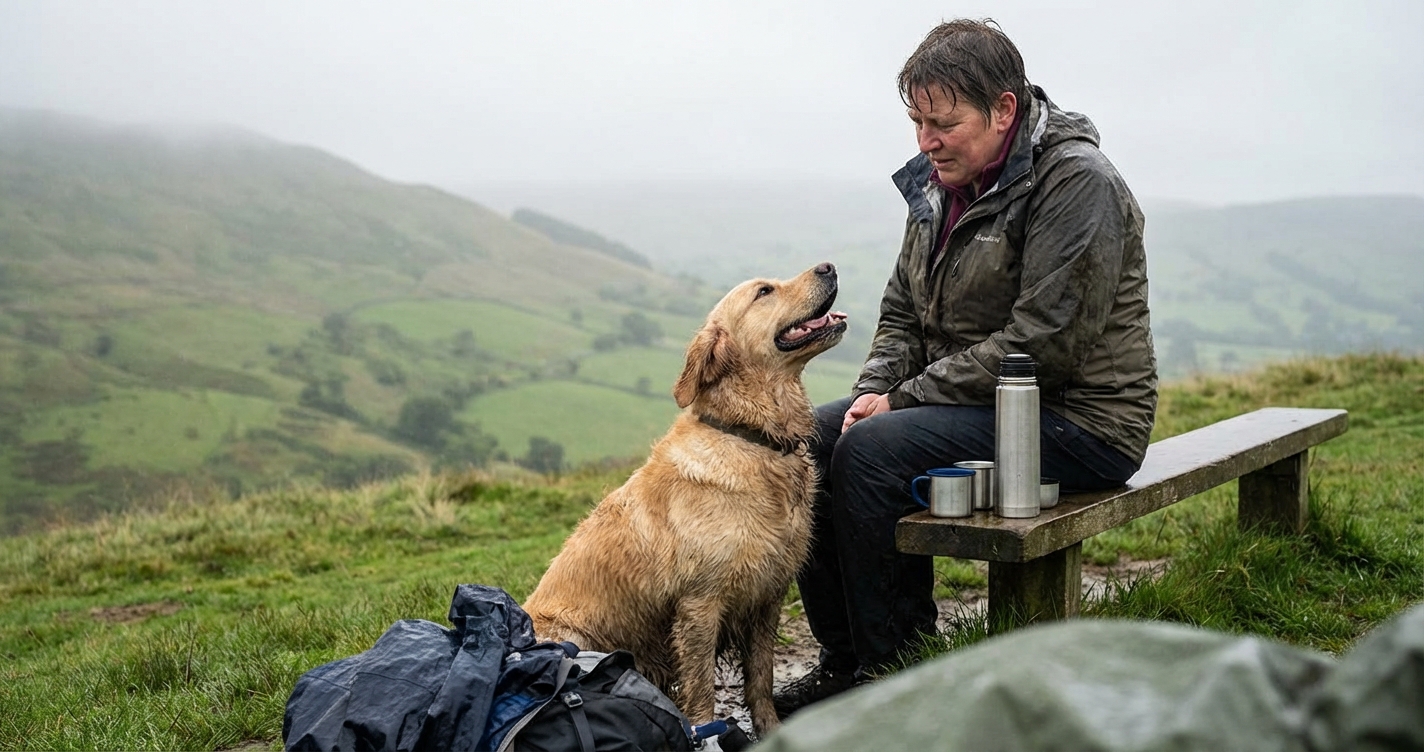
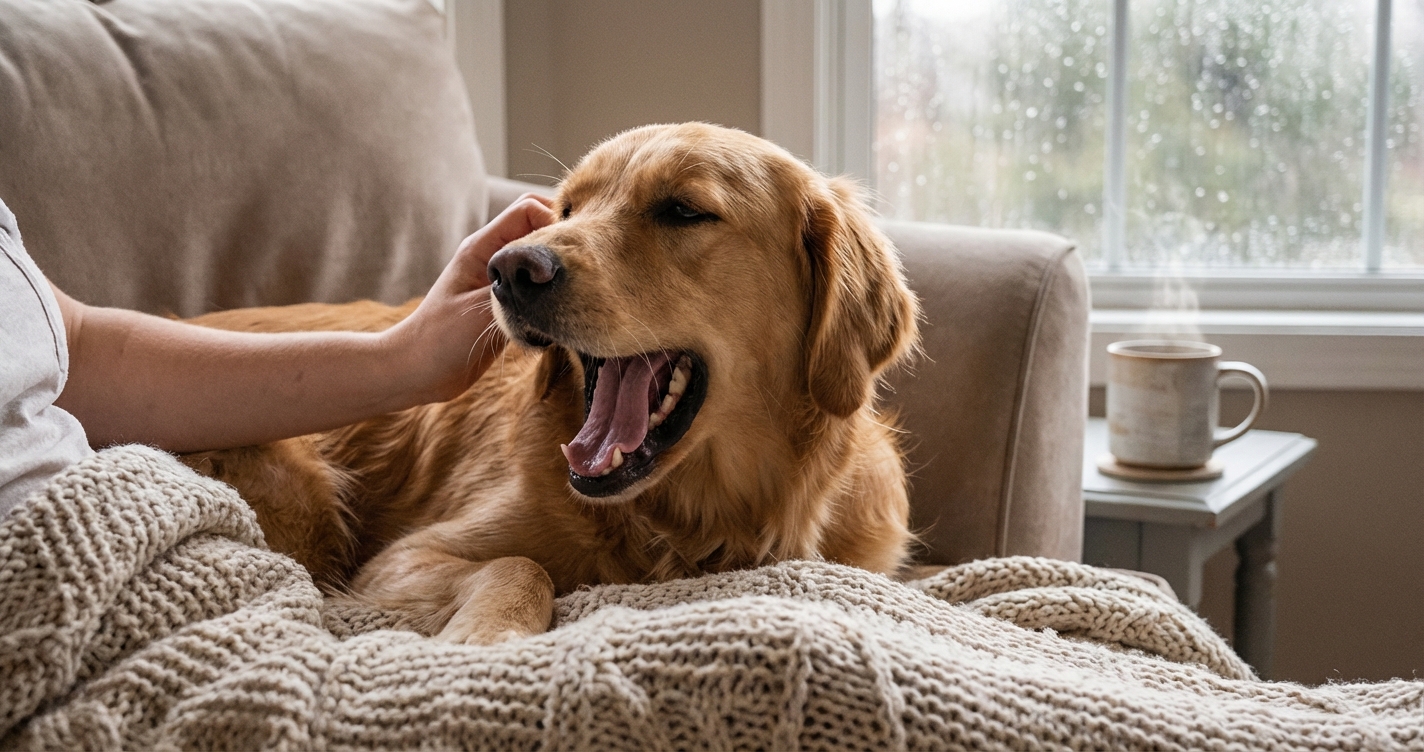
There I was, sat on the sofa with a cuppa, rain lashing against the window after a particularly soggy walk around Kinder Scout. My dog, smelling faintly of damp earth and happiness, was curled up beside me. I was giving him a good scratch behind the ears—the sweet spot—and in return, he gave me… a massive, jaw-stretching yawn right in my face. For a split second, you can’t help but think, “Right, am I that boring? Is my top-tier ear scratching not up to snuff?”
It’s a funny old moment, isn’t it? You’re sharing a bit of affection, and your dog looks like he’s getting ready for a kip. But that big gape is rarely about being tired or bored. A dog’s yawn is a proper piece of communication, and figuring out what it means is all about looking at the bigger picture. It’s a bit of body language that can mean anything from “Oh yes, that’s the spot” to “I’m feeling a little bit awkward, mate.”
The Yawn Spectrum: Is It a Happy Gape or a Nervous Gulp?
Before we get into the nitty-gritty, the most important thing to remember is that not all yawns are created equal. The key to decoding the yawn is to look at the rest of your dog’s body. Think of yourself as a bit of a body language detective.
- The Contented Yawn: This is the good stuff. The body is floppy and relaxed, what I call ‘noodle dog’ mode. Their eyes will be soft, maybe even a bit squinty with pleasure. The yawn itself is long, slow, and looks completely untroubled. It’s often followed by a contented sigh or a lick of the lips.
- The Stress Yawn: This one looks and feels different. The dog’s body might be tense or a bit stiff. Their eyes might be wide (you might see the whites, known as ‘whale eye’). The yawn itself is often quicker, and more intense. It can be paired with other calming signals like looking away, licking their nose, or even shaking their whole body as if they’re wet.
The Good Stuff: Reasons a Yawn is a Compliment
More often than not, especially with a dog you know and trust, a yawn during a petting session is a big thumbs up. They’re comfortable, happy, and feel safe with you.
A Sign of Pure Bliss and Contentment
This is the most common reason for a cuddle-yawn. Your dog is so utterly relaxed and happy with the affection you’re giving them that a big, peaceful yawn just slips out. It’s the dog equivalent of a human leaning back with a satisfied sigh. You’re hitting the right spot, and they are in a state of pure, unadulterated comfort.
An Expression of Trust
Think about it – a yawn is a vulnerable moment. Your dog is opening their mouth wide and briefly obscuring their vision. To do this in your presence, while you are physically interacting with them, is a huge sign of trust. It shows they feel completely secure and have no reason to be on guard. It’s a quiet way of saying, “I feel safe with you.”
Managing Over-Excitement
Sometimes, good feelings can be a bit overwhelming! If your dog gets incredibly excited when you come home and start making a fuss of them, a yawn can be a way to self-soothe and regulate that peak of happy energy. It’s a physical release for a burst of emotion, helping them to calm down from ‘bonkers’ to just ‘very, very happy’.
When a Yawn Might Mean “Give Me Some Space”
Now, let’s look at the other side of the coin. Sometimes, a yawn is a polite, and very dog-like, way of communicating discomfort or mild anxiety. It’s not a rejection, but a request.
A “Calming Signal” for Mild Anxiety
Behaviourists often refer to yawning as a ‘calming signal’. Dogs use these signals to de-escalate situations and show they aren’t a threat. If a new person is petting them, or a child is being a bit too boisterous, a dog might yawn to say, “This is all a bit much, and I’m feeling a tad stressed.” It’s their way of trying to calm themselves down, and also to signal to the other party that they’d like to avoid any conflict.
Discomfort with the Petting
We all assume dogs love a pat on the head, but many actually find it quite threatening. A yawn can be a direct response to you petting a sensitive area. If you go to stroke your dog’s head and they yawn and turn away, they’re probably telling you they’d prefer a chest scratch or an ear rub instead. It’s a simple piece of feedback on your technique!
The Catchy Yawn: A Sign of Your Bond
Have you ever yawned and then, a moment later, your dog does one too? It’s not a coincidence! This is known as contagious yawning. Research suggests that, just like in humans, this is linked to empathy. Dogs are more likely to ‘catch’ a yawn from their owner than from a stranger. It’s a fascinating little indicator of the social bond and emotional connection you share. Give it a go – next time you’re both relaxing, fake a big yawn and see if they copy you!
So, How Should You React?
Your response should be guided by the context clues you’ve just learned to spot.
- If the body language is relaxed and happy: Take it as the massive compliment it is and carry on. You’re doing a grand job.
- If the body language seems tense or stressed: It’s best to simply stop what you’re doing. Take your hands off them for a moment and give them some space. You can try petting a different area, like their chest or shoulders, and see if their reaction is more positive. The key is to listen to what they’re telling you.
Is It Ever a Worry?
On its own, a yawn when you’re petting your dog is almost certainly just behaviour. However, if you notice your dog is yawning excessively all the time, even when no one is interacting with them, and it’s paired with other things like lethargy or a lack of appetite, it’s never a bad idea to have a word with your vet. It’s always best to rule out any underlying medical reasons, just in case.
So, the next time your dog unleashes a mighty yawn during a cuddle, don’t take it personally. Take a moment to read the room. Nine times out of ten, you’re simply getting a direct, heartfelt message from your best mate that you’re doing everything right.

Related Posts