The Scritch-Scratch Sound That Makes You Wince
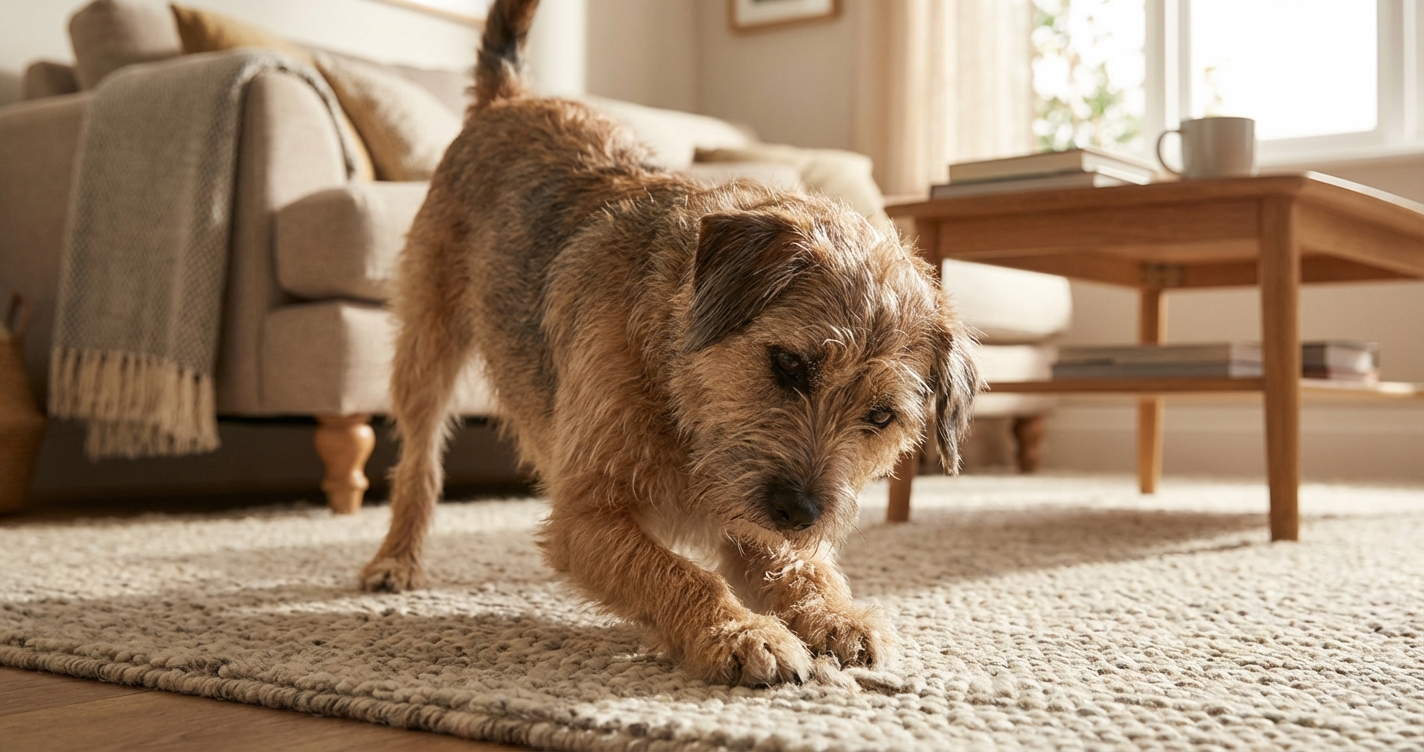
It’s a sound every dog owner knows. That rhythmic scritch-scratch-scratch from the other room that makes your shoulders tense up. You picture the fibres of your new rug being pulled, one by one, by a set of determined paws. Your first thought is probably, “Stop that, you little monster!” But the second, once you’ve taken a breath, is likely, “…but why are you even doing it?”
Believe it or not, your dog isn’t trying to redecorate or send your rental deposit up in smoke. This behaviour, maddening as it can be, is usually rooted in deep-seated instincts or a way of communicating something important. So, let’s put the kettle on, grab a biscuit, and figure out what’s really going on in that furry head of theirs.
First, A Quick Look: What’s the Likely Story?
Let’s get straight to it. Find the scenario below that best matches your situation to get a quick idea of what might be happening.
- Does it happen just before they lie down? They’re probably just getting comfy. This is classic ‘nesting’ behaviour. Jump to: Making a “Den”.
- Do they scratch frantically when you’re busy or they’ve been left alone? This could be a classic case of boredom or pent-up energy. Jump to: “I’m Bored!” – The Frantic Scratcher.
- Does the scratching ramp up when you grab your keys and coat? This points towards stress or separation anxiety. Jump to: “Don’t Go!” – The Anxious Scratcher.
- Are they scratching their own body a lot, as well as the carpet? This might not be about the carpet at all. An underlying itch could be the culprit. Jump to: Could It Be a Health Wiggle?
It’s Not Naughty, It’s Instinct
A lot of the time, carpet scratching is just your dog being a dog. Their wild ancestors passed down a few key behaviours that don’t always fit perfectly with modern living rooms.
Making a “Den”
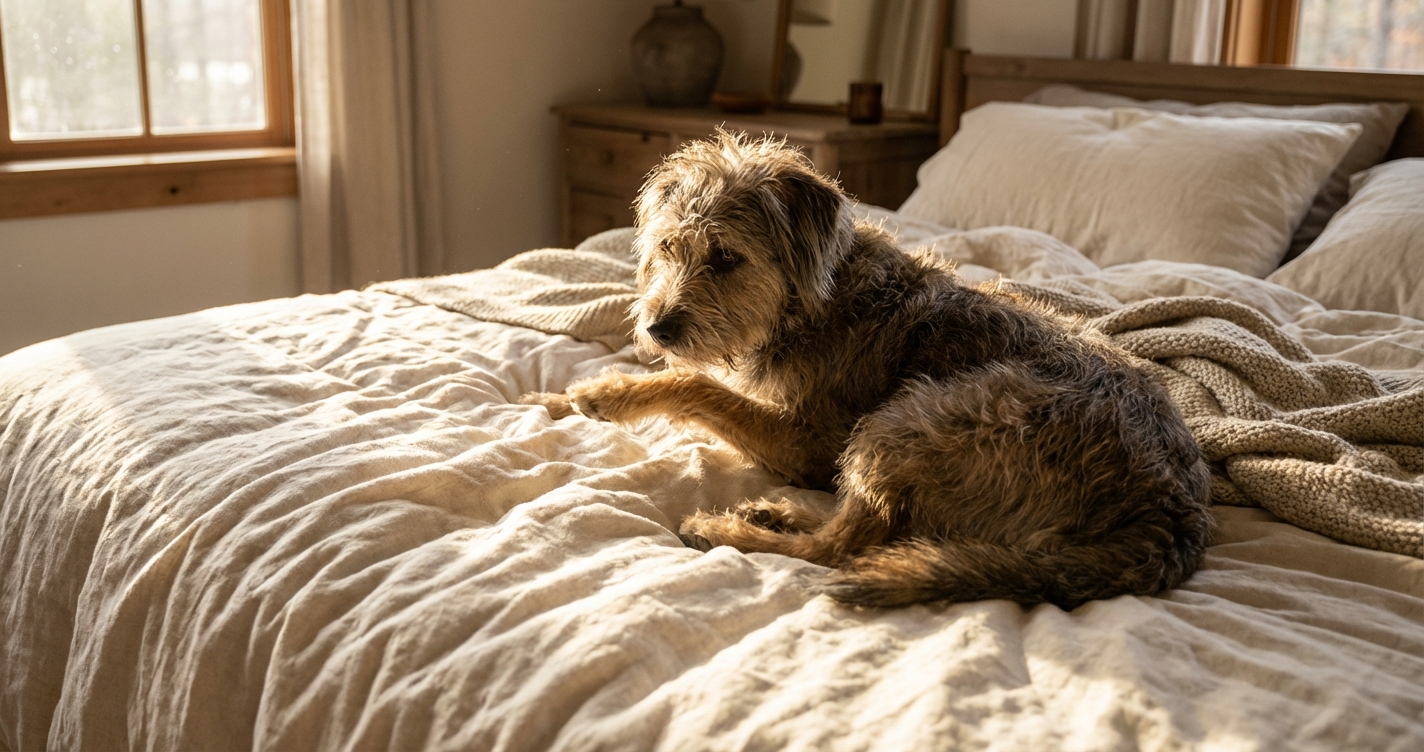
Ever seen your dog circle a few times before plonking down for a nap? Scratching the carpet is part of the same ritual. In the wild, canines would dig to create a shallow den. This had a few practical benefits:
- Temperature Control: Digging unearths cooler ground in summer and allows them to curl up in a protected hollow in winter.
- Comfort & Safety: It clears the area of any sharp stones or pesky creatures, making for a safer, comfier bed.
The takeaway: If the scratching happens right before they settle down, it’s likely just this ancient instinct to create a comfortable den. It’s harmless, if a little destructive.
Leaving Their “Post-it Note”
Dogs communicate a lot through scent, and their paws are powerful tools for this. They have interdigital glands between their paw pads that release a unique scent. When they scratch at a surface, they’re essentially leaving a message for other dogs, saying “I was here.”
Think of it as them putting their name on a particular spot. It’s a form of territory marking that’s just as important to them as a cocked leg is on a walk.
More Than Instinct: What Are They Trying to Tell You?
Sometimes, scratching goes beyond instinct and becomes a way for your dog to express an emotion or a need. This is when you need to put your detective hat on.
“I’m Bored!” – The Frantic Scratcher
A dog with too much energy and not enough to do will find their own entertainment. And for some, a good old scratch-up is wonderfully satisfying. If your dog isn’t getting enough physical exercise or mental stimulation (like puzzle toys or training), they may resort to scratching as a way to burn off that fizzing energy.
“Don’t Go!” – The Anxious Scratcher
Scratching can be a self-soothing behaviour for a worried dog. It’s often seen in dogs with separation anxiety, who may scratch at carpets, doors, or window frames when left alone. It’s a physical outlet for their emotional distress. You might notice this behaviour is paired with other signs of anxiety, like whining, pacing, or destructive chewing.
“Look at Me!” – The Attention-Seeking Scratcher
Dogs are clever. If they scratch the carpet and you immediately jump up and give them attention (even if it’s to tell them off), they learn a simple equation: Scratching = Attention. It can quickly become a go-to trick to get you to stop what you’re doing and focus on them.
Could It Be a Health Wiggle?
Before you dive into a full-on training plan, it’s worth considering if there’s a medical reason for the scratching. Sometimes, a dog is scratching the carpet simply because they have an itch they can’t relieve. This could be due to:
- Fleas or Mites: These pesky parasites are a common cause of itchiness.
- Allergies: Dogs can have environmental or food allergies that cause skin irritation, especially on their paws.
- Other Skin Conditions: Infections or dry skin can also lead to discomfort.
Important: If the carpet scratching is accompanied by lots of licking, chewing at paws, or general scratching of their body, it’s time for a chat with your vet to rule out any underlying health problems.
Right, How Do We Stop the Carpet Carnage?
Understanding the ‘why’ is the first step. Now for the practical part: making it stop. You might need a combination of these tactics.
- Up the Exercise and Fun: The old saying is true: a tired dog is a happy (and less destructive) dog. Ensure they’re getting enough walks, runs, and playtime. Mental exercise is just as important. Introduce puzzle feeders, scent work games, or short, fun training sessions to keep their brain busy.
- Trim Those Talons: Long nails can make scratching more damaging and even uncomfortable for your dog. Regular nail trims will, at the very least, reduce the impact on your carpet. If you’re not confident doing it yourself, a local groomer or vet nurse can help.
- Give Them a “Yes” Zone: You can’t remove an instinct, but you can redirect it. Provide a place where scratching is allowed. This could be a sturdy scratching mat, a specific old blanket, or a designated ‘digging box’ in the garden filled with sand or soil. Encourage them to use it and praise them when they do.
- Interrupt and Redirect: When you catch them in the act, make a calm but sharp noise (like a “Hey!” or a clap) to interrupt the behaviour. As soon as they stop, redirect their attention to a more appropriate activity, like a chew toy or a quick game of tug.
- When to Call in the Pros: If you suspect the scratching is due to deep-seated anxiety or you’re simply not making progress, don’t be afraid to seek help. A qualified vet can rule out medical issues, and a certified clinical animal behaviourist can provide a tailored plan for anxiety or other complex behavioural problems.
Your Questions Answered (The Scritch-Scratch FAQs)
Why does my dog scratch the carpet at night?
This is most often linked to that nesting instinct we talked about. They’re simply trying to get their bed ‘just right’ before settling down for the night. It’s their version of fluffing the pillows.
Why does my dog scratch the carpet before lying down?
Again, this is classic den-making behaviour. They’re clearing the space, getting comfortable, and settling in. It’s a deeply ingrained habit from their ancestors.
Is carpet scratching a sign of dominance?
It’s highly unlikely. The idea of ‘dominance’ is often misunderstood when it comes to dog behaviour. Scratching is almost always about instinct, emotion, or a physical need, not about them trying to be the ‘boss’.

Related Posts